








Mega Doctor News
By Roberto Hugo González / Mega Doctor News
Many of the most serious burn and trauma injuries can be prevented by avoiding unnecessary risks, according to Dr. R. Dewayne Edwards, chief burn surgeon, surgical critical care and trauma surgeon at DHR Health, who said public awareness and timely medical care remain essential to improving patient outcomes.
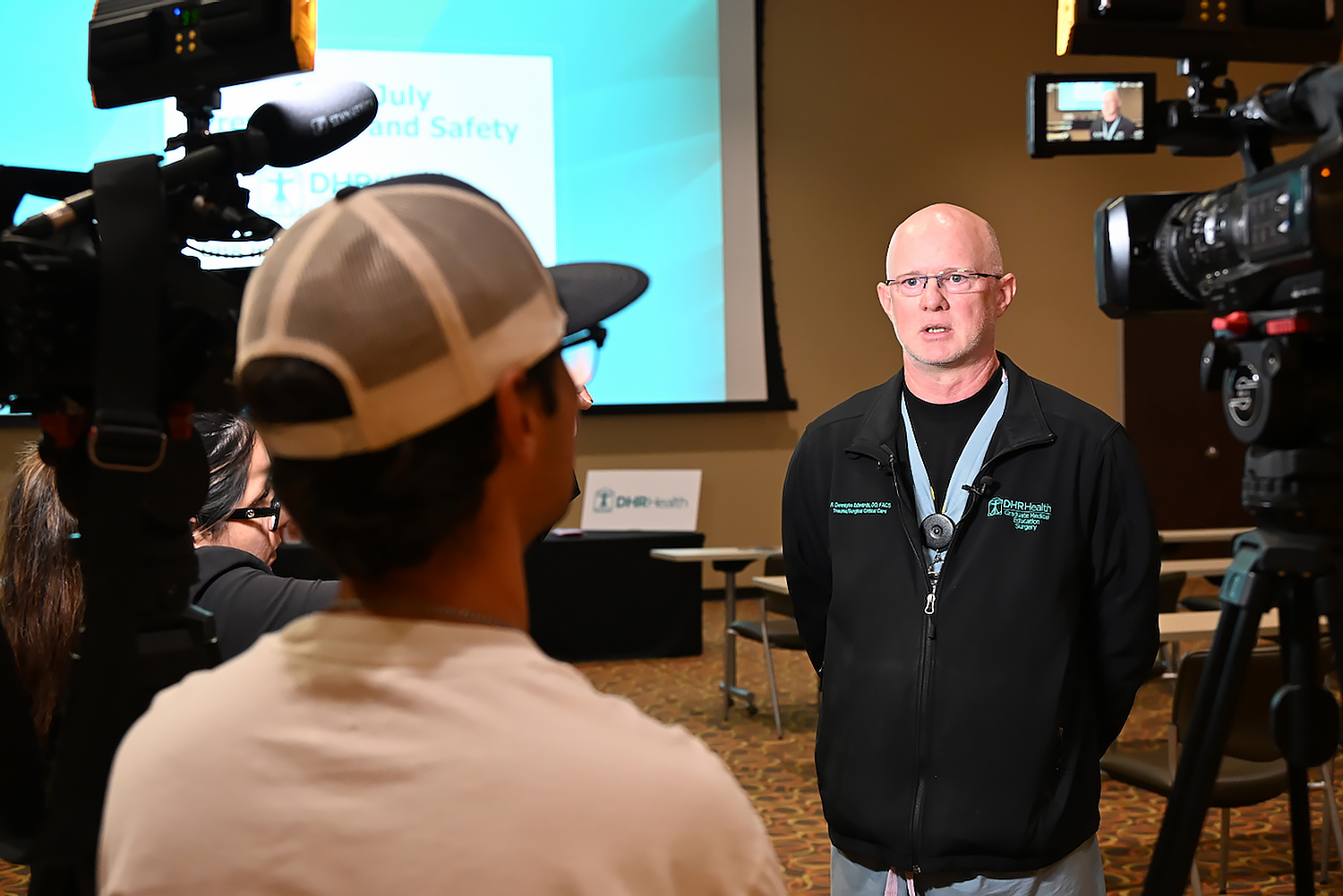
In a recent interview, Edwards discussed burn prevention, common misconceptions about burn injuries, advances in treatment and the continued expansion of burn care services at DHR Health.

Edwards discovered his passion for burn surgery during a required burn rotation while completing his surgical critical care fellowship at Maricopa County Hospital in Phoenix.
“I really loved the experience, and my faculty were outstanding,” Edwards said. “They offered me the opportunity to complete a burn fellowship, and I accepted.”
He said trauma and critical care surgery appealed to him because of the variety of specialized procedures involved and the opportunity to care for critically injured patients.
Edwards came to DHR Health after learning about the Rio Grande Valley through a colleague. After years in El Paso during his military service and medical training, he and his family were ready for a warmer climate.
“DHR Health seemed like a perfect fit for the type of job I wanted, and it was located in the community that offered everything my family was looking for,” he said.
One of the biggest misconceptions about burn injuries, Edwards said, is that many people underestimate how dangerous they can be.
“Any burn greater than 20% total body surface area can result in death if not appropriately treated.”
After any burn injury, he said, the first priority is stopping the burning process.
“The first thing someone should do after a burn injury is stop the burning process.”
He recommends applying a cool, damp dressing before seeking medical care when appropriate.
Certain burns should always be evaluated in an emergency department, including burns that cover a significant portion of the body, burns involving the face, hands, genitalia, or major joints, and burns that affect mobility. Even minor burns can worsen if left untreated, with infection or progression to deeper tissue injury increasing severity.
Burn injuries also vary by age group. Edwards said scald burns are most common in children, while adults are frequently injured while burning trash or using gasoline and other unapproved accelerants to light charcoal grills.
Burn care has advanced significantly over the past decade through improved treatment guidelines, burn resuscitation protocols and technologies such as autologous skin cell solutions and skin substitutes, expanding options for patients with severe injuries.
Despite the technical challenges, Edwards said helping patients survive life-threatening burns remains the most rewarding part of his work.
“Without question, the most rewarding part of this type of work is seeing patients that have life-threatening burns leave the hospital after surviving their injury,” he said. “It is an added bonus to see them return to normal productive lives with minimal or no limitations.”
In addition to burn surgery, Edwards practices trauma and critical care surgery, responding to emergencies ranging from appendectomies and ruptured intestines to chest injuries and vascular trauma.
“From day to day, I never know what challenges I will face, or what type of injuries and surgical emergencies I may encounter.”
He emphasized the importance of rapid treatment after traumatic injury, noting that the “golden hour” remains a critical concept in trauma care because prompt evaluation and stabilization significantly improve survival.
When asked about the most important habit for preventing serious injuries, Edwards offered a straightforward answer.
“To be perfectly honest, not taking stupid risks.”
He pointed to common preventable behaviors, including failing to wear seat belts, improperly securing children in vehicles, driving while intoxicated, using gasoline to light grills or burn trash, and failing to treat every firearm as though it is loaded.
Although some regions see seasonal increases in burn injuries during colder months, Edwards said the Rio Grande Valley’s warmer climate results in relatively consistent burn patterns year-round.
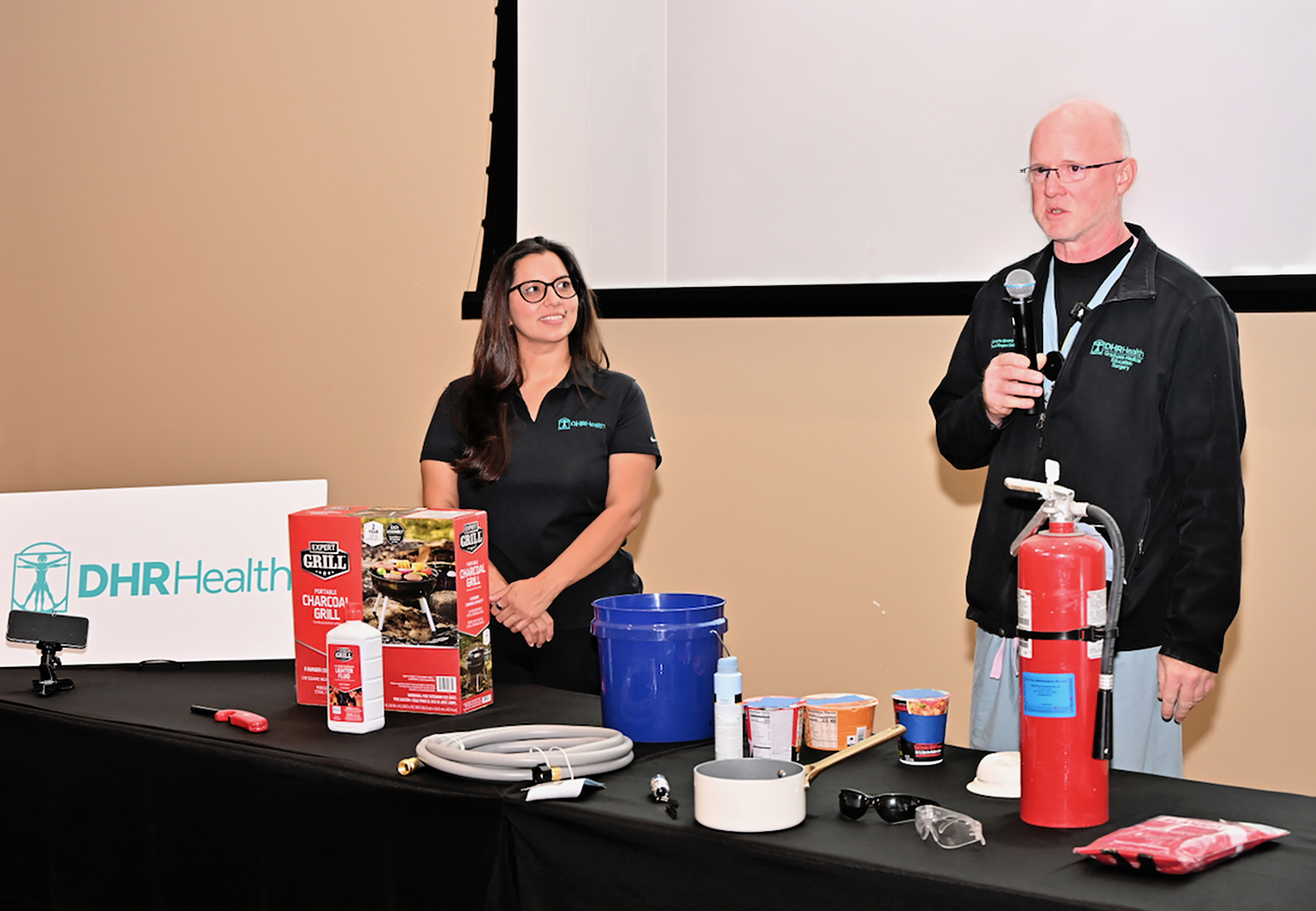
He encourages families to practice basic grilling and fireworks safety by avoiding accelerants, never igniting fireworks while holding them, and closely supervising children around fireworks.
Parents can also reduce burn injuries by lowering water heater temperatures to 120 degrees Fahrenheit or below, turning pot handles away from stove edges and avoiding overheating food in microwave ovens.
Burn and trauma surgery can be emotionally demanding, Edwards acknowledged, making healthy stress outlets essential.
“I would say that everybody who does this type of job needs some sort of healthy outlet to avoid emotional burnout.”
For him, that outlet is comedy.
He also offers simple advice to aspiring surgeons.
“Your patient’s needs always outweigh your personal needs. Never let your personal or financial needs influence what you do for your patients.”
Outside the hospital, Edwards enjoys spending time with his family and is an avid bowhunter and fisherman. He frequently fishes offshore from Port Isabel with his son or spends time on the Laguna Madre.
Looking ahead, Edwards said DHR Health continues expanding burn care in the Rio Grande Valley. The hospital now treats many complex burn injuries locally, offers multiple skin substitutes and recently added RECELL, a technology that uses a small sample of a patient’s skin to create a spray-on suspension of skin cells that helps treat deep burns while reducing donor skin requirements.
DHR Health can now care for patients with burns covering up to 30% of their total body surface area, allowing many patients to remain in the Valley instead of being transferred to burn centers in San Antonio or Galveston.
Asked for the one message he hopes the public remembers, Edwards returned to the principle that guides both burn prevention and trauma care.
“If something seems unsafe, it probably is unsafe. Do not take unnecessary risks.”
See related story:


