
Mega Doctor News
By Roberto Hugo González / Texas Border Business
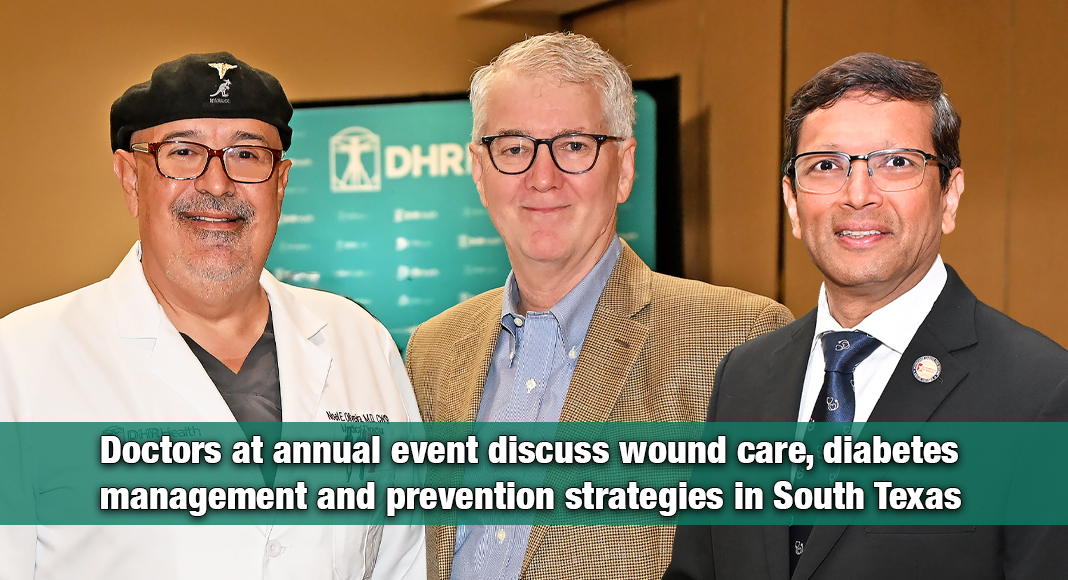
Medical professionals from across Texas gathered at DHR Health for the organization’s third annual wound care symposium. This was an event dedicated entirely to wound care for the first time, according to Dr. Noel Oliveira, Director of the Wound Care Center at DHR Health.
“This entire symposium is dedicated to wound care,” Dr. Oliveira said, noting that in previous years wound care had been included as a single lecture within larger events. He said the symposium was designed to bring together specialists from multiple disciplines involved in treating wounds.

According to DHR Health, the program was designed to assess evidence-based practices and standards of care for patients with hard-to-heal wounds. Organizers said the symposium aimed to narrow knowledge gaps and improve wound healing outcomes through discussions on wound bed preparation, interventions to prevent re-ulceration, and the role of glycemic balance in healing. The event also sought to increase healthcare providers’ knowledge and competence by presenting current recommendations for patient care.
Dr. Oliveira said the event featured nationally recognized speakers, including Dr. Jayesh Shah, MD, MHA, the immediate past president of the Texas Medical Association, and Dr. Lawrence Lavery, DPM, MPH, a podiatrist, professor, and vice chair of research in the Department of Orthopedic Surgery at the UT Health Science Center in San Antonio.
Dr. Oliveira said his presentation focused on evaluating new wound care patients while addressing diabetes management alongside Dr. Annette Ozuna, PharmD, of DHR Health. He said the topic was selected because diabetes remains common in the Rio Grande Valley and throughout the United States.
The symposium’s learning objectives included identifying patient-specific risk factors for ulcer recurrence using validated risk assessment tools, developing cost-effective interventions to reduce re-ulceration, and applying wound bed preparation principles, including tissue management, infection control, moisture balance, and edge advancement. Organizers also aimed to help providers better understand glycemic control and incorporate metabolic management into patient-centered wound care plans that improve healing outcomes and reduce recurrence rates.
Dr. Oliveira said the symposium drew a wide range of healthcare workers, including vascular surgeons, emergency medicine personnel, athletic trainers, nurses, nurse practitioners, physician assistants, wound care technicians, and hyperbaric medicine technicians. According to organizers, the target audience included physicians, advanced practice providers, nurses, and others directly involved in patient care.
Dr. Oliveira said wound care requires collaboration across specialties, including surgery, podiatry, vascular medicine, and primary care. He added that the symposium was modeled after wound care conferences he had attended over more than 20 years.
“We plan on doing this every year because DHR Health is so supportive of our continuing medical education efforts,” Dr. Oliveira said, adding that the organization intends to continue bringing “world-renowned speakers” to future events.
During his presentation, Dr. Shah discussed diabetes complications, including gangrene, and the role of wound care specialists in preventing amputations. He described a patient case involving diabetic foot gangrene and said modern wound care methods can help preserve limbs and support recovery.
“Once they get amputation, they have a high chance of dying also,” Dr. Shah said. “So, when you save their limb, you are saving their life.”
Dr. Shah, a wound care and hyperbaric physician from San Antonio with more than 30 years of experience, described South Texas as an area with a high prevalence of diabetes. He attributed the prevalence to multiple factors, including genetics, diet, lifestyle, and social conditions.
He said some patients face barriers to disease management, including work schedules, family obligations, and limited access to resources. Dr. Shah called for solutions at multiple levels, including patient support, healthcare policy, and education beginning in childhood.
“I think the narrative, telling them about lifestyle changes, telling them about the bad things that can happen with diabetes if they are not taking care of it early on, is extremely important,” Dr. Shah said.
Dr. Shah also discussed challenges facing physicians, including prior authorization requirements and reimbursement issues. He said administrative burdens can interfere with patient care. “If doctors are allowed to practice the way they’re supposed to do and not have all this hindrance in between the paperwork and the hassles, then our healthcare system will get better,” he said.
Dr. Lavery focused his presentation on preventing diabetic foot wounds, an area he said often receives less attention at wound care meetings. “In most wound meetings, you don’t talk about prevention, you talk about wounds,” Dr. Lavery said.
Dr. Lavery said South Texas faces a significant need for preventive care because of the high number of diabetes cases. He described the region as “the hotbed of diabetes” and said preventive measures such as patient education, therapeutic footwear, insoles, and regular follow-up appointments are often underused.
He also emphasized family involvement in diabetes care, saying treatment decisions and caregiving often involve spouses, children, and extended family members. “It’s a family education process,” Dr. Lavery said.
Dr. Lavery discussed simple technologies that may help prevent foot ulcers, including temperature monitoring to identify injuries before ulcers develop. He said devices that once cost thousands of dollars have become more affordable and accessible.
“Twenty-five years ago, that wasn’t possible,” Dr. Lavery said, referring to low-cost infrared temperature monitoring. “In fact, many people now carry infrared cameras in their phones.”
Dr. Lavery said preventive tools and education may reduce complications and help families avoid more costly medical treatments, including hospital visits and antibiotics.
See related story: