







Mega Doctor News

Texas Border Business / Mega Doctor News
On July 4, 2025, President Donald J. Trump signed the ONE BIG BEAUTIFUL BILL (OBBB) into law, making significant changes to several federal tax programs. Among its provisions, the law brings an end to two key residential energy tax credits: the Energy Efficient Home Improvement Credit and the Residential Clean Energy Credit. Both programs are set to expire on December 31, 2025.
These credits have provided financial incentives to homeowners making qualified improvements or installing clean energy systems, such as solar panels or heat pumps. Under the OBBB, the credits will no longer be available for expenses incurred after the end of the calendar year.

According to the legislation: “The Energy Efficient Home Improvement Credit under Section 25C and the Residential Clean Energy Credit under Section 25D shall not apply to property placed in service after December 31, 2025.” This means that to qualify for either credit, installations or improvements must be fully completed and placed in service by December 31, 2025.
The Energy Efficient Home Improvement Credit has allowed taxpayers to claim up to 30% of the cost of qualifying improvements, such as insulation, windows, doors, HVAC systems, and water heaters, with annual caps for each category. The program was most recently expanded under prior legislation to cover up to $1,200 per year in total credits. With the OBBB now ending this provision, homeowners have limited time left to complete eligible upgrades.
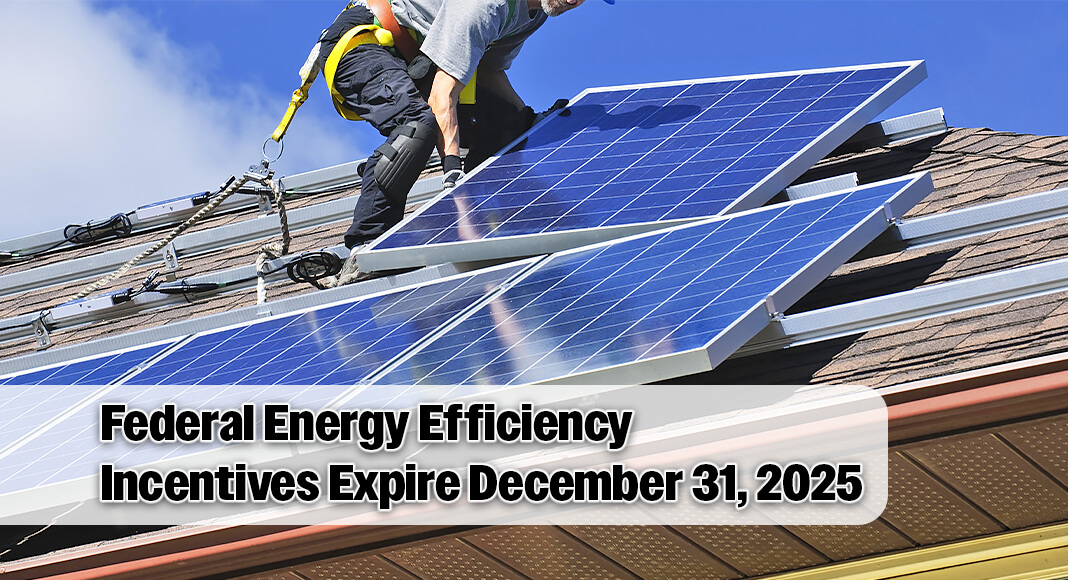
The Residential Clean Energy Credit, formerly known as the Residential Energy Efficient Property Credit, has provided a 30% credit for the cost of installing solar panels, solar water heaters, geothermal heat pumps, and battery storage systems. This credit applied to both primary and secondary residences and had no annual cap. With the passage of the OBBB, this credit will no longer be available for systems installed after the end of 2025.
Homeowners who have already started clean energy or efficiency projects should ensure that installation and activation are completed before the deadline. “Taxpayers must certify that eligible property was installed and operational on or before December 31, 2025,” the bill states.
The Internal Revenue Service (IRS) is expected to release additional guidance to clarify rules for projects that begin in 2025 but are completed in 2026, including transitional policies and documentation requirements.
Energy and construction industry groups have noted that the expiration of these credits could affect the timing of home improvement and solar installation projects during the final months of 2025. Contractors and service providers may see increased demand as homeowners seek to complete projects before the credits expire.
The OBBB does not replace these credits with alternative incentives at this time. Any future programs would require additional legislative action. As a result, the expiration date of December 31, 2025, currently marks the end of federal tax support for most residential clean energy and efficiency improvements.
Always consult with a tax professional to understand how these changes may affect your eligibility and filing.
See related stories:


