







Mega Doctor News

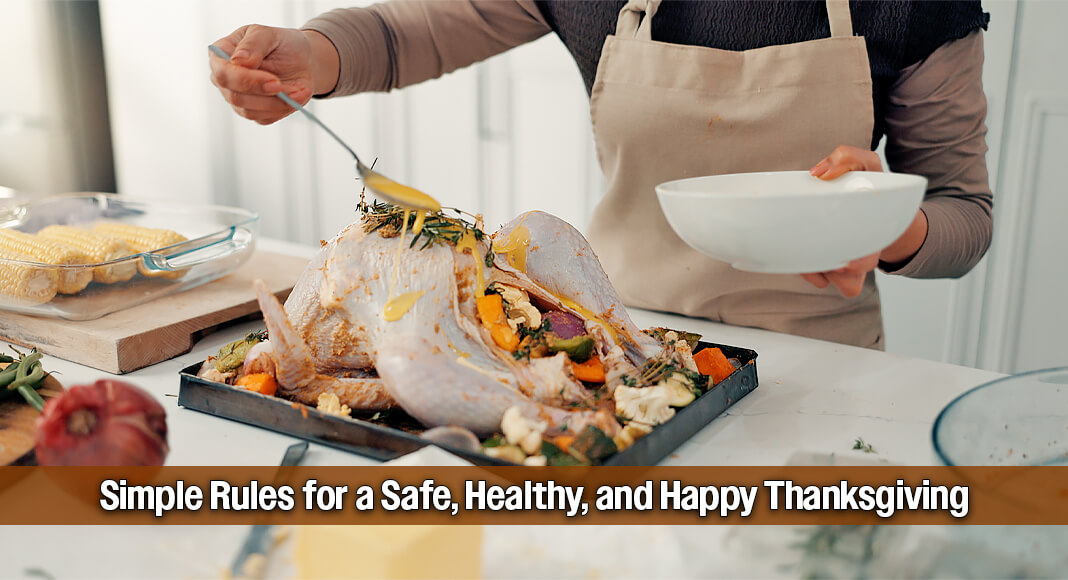
Washington, D.C.– As families across the country prepare for Thanksgiving, the U.S. Department of Agriculture’s Food Safety and Inspection Service (FSIS) is reminding consumers to take simple steps that will keep their holiday meals safe and enjoyable.
“Thanksgiving is one of America’s most cherished traditions, bringing family and friends together around the table,” said USDA Under Secretary for Food Safety Dr. Mindy Brashears. “At USDA, we work year-round to help keep our nation’s food supply safe. Food safety doesn’t stop at the processing establishments that produce the food you eat. By following a few simple food safety steps at home, families can protect their loved ones and focus on what matters most — enjoying a safe and memorable Thanksgiving together.”
Every year, USDA food safety specialists answer thousands of Thanksgiving questions through USDA’s Meat and Poultry Hotline. From when to buy a turkey to how to thaw and cook it safely, you can find all the information you need, including interactive thawing and cooking calculator, on our Your Safe Thanksgiving Guidewebpage.


Prepare a safe meal on Thanksgiving by following these four key Thanksgiving food safety steps:
1. Plan and Thaw Safely
Buying a fresh or frozen turkey is really a matter of personal preference, but as you plan for your holiday meal, it’s helpful to keep a few important food safety considerations in mind.
- If shopping one to two days before cooking: buy a fresh turkey. If there is a “best-by” or “use-by” date on the manufacturer’s label, then you can keep fresh turkey, unopened, in the refrigerator until that date.
- If shopping weeks in advance: buy a frozen turkey. Never thaw on the counter. Thaw frozen turkey in the refrigerator (24 hours for every 4 to 5 pounds) or in cold water (30 minutes per pound, changing water every 30 minutes).
2. Cook to 165 Degrees F
Use a food thermometer to check if your turkey is ready – it’s the only way to know for certain that it has reached the safe minimum internal temperature of 165 degrees F. Check in all three of these places:
- Thickest part of the breast
- Innermost part of the wing
- Innermost part of the thigh
For optimal safety and uniform doneness, cook stuffing separately. However, if stuffing is cooked inside the turkey, use a food thermometer to make sure the center of the stuffing also reaches a safe minimum internal temperature of 165 F.
3. Keep Foods Out of the “Danger Zone”
Bacteria grow quickly between 40 and 140 degrees F, also known as the food safety “Danger Zone,” putting your family at risk for foodborne illness. To keep food safe:
- Keep cold foods in the refrigerator or nestled over ice. Serve smaller portions and replenish them as needed to keep food at or below 40 degrees F.
- Keep hot food in the oven, heated chafing dishes, warming trays, or slow cookers at or above 140 degrees F.
- Follow the two-hour rule: Refrigerate perishables, prepared foods, and leftovers within 2 hours. Discard perishable foods left at room temperature for more than two hours.
4. Store Leftovers Safely
The joy of Thanksgiving continues with leftovers. By storing them properly, you can savor each comforting dish safely and happily in the days that follow.
- Divide large portions into smaller containers for quicker cooling.
- Refrigerated leftovers are safe for up to four days and can be frozen for longer storage. When kept continuously frozen at 0 degrees F or below, they remain safe indefinitely, although quality may decline over time.
- Reheat leftovers to 165 degrees F before serving.
Information source: USDA