







Mega Doctor News

Women make up just over half the U.S. population, according to the U.S. Census, and more than 80 million women are above the age of 40, equaling to millions of mammograms performed every year. Mammograms, ultrasounds, MRIs and other imaging services are crucial for the early diagnosis of breast cancer and other breast problems, and having the best equipment helps increase accuracy and makes for a smoother process for both the patient and radiologist.
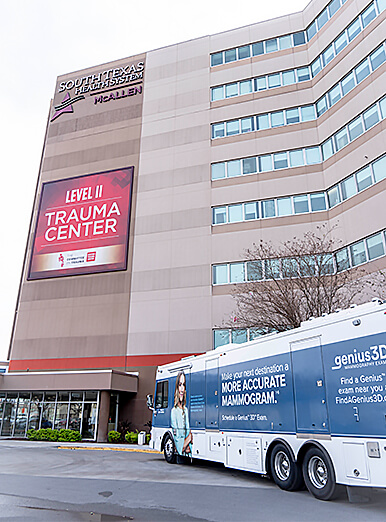
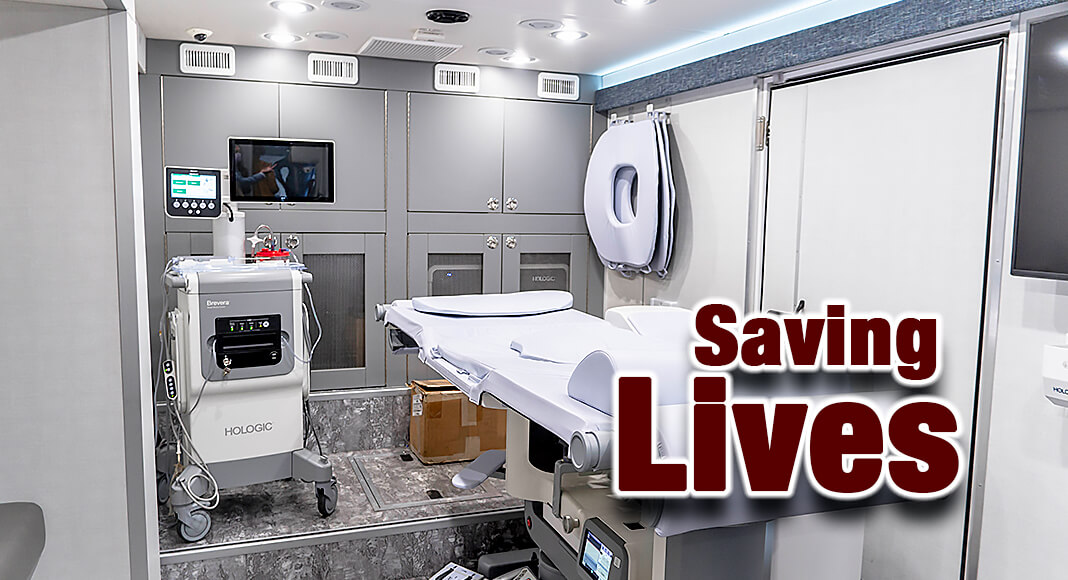
To showcase and provide demonstrations of the newest equipment and models, Hologic — a global medical technology company with products focused on early detection — visited South Texas Health System McAllen on Wednesday, January 26.
Physicians, mammo techs, radiologists and other healthcare professionals — within STHS and from other local practices — were welcomed into the Hologic Tour Bus to get a firsthand look at how these devices can be incorporated into their facilities for an improved patient experience.

“Women’s services are a huge part of healthcare and while patients don’t usually look forward to coming in for their annual screenings and exams, it’s important that we as healthcare providers work to give them the best possible experience,” STHS McAllen Radiology Director Charlie Aguirre said. “This helps ensure they don’t delay these vital services. And one way we do this is by equipping our facilities with the most advanced technologies that improve accuracy, as well as a patient’s comfort.”
Patients and the public were also invited to tour and learn about the technology and exactly what to expect on their next breast health visit. The 3D mammography system — already in use throughout STHS facilities — records a scan in only 3.7 seconds, allowing for minimal radiation exposure and discomfort.
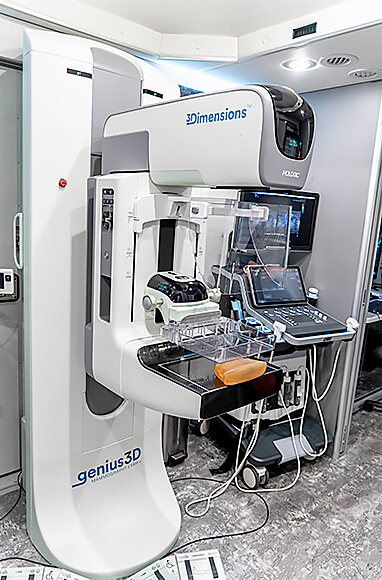
“In many cases, a women’s challenge when she comes to the exam is just the anxiety of being under compression and the pain she’s experiencing,” Hologic Account Executive Felix Gutierrez explained. “So, with a 3.7 second scan, what that allows is for her to be under compression for just a short amount of time.
“At the same time, motion is the enemy of image quality. If there’s a lot of motion, the radiologist isn’t going to have a very good image. So, at 3.7 seconds, that’s very minimal motion and that allows us to produce the best image on the market.”
STHS McAllen is designated as a Breast Imaging Center of Excellence by the America College of Radiology. For more information on the imaging services at South Texas Health System, visit STHS Edinburg or STHS McAllen.


