







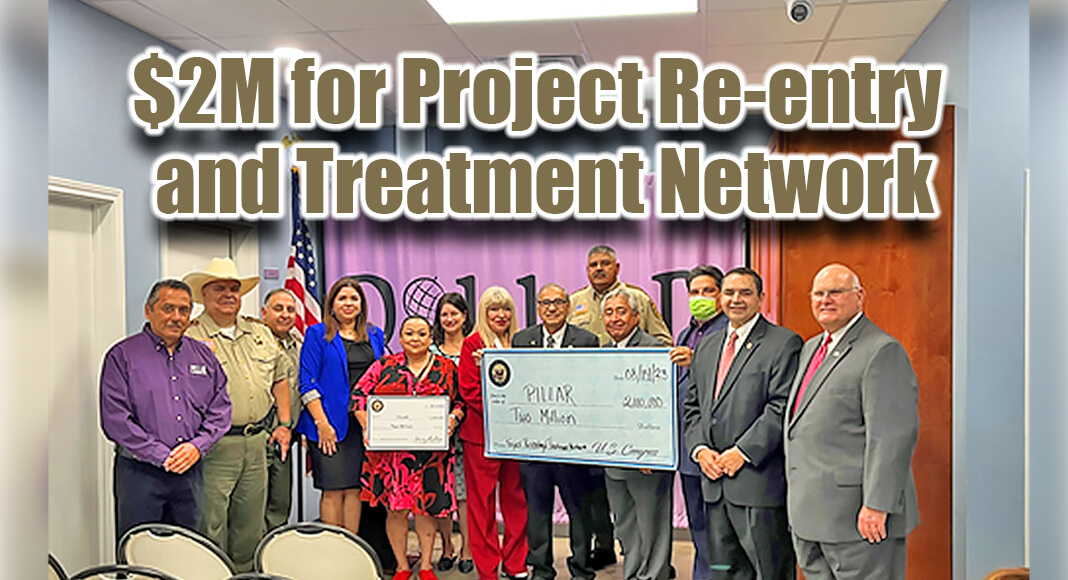

$2M in Federal Funding for PILLAR’s Project Re-entry and Treatment Network

Translate to Spanish or other 102 languages!

Senator Henry Cuellar announced $2,000,000 in federal funding for PILLAR's Project Re-entry and Treatment Network. Courtesy Image
Senator Henry Cuellar announced $2,000,000 in federal funding for PILLAR’s Project Re-entry and Treatment Network. Courtesy Image

Mega Doctor News

- Advertisement -

Senator Henry Cuellar announced $2,000,000 in federal funding for PILLAR’s Project Re-entry and Treatment Network. The funds, awarded by the U.S. Department of Health and Human Services’ Substance Abuse and Mental Health Services Administration (SAMHSA), will be used to provide re-entry services, treatment, and recovery support services for 330 individuals.

PILLAR will utilize the award over a 5-year period to treat incarcerated individuals struggling with substance use disorders and/or co-occurring disorders as they return to their families and community. 50 persons will be treated in Year 1, and 70 persons will be treated each year in Years 2 through 5.

Mental health care is essential to our community’s wellbeing. This $2,000,000 investment will help PILLAR provide the care and treatment needed to get individuals suffering with substance use disorders back on their feet and back into the world. The senator woud like to thank PILLAR Co-Founders Arturo Diaz, Jr., and Manuel Sanchez for working with him to deliver for the community.


- Advertisement -
- Advertisement -

- Advertisement -

More Articles

DHR Health Transplant Institute Earns Top State and National Rankings

The DHR Health Transplant Institute announced today that it has been recognized among the state’s and nation’s top performing kidney transplant centers, earning the no. 2 ranking in the State and no. 16 ranking in the Nation, according to the Scientific Registry of Transplant Recipients (SRTR).  

New Noninvasive Tech Tracks Infant Vital Signs Without Wires

In the neonatal intensive care unit, the most fragile patients in medicine are often the most heavily wired. Premature babies, some weighing less than a pound, can be tethered to a tangle of cables, monitors, and sensors. Each blood draw to check sugar levels or electrolytes means another needle, another bandage, another moment of stress for an infant whose skin is still forming.

STHS McAllen Receives National Award for Advancing Cardiac Arrest Care & Improving Patient Survival

In the moments following cardiac arrest, every second counts. Rapid intervention, seamless teamwork and evidence-based care can make the difference between life and death.

STHS GME Consortium Welcomes Incoming Class of 65 Medical Residents

The future of healthcare in the Rio Grande Valley is brighter than ever as 65 new medical residents begin their training through the South Texas Health System (STHS) GME Consortium.
- Advertisement -

