




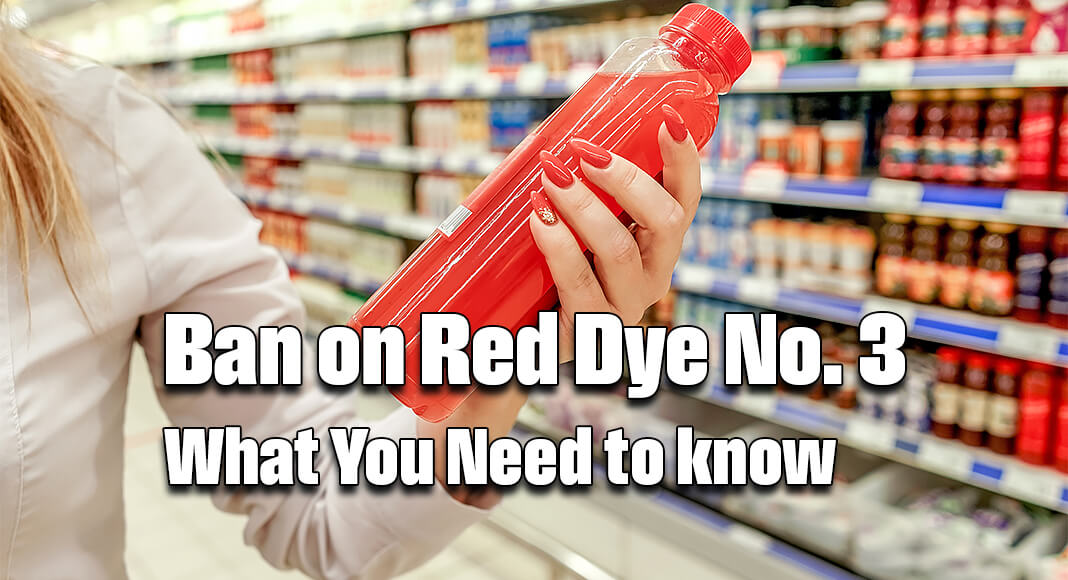

What You Need to Know About Ban on Red Dye No. 3

Translate to Spanish or other 102 languages!

“Red dye no. 3 is something that the food manufacturers have used. It's a petroleum-based chemical, which now, because it's being banned, has actually had a positive correlation to cause cancer in rats,” explained Beth Czerwony, RD, registered dietitian with Cleveland Clinic. Image for illustration purposes
“Red dye no. 3 is something that the food manufacturers have used. It’s a petroleum-based chemical, which now, because it’s being banned, has actually had a positive correlation to cause cancer in rats,” explained Beth Czerwony, RD, registered dietitian with Cleveland Clinic. Image for illustration purposes
- Advertisement -

CLEVELAND CLINIC – The FDA recently announced a ban on red dye no. 3, which has been used for years in all kinds of food, like candy, cookies, and cereal.

It’s even added to some medications.

But, why did the agency decide now that it’s no longer safe?

- Advertisement -

“Red dye no. 3 is something that the food manufacturers have used. It’s a petroleum-based chemical, which now, because it’s being banned, has actually had a positive correlation to cause cancer in rats,” explained Beth Czerwony, RD, registered dietitian with Cleveland Clinic. “So, there are no human studies that have shown this, but there is strong evidence that it does have cancer causing properties based on the petroleum that it’s made out of.”

Czerwony said red dye no. 3 has no nutritional value.

It’s really just used to help make the color of a certain food look more vibrant and appetizing for the consumer.

It doesn’t affect the flavor or texture in any way.

- Advertisement -

She also notes that other countries have already banned red dye no 3. from being added to foods, so the FDA’s decision wasn’t surprising.

Here in the US, food manufacturers have until 2027 to reformulate their products, so shoppers need to be cautious in the meantime.

Czerwony suggests skipping any foods with the dye in it and opting for whole foods instead, which will be healthier anyway.

“A lot of foods that are going to have this red dye are already processed. They’re going to be in cereals, snacks and sugar-laden beverages and those types of things. So, ultimately, those are things that we would want you to avoid or limit in your diets anyway,” she said.

Czerwony said it’s hard to tell how this ruling will be enforced down the road or if manufacturers may try to find another dye to use instead.

That’s why consumers need to be mindful when they’re looking at ingredients.

- Advertisement -
- Advertisement -

- Advertisement -

More Articles

FDA Launches Expedited IND Pilot to Speed Up Clinical Trials

The U.S. Food and Drug Administration today announced the final design of the Expedited Investigational New Drug (IND) Pilot. Accelerating clinical trial timelines and eliminating regulatory hurdles to maintain American leadership in global medical innovation is a core priority for the Trump Administration.

Navigating Cardiovascular Health in Hispanic Communities

Cardiovascular disease is the leading cause of death for Hispanic and Latino people in the United States. But the challenges they face are hardly the whole story, say experts who helped write a new report on the heart health of these communities.

Easy Ways to Turn Picky Eaters Into Happy Eaters

September is National Fruits and Veggies Month. If you have a little one who isn’t a big fan of either, you’re in good company. It’s common for kids to be picky eaters.

New AI Tool Accurately Predicts Lung Cancer Immunotherapy Results

Artificial intelligence (AI) tools can help physicians predict treatment and survival outcomes in patients with advanced non-small cell lung cancer (NSCLC) treated with immunotherapy, according to a new study published in Nature Medicine.
- Advertisement -

