









Mega Doctor News
The American Society of Clinical Oncology (ASCO) and the American Association for Cancer Research (AACR) have issued an updated policy, regarding the use of electronic nicotine delivery systems (ENDS). Roy S. Herbst, MD, PhD, is corresponding author on the statement published today in both Clinical Cancer Research and the Journal of Clinical Oncology.
The statement, which is an update from the version previously issued in 2015, was developed by members from the Tobacco Products and Cancer Subcommittee of the AACR Science Policy and Government Affairs Committee and the ASCO Tobacco Cessation and Control Subcommittee of the Health Equity and Outcomes Committee. Dr. Herbst is former Chair of the Tobacco Products and Cancer Subcommittee and current Chair of the AACR Scientific Policy and Government Affairs Committee. He is also Deputy Director for Clinical Affairs and Chief of Medical Oncology at Yale Cancer Center and Smilow Cancer Hospital, Ensign Professor of Medicine (Medical Oncology) and Professor of Pharmacology, and Assistant Dean for Translational Research at Yale School of Medicine.

“Current evidence is lacking to support electronic nicotine delivery systems, specifically e-cigarettes, as tobacco cessation aids,” said Dr. Herbst. “However, their use has grown by alarming rates and threatens to hinder progress against tobacco use. Another major concern is use by youth and adults who never previously used tobacco.”
The new statement aims to detail advances in the scientific understanding of the electronic nicotine delivery system epidemic, strengthen recommendations to protect public health, promote evidence-based tobacco cessation across all groups, and highlight areas where more research is needed.
The first electronic nicotine delivery systems were introduced in the U.S. in 2006 to deliver nicotine to users without burning tobacco. Some products can result in rapid delivery of a similar amount of nicotine as modern American cigarettes, which contribute to high addiction potentials.
“This is a call for urgent action by Congress, state legislatures, and regulatory agencies to implement the various legislative, regulatory, and research recommendations outlined in this report, including the use of synthetic nicotine, with the goal of reducing use by youth and adults who never previously used tobacco,” said Suchitra Krishnan-Sarin, PhD, Albert E. Kent Professor of Psychiatry at Yale. Dr. Krishnan-Sarin was recently named Vice Chair of the Tobacco Products and Cancer Subcommittee.
Evidence-based treatments to promote smoking cessation and prevent smoking relapse to reduce cancer incidence and improve public health remain top priorities for both ASCO and AACR. They, along with Yale Cancer Center and Smilow Cancer Hospital, recognize the urgent need for research to understand the relationship between electronic nicotine delivery systems and tobacco-related disparities.
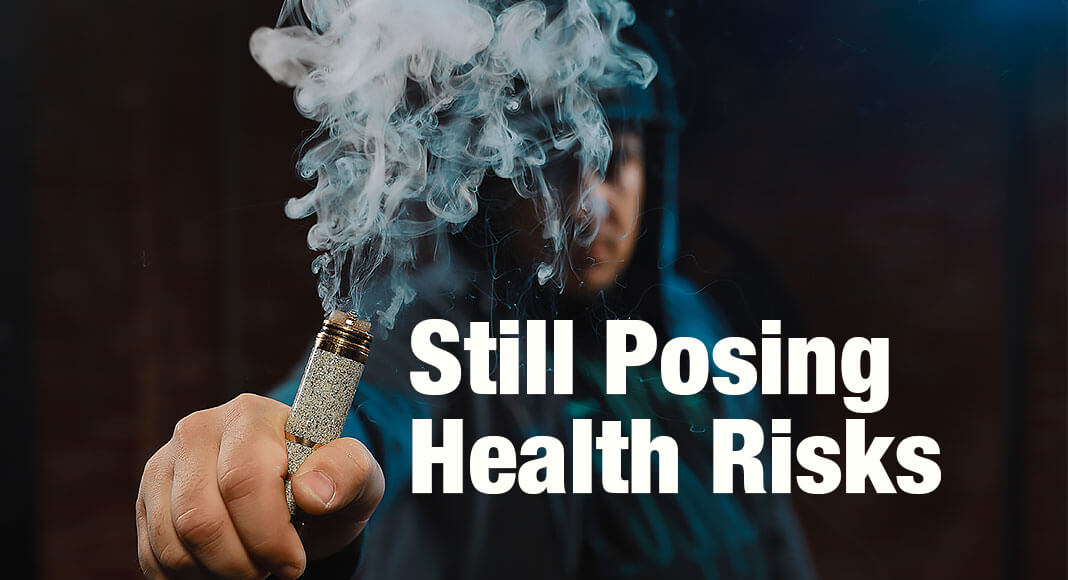
“While electronic nicotine delivery systems emit fewer carcinogens than combustible tobacco, primarily due to the absence of combustion products, it is clear that they still pose health risks,” said Dr. Herbst. “The use of these products exposes the user to carcinogens and therefore likely increases long-term cancer risk, and e-cigarettes have addicted a new generation of youth and young adults to nicotine and threaten to hinder progress against tobacco-related illnesses.”

