








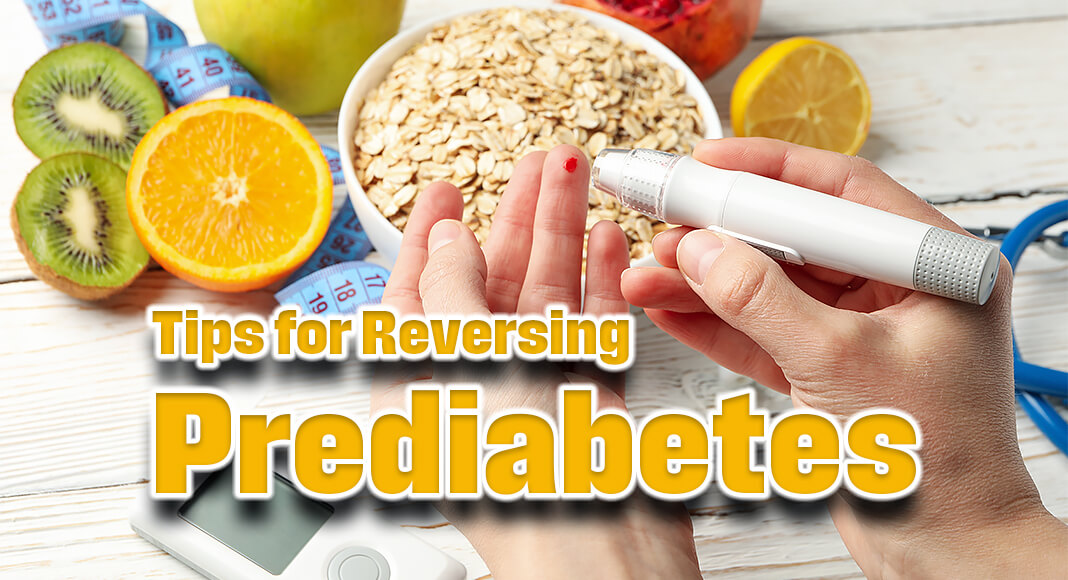
Tips for Reversing Prediabetes

Translate to Spanish or other 102 languages!

According to the CDC, more than 38 million Americans have diabetes, with 90 to 95-percent of those having type 2 diabetes. Image for illustration purposes
- Advertisement -

According to the CDC, more than 38 million Americans have diabetes, with 90 to 95-percent of those having type 2 diabetes.

And on top of that, another 98 million Americans have prediabetes.

“We are seeing this not only in the western world, but we’re also seeing it in the rest of the world as well,” said Peminda Cabandugama, MD, endocrinologist for Cleveland Clinic. “It’s something that’s an eye-opener. And when you tie it into the obesity pandemic that we have going on, I think there’s a lot of work to be done in this space.”

- Advertisement -

Prediabetes is when your blood sugar levels are elevated but are not high enough to be type 2 diabetes.

If left untreated, type 2 diabetes can cause serious health issues, like heart disease, kidney disease, stroke, vision loss, and nerve damage.

Type 2 diabetes cannot be cured.

However, a person can reverse prediabetes.

- Advertisement -

So, how do you go about doing that?

Dr. Cabandugama said by eating healthy and regularly exercising.

But, those aren’t the only factors that play a role.

He said sleep and stress matter too.

“The world has changed from what we had maybe a few years ago. Stress levels are higher. Our sleep is not as good. Our diet is not as good. We tend to be more sedentary. Especially with COVID, I think we were a lot more sedentary,” he said. “And now I think people are starting to kind of realize that. So, all these concepts together have brought out all these chronic diseases and prediabetes is one of them, just like obesity, high blood pressure and high cholesterol is part of it.”

Prediabetes is diagnosed using a blood test.

Symptoms aren’t always obvious, which is why annual check-ups are important.

- Advertisement -
- Advertisement -

- Advertisement -

More Articles

New Noninvasive Tech Tracks Infant Vital Signs Without Wires

In the neonatal intensive care unit, the most fragile patients in medicine are often the most heavily wired. Premature babies, some weighing less than a pound, can be tethered to a tangle of cables, monitors, and sensors. Each blood draw to check sugar levels or electrolytes means another needle, another bandage, another moment of stress for an infant whose skin is still forming.

The Truth About Hot Dogs and Your Health

July is National Hot Dog Month. Reports show Americans eat roughly 20 billion hot dogs every year. While they’re okay to have on occasion, they shouldn’t be a regular part of your diet.

Study Links Type 2 Diabetes to Higher Risk of Hearing Loss

Diabetes is well known to increase the risk of complications throughout the body, potentially affecting the eyes, kidneys, and nerves. 

Researchers Unlock New Way to Help Fight Skin Cancer

Researchers at the UNC School of Medicine and UNC Lineberger Comprehensive Cancer Center have identified a potential solution. In a new study published in the Journal of Clinical Investigation, researchers have found that by inhibiting a problematic protein, the immune system can better fight off melanoma, decreasing tumor growth and bolstering the body’s immune cells.
- Advertisement -

