







Mega Doctor News

By Roberto Hugo González / Mega Doctor News
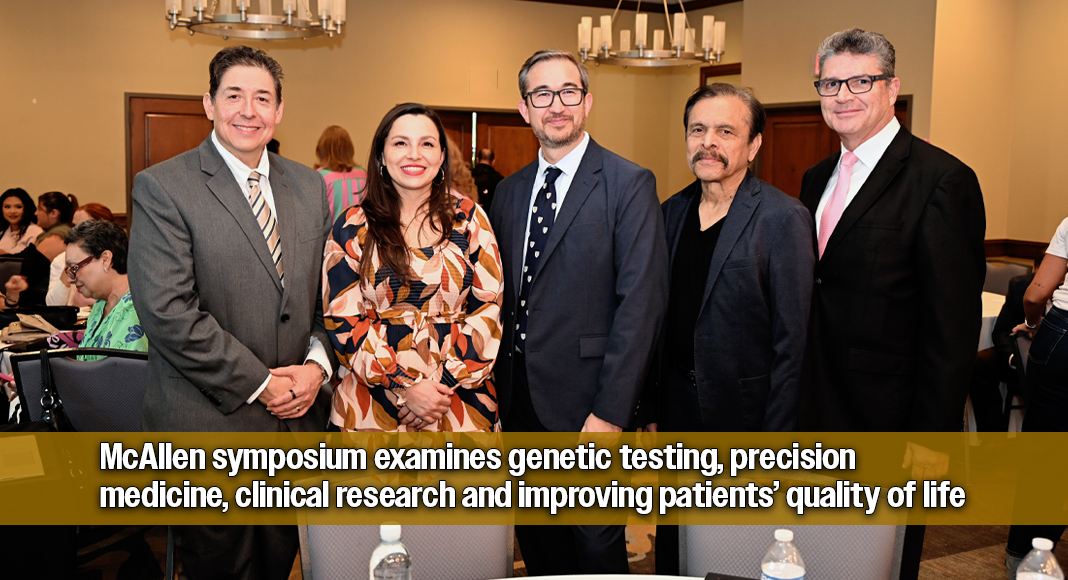
McALLEN, Texas — Physicians, researchers and healthcare professionals gathered October 16, 2026, for a breast cancer symposium examining advances in early detection, genetic testing, treatment and survivorship, with speakers emphasizing the importance of individualized care and continued clinical research.
The event, titled “Breast Cancer 2026: Early Detection, Modern Care, and Survivorship Through Community Partnership,” brought together specialists from Texas Oncology McAllen and Caris Life Sciences.

Texas Oncology physicians Dr. Guillermo Lazo, Dr. Jasmine Gowarty, and Dr. Alvaro Restrepo participated alongside breast surgeon Dr. Lisa Chapa and researchers specializing in molecular testing.
Arlene Alegria, a physician assistant at Texas Oncology McAllen West, discussed how to identify patients at increased risk of hereditary cancer.
Alegria explained that genetic risk assessments consider personal and family cancer histories, ages at diagnosis, and inherited mutations. Testing can help physicians identify appropriate screening and prevention strategies for patients and relatives.
“Genetic testing is not just a diagnostic test; it’s a prevention and treatment tool,” Alegria said.
She also explained the difference between inherited genetic mutations and changes that develop within tumors, noting that each requires a different approach to testing and interpretation.
Dr. Jared Gilliam of Caris Life Sciences discussed precision medicine, which uses molecular information to help physicians select treatments according to the characteristics of individual tumors.
Gilliam described advances in analyzing DNA, RNA, and proteins, along with emerging applications of artificial intelligence in cancer research.
Dr. Joseph Murray, senior medical director at Caris Life Sciences, reviewed clinical trials involving hormone receptor-positive, HER2-positive and triple-negative breast cancers.
Murray discussed research examining whether blood tests can detect treatment resistance before changes become visible on imaging studies. He also addressed the importance of evaluating treatment benefits alongside side effects and patients’ quality of life.
Restrepo, a medical oncologist and hematologist at Texas Oncology McAllen, focused on survivorship, including exercise, nutrition, bone health, treatment adherence, and emotional support.
He said breast cancer survival has improved substantially over several decades because of advances in screening, surgery, medication, and research.
Restrepo also encouraged survivors to maintain regular medical appointments and discuss treatment-related symptoms with their healthcare teams.
During a panel discussion, Restrepo asked Lazo whether a blood test could determine with certainty whether a patient was cancer-free.
“Unfortunately, we’re not smart enough yet to have a test that tells us exactly whether someone has cancer,” Lazo said.
Lazo explained that tumor markers, including CA 27.29 and CA 15-3, can help physicians evaluate patients previously treated for breast cancer, although the tests can produce false-positive and false-negative results.
He said circulating tumor DNA testing offers additional information but that treatment decisions based solely on certain molecular findings still require further clinical research.
Lazo also distinguished between curing metastatic breast cancer and treating it.
He explained that although metastatic breast cancer generally cannot be cured, available treatments can help patients live longer.
The symposium concluded with a discussion of ongoing research and the role of patients in clinical trials in improving future cancer care.
See related stories: