



Mega Doctor News
By Roberto Hugo González / Mega Doctor News
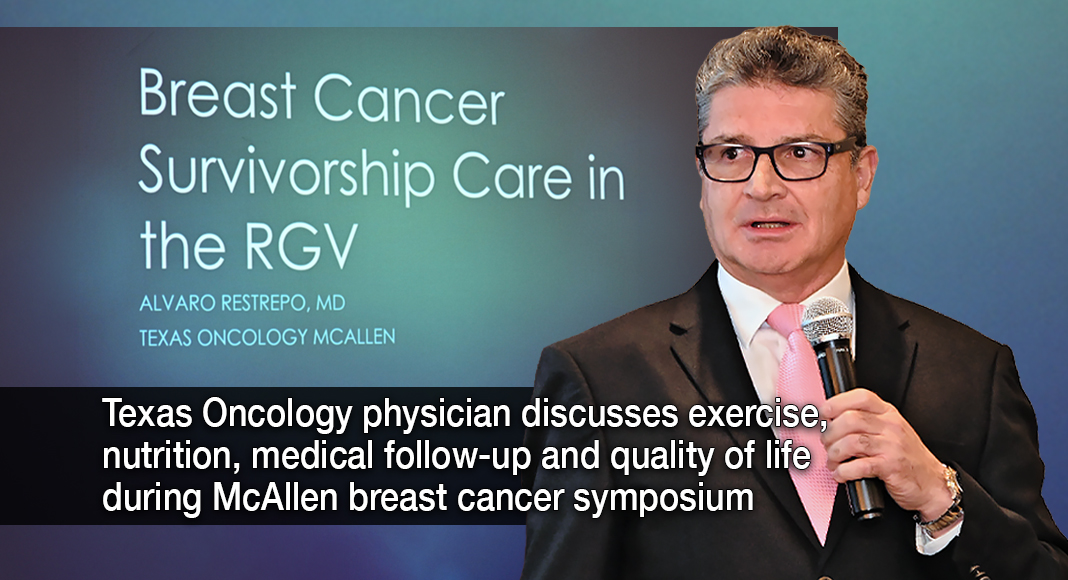
McALLEN, Texas — Breast cancer survivorship involves more than completing treatment, according to Dr. Alvaro Restrepo, a medical oncologist and hematologist at Texas Oncology McAllen, who urged patients to focus on physical health, emotional well-being, and long-term medical care.
Restrepo delivered his presentation, “Breast Cancer Survivorship Care in the RGV,” on October 16, 2026, during the symposium “Breast Cancer 2026: Early Detection, Modern Care, and Survivorship Through Community Partnership.”

“The goal is survivorship,” Restrepo told attendees, explaining that advances in surgery, medication, molecular testing, and clinical research ultimately seek to help patients live longer and maintain their quality of life.
Restrepo said the United States has more than 4.5 million women living after a breast cancer diagnosis. He attributed improvements in survival to earlier detection, better treatments, research and public awareness.
He discussed challenges survivors may experience, including fatigue, premature menopause, sexual health concerns, fertility decisions and the possibility of cancer returning.
Restrepo emphasized that follow-up care should reflect each patient’s diagnosis, treatment and individual circumstances.
He said annual mammograms remain important for eligible survivors, while additional imaging, including CT scans, PET scans and MRI examinations, is generally reserved for specific medical concerns rather than routine surveillance.
Another concern is whether patients complete prescribed hormonal therapy.
Restrepo said some patients discontinue treatment because of side effects, medication costs or difficulties maintaining a daily schedule. He encouraged patients to discuss these problems with their physicians rather than stopping medication without medical guidance.
Exercise received particular attention during his presentation.
Restrepo described physical activity as an important part of survivorship care, citing research associating regular exercise with improvements in fatigue, physical fitness, emotional health and survival.
He encouraged aerobic activity and resistance training, emphasizing that patients should remain physically active according to their abilities.
Weight management was another priority. Restrepo recommended balanced nutrition, appropriate calorie intake and regular activity to help patients maintain a healthy weight.
He also advised avoiding tobacco and limiting alcohol consumption.
Restrepo discussed bone health, explaining that some cancer treatments can contribute to bone loss and increase fracture risk.
He said physicians may recommend bone-density testing and appropriate treatment when patients develop osteoporosis or osteopenia.
He cautioned against unnecessary vitamin supplements, explaining that evidence does not establish that such products prevent breast cancer recurrence and that some may interfere with treatment.
Patients should consult their healthcare providers before taking supplements, he said.
Emotional health also requires attention. Restrepo described a breast cancer diagnosis as a crisis that can affect patients, relatives and coworkers.
He encouraged survivors to seek support from family, friends, healthcare professionals and community organizations.
Restrepo concluded by emphasizing the importance of clinical research. He said Texas Oncology had seven breast cancer trials and 32 studies open at the time of his presentation.
He reminded attendees that progress in cancer care depends on patients who participate in research.
“Survivorship is not only about adding years to your life,” Restrepo said, “but about adding love, purpose and meaning to every year.”
See relates Stories: