








Mega Doctor News

By Roberto Hugo González / Mega Doctor News
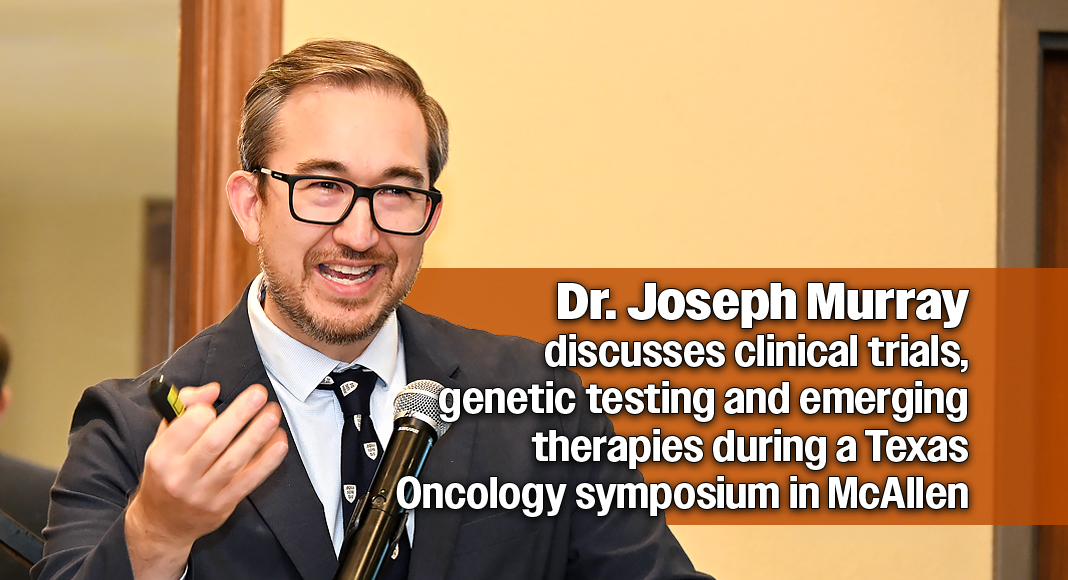
McALLEN, Texas — Advances in genetic testing and clinical research are giving physicians new ways to select breast cancer treatments based on individual patients’ needs, according to Dr. Joseph Murray, senior medical director at Caris Life Sciences.
Murray presented “What’s New in Breast Cancer Treatment in 2026” on October 16 during the symposium “Breast Cancer 2026: Early Detection, Modern Care, and Survivorship Through Community Partnership.”


Murray, a thoracic medical oncologist at Johns Hopkins, reviewed research on hormone receptor-positive, HER2-positive, and triple-negative breast cancers.
He emphasized that treatment decisions increasingly depend on identifying molecular characteristics that can help physicians determine which medications may benefit particular patients.
“Do the right therapy for the right patient at the right time,” Murray said, describing the principle guiding precision oncology.
He discussed the SERENA-6 clinical trial, which examined whether blood testing could identify treatment resistance before cancer progression became visible on medical scans.
The study involved patients with hormone receptor-positive breast cancer receiving hormonal treatment and medications known as CDK4/6 inhibitors.
Researchers monitored circulating tumor DNA for ESR1 mutations, which can indicate resistance to certain hormonal therapies.
According to Murray, patients whose treatment was changed after a mutation appeared in their blood experienced improved progression-free survival compared with those who continued their existing treatment.
The study also examined patients’ reported quality of life and treatment-related side effects.
Murray cautioned that overall survival data remained incomplete, making continued follow-up necessary.
He also reviewed DESTINY-Breast09, a clinical trial evaluating trastuzumab deruxtecan, an antibody-drug conjugate, in combination with pertuzumab for HER2-positive metastatic breast cancer.
Antibody-drug conjugates combine cancer-targeting antibodies with chemotherapy drugs, directing treatment toward cells carrying specific molecular targets.
Murray said the newer combination improved progression-free survival compared with a treatment regimen used for more than a decade.
However, he stressed that improved effectiveness must be weighed against potential complications.
He identified drug-related pneumonitis, an inflammatory lung condition, as a serious risk requiring careful monitoring.
Nausea was another concern, affecting approximately 70% of patients receiving the newer combination in the trial he discussed.
Murray also examined treatment options for triple-negative breast cancer, a disease that lacks three commonly targeted receptors.
He explained that physicians increasingly use biomarkers, including PD-L1 and inherited BRCA1 or BRCA2 mutations, to identify patients who may benefit from immunotherapy, targeted medications or antibody-drug conjugates.
Despite these developments, Murray said additional research is needed to understand which patients benefit most from emerging treatments.
He credited patients participating in clinical trials for making advances possible.
“We can’t learn and develop evidence without patients and their entire support system,” Murray said.
He noted that clinical research requires substantial commitments from patients, families and caregivers.
Murray concluded that molecular testing, careful evaluation of treatment risks, and continued clinical trials remain essential to improving breast cancer care.
See related stories: