
Mega Doctor News
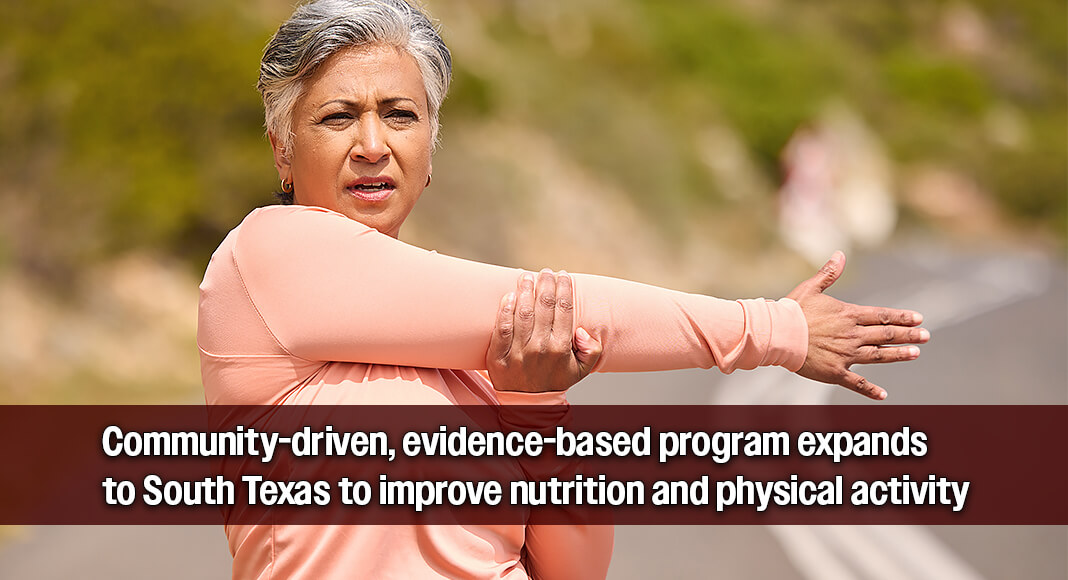
A Texas A&M AgriLife researcher was awarded $2.1 million from the National Heart, Lung and Blood Institute to help rural Texas women take charge of their heart health through evidence-based nutrition, physical activity and community engagement strategies.
The project, “Deep in the Heart,” will bring a proven community-based program, originally implemented in rural New York and Montana, to South Texas communities beginning this fall.
A collaboration between top Texas A&M researchers


The study is led by Rebecca Seguin-Fowler, Ph.D., associate director of the Texas A&M AgriLife Institute for Advancing Health Through Agriculture, IHA, and professor in the Department of Nutrition, in collaboration with Starr Flores, director, and Juanita Garcia, health education coordinator, both with the Texas A&M Coastal Bend Health Education Center, CBHEC.
“Cardiovascular disease remains the leading cause of death among women in Texas, and rural women are disproportionately affected,” Seguin-Fowler said. “This grant makes it possible for us to work hand-in-hand with local communities to improve heart health statewide and beyond.”
Flores added, “Through the Deep in the Heart project, CBHEC is expanding our regional footprint by translating academic health initiatives into accessible, life-changing heart health education that directly benefits residents across the Coastal Bend.”
Co-investigators within IHA include Elena Andreyeva, Ph.D., assistant professor in the Texas A&M University School of Public Health; Alexandra MacMillan Uribe, Ph.D., assistant professor; Chad Rethorst, Ph.D., associate professor; Jacob Szeszulski, Ph.D., assistant professor, all in the Department of Nutrition.
Empowering the community with proven scientific interventions
The Deep in the Heart study was conceptualized by Seguin-Fowler and originally tested in New York and Montana. Also funded by the National Heart, Lung and Blood Institute, the original 24-week program included randomized controlled trials conducted in 27 rural towns. Participants achieved clinically meaningful, statistically significant improvements in body mass index and blood pressure.
While the original 24-week program demonstrated strong results, participant and leader feedback suggested a shorter-duration program may improve adoption. Seguin-Fowler and her team adapted the design, tailoring it specifically for testing among residents in Jim Wells County, Texas.
Participants will take part in two weekly, 60-minute sessions that include experiential physical activities like aerobic exercise and strength training. The curriculum also includes nutrition education and content focused on social and environmental factors that influence health.
To support long-term behavior change, participants will access a program-specific website, a mobile app and community clinical resource guide.
The study team also has plans to convene a local community clinical advisory board to support the work.
Rural health at the heart
Texas A&M AgriLife is committed to advancing healthy living through science-based, community-driven solutions. The Deep in the Heart project’s collaborative framework reflects that mission by applying a collaborative, evidence-based framework designed to strengthen health resiliency in rural regions. Early outcomes are expected in 2026.
Several phases are planned, with upwards of 200 participants anticipated. Jim Wells County residents who are interested in more information may email Katrina Beavers, executive assistant, at katrina.beavers@ag.tamu.edu.
Information source: Texas A&M AgriLife