








FDA Seeks Public Input on New In‑Home Opioid Disposal Standards

Translate to Spanish or other 102 languages!

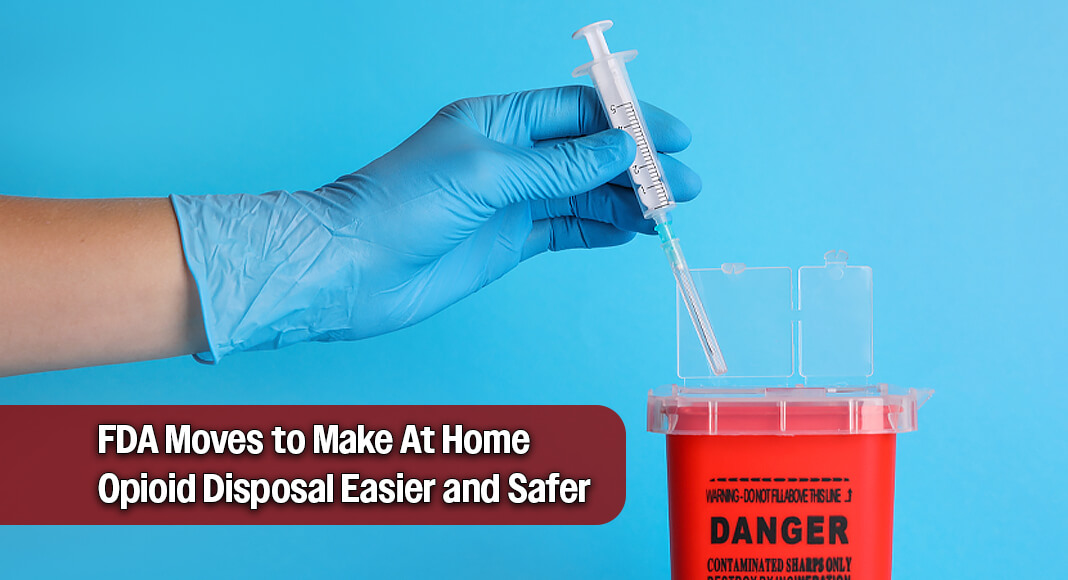
The U.S. Food and Drug Administration today issued a Request for Information (RFI)seeking public comment on potential new standards for in-home opioid disposal products. This effort is part of the agency’s broader work to combat the opioid crisis. Image for illustration purposes
- Advertisement -

The U.S. Food and Drug Administration today issued a Request for Information (RFI) seeking public comment on potential new standards for in-home opioid disposal products. This effort is part of the agency’s broader work to combat the opioid crisis.

Companies selling opioid analgesics are currently required to make available prepaid mail-back envelopes to outpatient pharmacies and other dispensers. Now, the agency is considering whether to require that opioid sponsors, through dispensers, make available in-home disposal systems.

“Having unused opioids laying around at home can be a significant risk to those struggling with opioids and can be a gateway for opioid-naïve family members,” said FDA Commissioner Marty Makary, M.D., M.P.H. “We need to develop creative ways to address opioid misuse and abuse.”

- Advertisement -

At present, FDA recommends dropping off unused opioids at a drug take-back location or mailing them back using a pre-paid envelope provided by a pharmacy. Alternatively, the FDA recommends flushing unused opioids down the toilet (something the agency only recommends for certain high-risk medications). A 2017 study in the Science of Total Environment concluded that flushing unused opioids presents a “negligible eco-toxicological risk.”

Today’s RFI seeks input from industry, health care providers, and advocates on appropriate criteria for in-home disposal kits. This aligns with the SUPPORT for Patients and Communities Reauthorization Act of 2025, which mandates the FDA to issue guidance to facilitate in-home safe disposal, as well as President Trump’s Great American Recovery initiative.  

Responses to the RFI are due by 11:59 p.m. Eastern Time on April 6, 2026. All interested parties are invited to submit comments to the docket.

Information source: FDA

- Advertisement -
- Advertisement -

- Advertisement -

More Articles

DHR Health Transplant Institute Earns Top State and National Rankings

The DHR Health Transplant Institute announced today that it has been recognized among the state’s and nation’s top performing kidney transplant centers, earning the no. 2 ranking in the State and no. 16 ranking in the Nation, according to the Scientific Registry of Transplant Recipients (SRTR).  

New Noninvasive Tech Tracks Infant Vital Signs Without Wires

In the neonatal intensive care unit, the most fragile patients in medicine are often the most heavily wired. Premature babies, some weighing less than a pound, can be tethered to a tangle of cables, monitors, and sensors. Each blood draw to check sugar levels or electrolytes means another needle, another bandage, another moment of stress for an infant whose skin is still forming.

STHS McAllen Receives National Award for Advancing Cardiac Arrest Care & Improving Patient Survival

In the moments following cardiac arrest, every second counts. Rapid intervention, seamless teamwork and evidence-based care can make the difference between life and death.

The Truth About Hot Dogs and Your Health

July is National Hot Dog Month. Reports show Americans eat roughly 20 billion hot dogs every year. While they’re okay to have on occasion, they shouldn’t be a regular part of your diet.
- Advertisement -

