







Mega Doctor News

MCALLEN, TX – Rio Grande Regional Hospital (RGRH) is pleased to announce the launch of a new Ceribell Rapid Response Electroencephalogram (EEG) program to ensure optimal care is provided for critically ill patients. Currently, Rio Grande Regional Hospital is the FIRST and ONLY hospital in the Rio Grande Valley to use such innovative technology to reduce seizures and loss of brain activity.
The Rapid EEG is the first of its kind and provides a brain vital sign for patients at risk of harmful brain patterns that have no outward clinical signs and can only be diagnosed using electroencephalography (EEG). Using the new system, clinicians will now have immediate access to EEG information for triaging at risk patients in just 5-minutes and for on-going automatic monitoring and immediate feedback on treatment effectiveness.
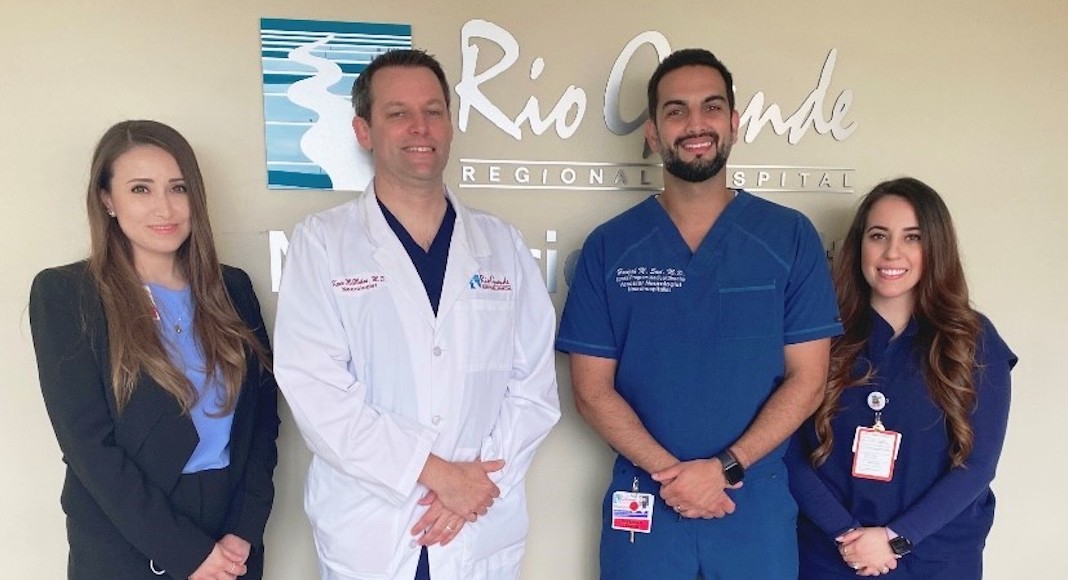
“This new response program is vital in the intensive care unit and in the hospital,” said Dr. H. Saei, Fellowship Trained Vascular Neurologist. “The ease of use, reliability and timely response makes for an excellent tool to assure a high-quality standard of care for our patients.”

The Rapid Response EEG system was developed to address limitations in EEG acquisition and interpretation so patients at risk of seizure can be triaged more quickly. The device consists of a simple headband, pocket-sized recorder with intuitive software, and an on-line portal for remote viewing. The EEG software provides 24/7 EEG monitoring and instantaneous alert for brain patterns which allows the physician to asses response to treatment and optimize care, all in real-time.
“The Rapid EEG device is an essential tool to speed up the identification and treatment in acutely ill patients with seizures,” said Dr. K. McMahon, Fellowship Trained Epileptologist. “This technology provides the opportunity to identify seizures in as little as 5 minutes in patients whose seizure status is unclear, instead of within hours such as with a conventional EEG. This time difference is critical, as research indicates that patients are able to fully recover when indicated treatment is administered in a timely manner.”
RGRH’s dedicated Neuroscience Hospitalist team, medical and clinical staff have surpassed national benchmarks for the care of stroke patients. The availability of highly trained specialists and implementing the latest in medical technology is RGRH’s continuous commitment to raise the bar in in the treatment of neurological care.


