







Mega Doctor News

HARLINGEN, Texas – Texas State Technical College offers a broad range of programs of study that military veterans can choose from to gain the technical skills they need for a high-paying job.
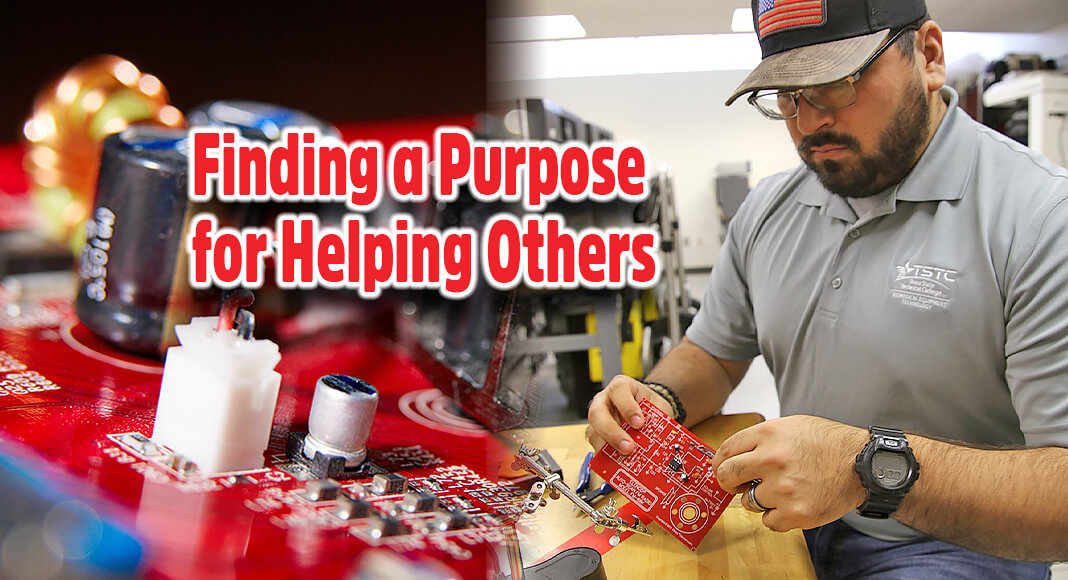
Javier Escobar Jr., a U.S. Army veteran and Texas Army National Guard specialist, learned about TSTC’s Biomedical Equipment Technology program from a program graduate who has experienced a successful career.
“I met some of the Biomedical instructors at a college fair, and they talked about the program,” he said. “An instructor gave me a tour of the program as well. I had an interest in the mechanical aspect of the medical field.”

Escobar’s fascination for working with objects and mechanical devices started at an early age.
“I used to take household items apart when I was a child to see how they functioned,” he said. “That stayed with me and I’ll be able to do that for my career.”
Escobar, who is studying for an Associate of Applied Science degree, said his experience in the program has been rewarding. He was drawn to the field because of the troubleshooting aspect of the industry, as well as the preventive maintenance of medical devices.
“My instructor (Oziel) Capetillo has been able to explain engineering math so I understand it,” he said. “My favorite course is Shop Skills for Biomedical Equipment Technicians because I get to work on the equipment firsthand. I also had an opportunity to talk to representatives from Texas Instruments. They talked about their company and the job opportunities they have available.”
In his first semester, Escobar is getting acclimated to the demands of the program.
“I’ve had difficulty studying because I haven’t been in school for 10 years,” he said. “Thankfully I have received help on better studying habits from good resources at the college. That will help me graduate from TSTC and get a job as a biomedical technician.”
Capetillo said Escobar is a determined student who will not give up.
“Javier constantly asks questions about the courses in the upcoming semesters,” he said. “His purpose is to know how that will shape him into a skilled biomedical technician.”
TSTC offers an Associate of Applied Science degree in Biomedical Equipment Technology at its Harlingen and Waco campuses, as well as an Associate of Applied Science degree in Medical Imaging Systems Technology Specialization at the Waco campus.
According to onetonline.org, the average annual salary for medical equipment repairers is $49,880 in Texas, where the number of jobs in that field was forecast to increase 18% between 2020 and 2030.
Registration for TSTC’s spring semester is currently underway. For more information, visit tstc.edu.


