








Mega Doctor News
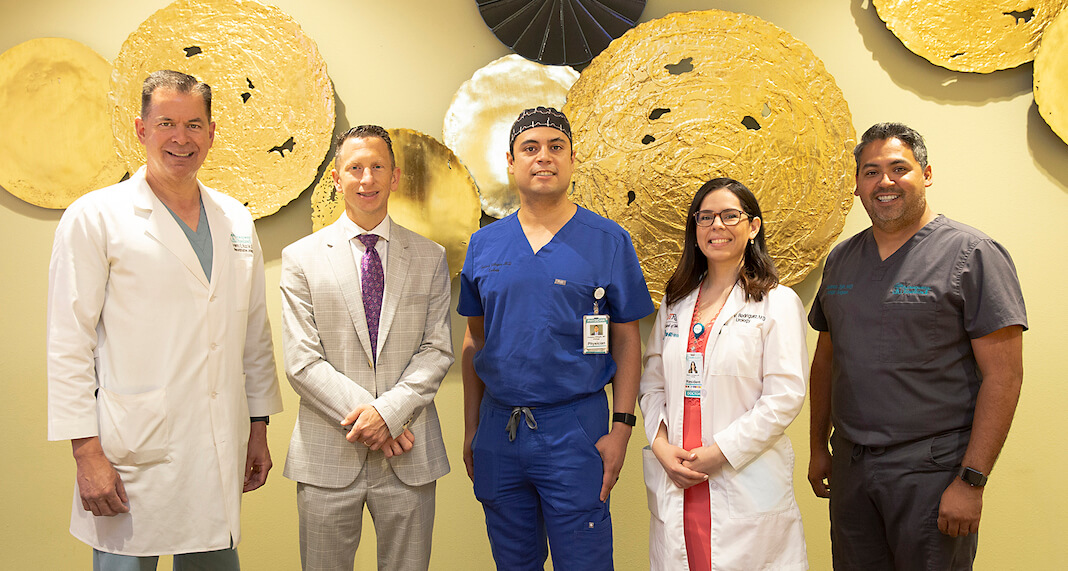
Edinburg, TX – Dr. Robert Svatek, the Chair of Urology at UT Science Center at San Antonio (UTHSCSA) and one of the top five highest volume bladder cancer surgeons in the United States, visited DHR Health and DHR Health Institute for Research and Development to discuss collaborative efforts that will continue to enhance the ongoing partnership of advancing clinical care and research benefiting Rio Grande Valley residents.
“Dr. Robert Svatek is a nationally recognized urologic surgeon-scientist with clinical expertise in early and late phase clinical trials and urologic cancers” said Dr. Henry Ruiz, Medical Director at DHR Health Urology Institute. “Many areas of common clinical and research interests were discussed and we look forward to continuing to work with Dr. Svatek and his team at UTHSCSA to provide the highest level of care to members of our community”.
DHR Health has endowed a Distinguished Chair in Urology at UTHSCSA. The primary objective of this endowment is to create a closer and more productive partnership between the institutions, which would benefit the Rio Grande Valley community. American Cancer Society has projected that over 248,000 patients will be diagnosed with prostate cancer in 2021 and more than 34,000 will have a fatal outcome. In addition, according to the Prostate Cancer Foundation, prostate cancer is the most commonly diagnosed cancer among Hispanic/Latino men in the United States.

“Bladder cancer is also a serious clinical challenge in the Rio Grande Valley” said Dr. Sohail Rao, president and chief executive officer at DHR Health Institute for Research and Development. “American Cancer Society has predicted that more than 83,700 patients will be diagnosed with bladder cancer in 2021 with a very high incidence (>20%) of fatal outcome. Given Dr. Svatek’s interest in developing innovative strategies to treat bladder cancer, our goal is to work closely with his team at UTHSCSA to partner in these innovative clinical studies”.
For more information on research studies and collaborations, please contact Dr. Sohail Rao, president and chief executive officer at DHR Health Institute for Research and Development at (956) 362-2387 or visit www.dhrresearch.org.


