








By Jennifer L. Berghom
Mega Doctor News
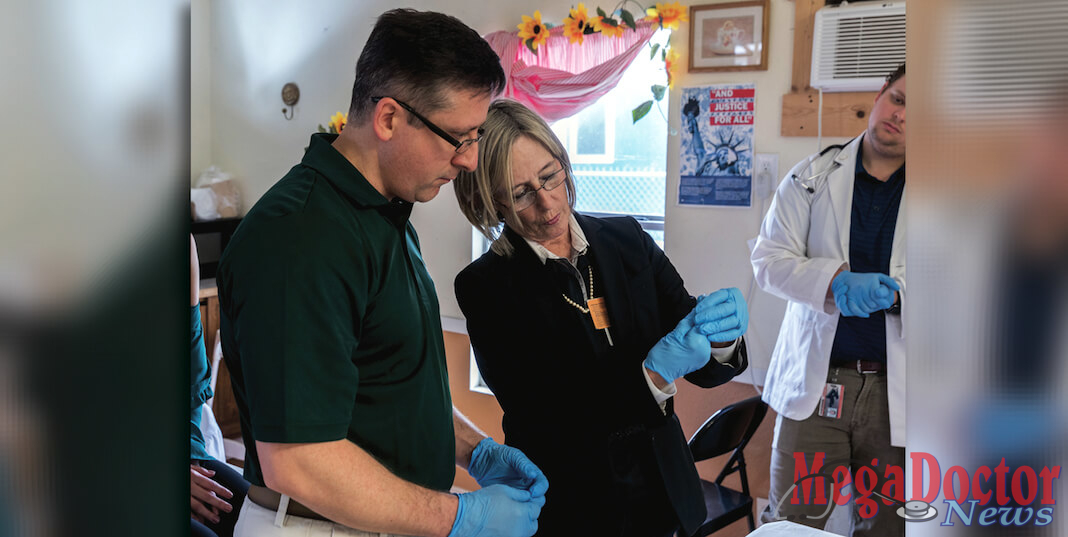
Mercedes, Texas –Administering a vaccine for the first time might intimidate some aspiring doctors – especially if the patient is their instructor – but first-year medical student Patrick Ojeaga wasn’t ruffled.
“It was fun,” said Ojeaga, who administered his very first flu shot to Dr. Eron Manusov, assistant dean of Clinical Education and professor and chair of the UTRGV School of Medicine’s Department of Family and Community Medicine. “Dr. Manusov was really calm, which made me calm.”

Ojeaga was one of more than a dozen first and second year medical students who traveled to Indian Hills, a community near Mercedes, to assist clinical staff and medical residents from Knapp Family Medicine in treating patients.
The students, all under the supervision of School of Medicine faculty and healthcare professionals, also administered flu shots to patients, something students at other medical schools do not get to do until later in their studies.
The School of Medicine has been offering healthcare to residents of the Indian Hills community for the past two years in its efforts to close gaps in healthcare access to people living in underserved areas. This is the second year the School of Medicine has brought medical students to receive training on administering vaccines to patients.
Ojeaga, who was born and raised in McAllen and completed his undergraduate studies at The University of Texas at Austin, said he chose to study medicine at UTRGV to because of its commitment to providing care to underserved areas and the school’s close-knit community.
“The small class size provides a family environment,” he said. He also enjoys having the opportunity to interact with patients much sooner than students at other medical schools.
“I tell a lot of interviewees (students interested in the School of Medicine) when they come in that we get patient exposure right away,” he said. “I know I have a jump on other students at other schools because we get that exposure right away.
“We are going to be really prepared when we hit our third year and start our preceptorships (hands-on training under the guidance of a medical professional),” he said.


