







Mega Doctor News

By Harvey L. Neiman Health Policy Institute
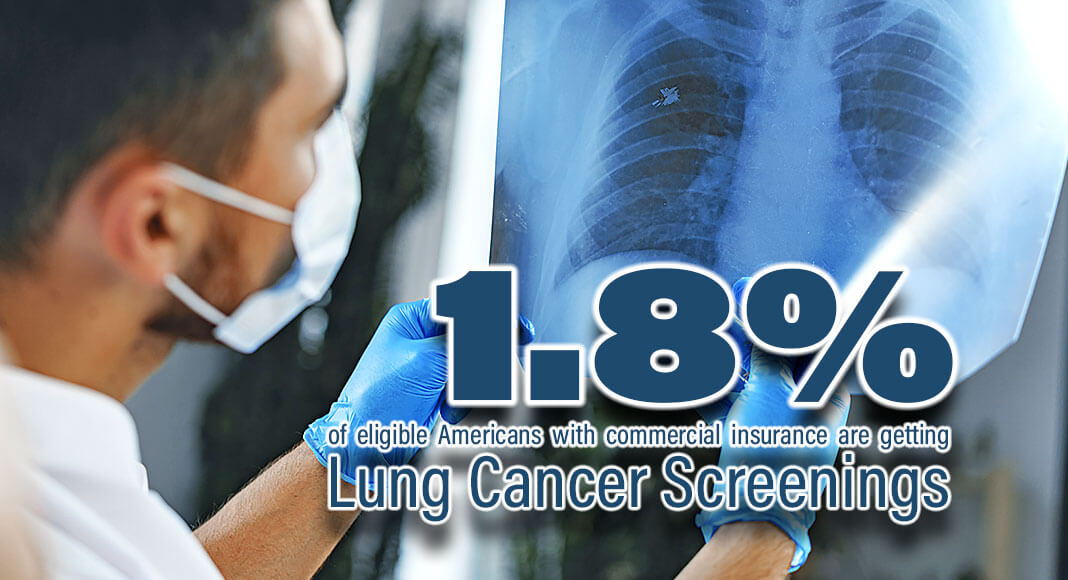
Newswise — A new study from the Harvey L. Neiman Health Policy Institute found that only 1.8% of eligible Americans with commercial insurance received lung cancer screening. Rates were higher but still extremely low for Original Medicare (3.4%) and Medicare Advantage (4.6%). The study, published in the Journal of the American College of Radiology, determined 2017 screening rates for patients who were eligible for lung cancer screening by low-dose computed tomography (LDCT), as determined United States Preventive Services Task Force guidelines.
Lung cancer is the leading cause of cancer mortality in the U.S. and LDCT screening is covered with no out-of-pocket costs for all insured, eligible patients, yet the published study data show that over 95% of these patients do not get screened. “Lung cancer is deadly if not caught early, so it is concerning that at-risk Americans are not getting the screening needed for early detection. Cost has been eliminated as a barrier, so it is important to understand more about who is and isn’t getting the recommended LDCT,” said author Bob Smith, Ph.D., senior vice president of early cancer detection science at the American Cancer Society.

The study found the lowest screening rates among females (1.55%-4.02%), 75-77 year olds (0.63%-2.87%), and those residing in rural areas (1.88%-3.56%) and in the West (1.16%-3.65%). Patient race was only available to the researchers for Original Medicare enrollees, and the analysis of this group demonstrated racial disparities, with screening rates for non-Hispanic Blacks at 2.17% and Other races at 1.68% compared to 3.71% for non-Hispanic Whites. “These results indicate that efforts aimed at historically vulnerable populations could present opportunities for outsized gains to public health.” said Danny R. Hughes, Ph.D., professor at Arizona State University and lead study author. “Together, these data can inform practitioners and policy makers on how to best target efforts to increase lung cancer screening in vulnerable populations.”
According to guidelines for 2017, patients were eligible for lung cancer screening if they were age 55-77 and had a 30-pack-year smoking history. The study estimated screening eligibility using county level adjusted smoking rates. Screening rates were measured directly using claims data from Optum’s 2017 de-identified Clinformatics® Data Mart, which contains large commercial and Medicare Advantage health plans, and the 2017 Centers for Medicare & Medicaid Service’s 5% Research Identifiable Files which contain Original Medicare claims (i.e., Parts A and B). Of the 6.9 Million individuals in the data, 1.1 Million (15.7%) were estimated to be eligible for LDCT screening.
“This study points to a need for further research to examine the reasons for the low, disparate lung cancer screening rates, such as awareness, access and social determinants. We hope this publication will serve as a call to action to explore strategies to increase screening and save lives,” said Elizabeth Y. Rula, Ph.D., Executive Director of the Harvey L. Neiman Health Policy Institute.


