








Mega Doctor News
Exclusive By Roberto Hugo González
Mega Doctor News
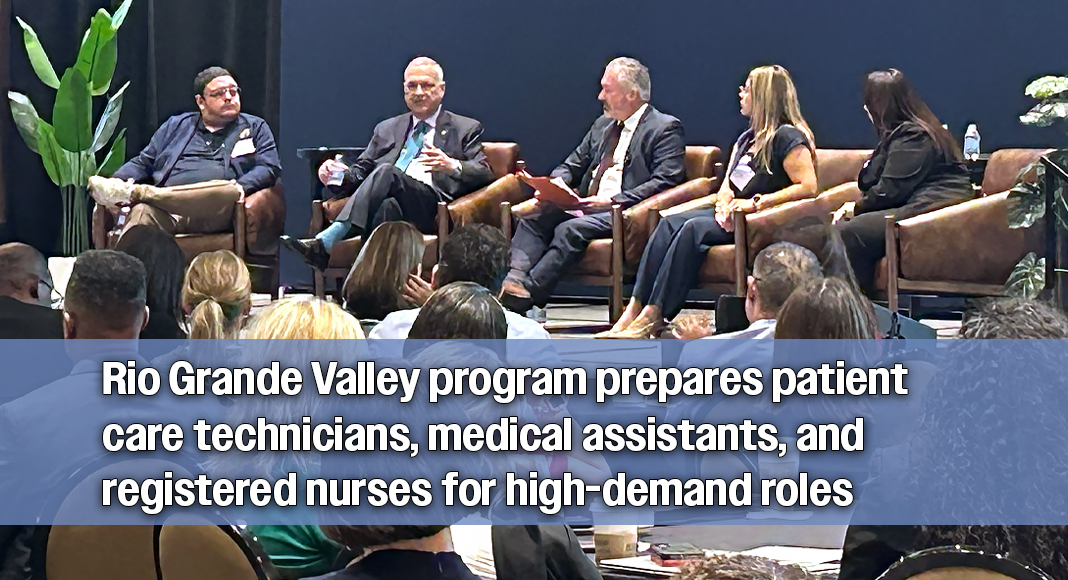
The Texas Workforce Commission hosted its 9th Annual Apprenticeship Texas Conference on September 25, 2025, at the Sheraton Dallas Hotel. Themed “Building Texas Talent – Apprenticeships of Tomorrow,” the conference featured a flagship plenary session titled “Building a Healthier Workforce.” The session examined how Texas is leveraging apprenticeship programs to address healthcare shortages while opening sustainable career pathways for workers.

Central to the discussion was the participation of Dr. Carlos Cardenas, Chairman of the Board at DHR Health in the Rio Grande Valley. He highlighted how collaboration between local colleges and health systems has created earn-and-learn programs for critical healthcare roles. “This college stepped up to build those relationships, and it worked out well,” Cardenas said. “Much of it already existed to a certain extent — we had been collaborating before — and this was simply the next logical step forward.”
The apprenticeship initiative prepares patient care technicians, medical assistants, and registered nurses, as well as other high-demand positions, such as surgical technologists or imaging specialists, as needed. Patient care technicians and medical assistants are entry and mid-level staff who provide essential support to nurses and physicians. Registered nurses, a centerpiece of the program, represent the most critical workforce need in Texas hospitals.
Cardenas emphasized that the program’s viability relies not only on funding but also on measurable outcomes. “This effort has primarily been supported through a grant,” he explained. “We will continue to seek additional grants and similar funding sources to make it possible. Funders naturally want to see results, and as long as we demonstrate that we are good stewards of the resources entrusted to us — producing measurable outcomes and clear returns on investment — then support is justified.”
Alongside Cardenas, the panel featured Carlos Margo of South Texas College, Nori Zapata of DHR Health, nurse apprentice graduate Wendy Schell, and Joel Mario Ramos of Rio Grande Valley College. Together, they reflected the cross-sector partnerships that underpin the program, uniting healthcare providers, colleges, and workforce boards.
Cardenas also emphasized the replicability of the Rio Grande Valley model. “What’s happening here can be replicated in other communities,” he said. “It gives the state and other entities an opportunity to address a difficult challenge in healthcare by rethinking how to tap into the talent that already exists within local communities and facilities. In fact, some individuals discovered through this program that they wanted to pursue healthcare careers, even though they hadn’t realized it before.”
The plenary reinforced the message that apprenticeships can serve as a scalable response to Texas’s healthcare workforce crisis. By preparing workers at multiple levels — from entry-level patient care technicians to licensed nurses — the program is building a pipeline of healthcare professionals equipped to meet immediate and long-term needs.


