







Mega Doctor News

American Diabetes Association
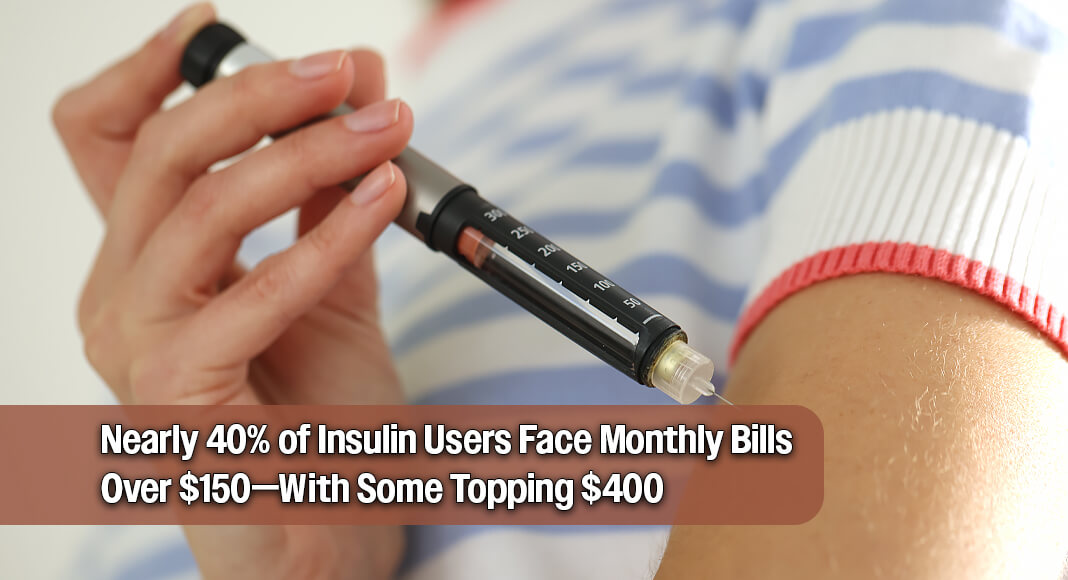
New polling released by the American Diabetes Association® (ADA) finds that among respondents who rely on insulin, 72% report paying more than $35 per month, and nearly 40% pay more than $150 monthly. Cost is a more pronounced problem among middle-class Americans with diabetes—44% of insulin-dependent individuals who make between $50,000 and $75,000 per year report paying more than $150 for insulin each month, and this is true for 55% of people who make between $75,000 and $99,000. It’s no surprise, then, that 76% of survey respondents across political parties support a $35 limit on cost-sharing for insulin.
The findings reflect rising financial strain from healthcare costs broadly. One in 3 survey respondents reported having to cut back on groceries because of healthcare expenses, and nearly 1 in 4 has skipped or delayed a medical appointment.

While Medicare and 29 states and Washington, DC, have implemented limits on insulin cost-sharing, people on private and employer-sponsored health plans and the uninsured continue to face high costs, upwards of $400 a month in many cases according to new survey data.
Bipartisan legislation introduced by Senators Jeanne Shaheen, Susan Collins, Raphael Warnock, and John Kennedy would help close that gap. The Improving Needed Safeguards for Users of Lifesaving Insulin Now (INSULIN) Act of 2026 would limit out-of-pocket costs for insulin for people using private or employer-sponsored coverage to $35 a month.
“We’ve made extraordinary progress to reduce the cost of insulin in this country, but we’re not done. Half of insulin-dependent people with diabetes are still rationing, and three-quarters are paying more than $35 per month. No one should miss taking even one dose of a lifesaving medication because it is financially out of reach. We urge Congress to act quickly to pass the INSULIN Act into law,” said Lisa Murdock, the ADA’s chief advocacy officer.
The survey was conducted by Focaldata on behalf of the American Diabetes Association in June 2026 among a nationally representative sample of 1,527 U.S. adults. Data are weighted to reflect the U.S. adult population by age, gender, race/ethnicity, education, and region. The margin of error is approximately ±2.5 percentage points at the 95% confidence level.
Information source: American Diabetes Association


