








Mega Doctor News
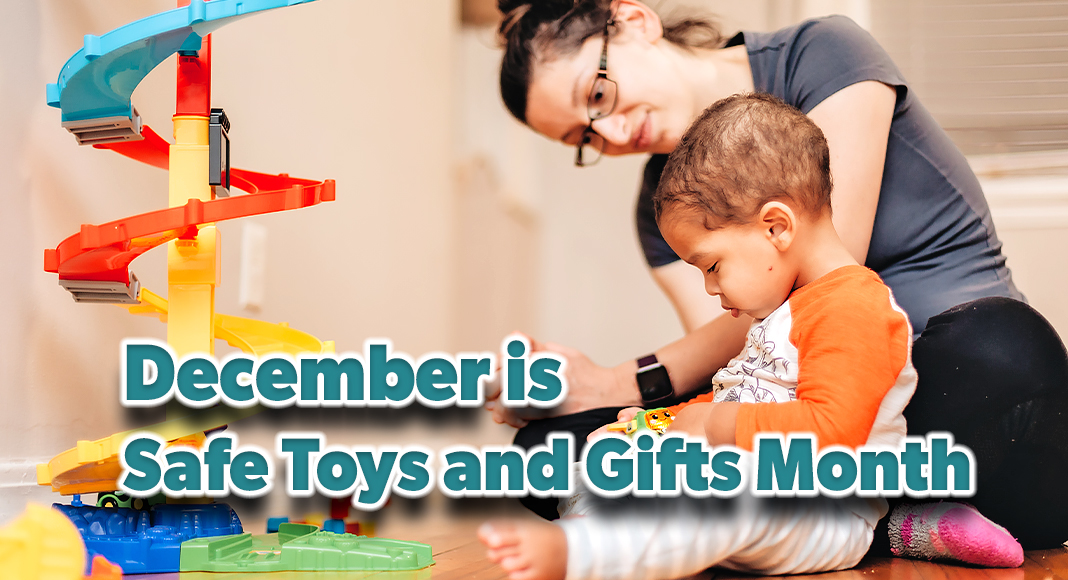
December is Safe Toys and Gifts Month, an observance that was started by the nonprofit organization, Prevent Blindness, to encourage age- and ability-appropriate gift-giving during the holiday season, especially for children under age three.
Too often, accidents involving children and toys occur and may result in eye injuries. Each year, thousands of children age 14 and younger suffer serious eye injuries, including blindness, from toys. According to the American Academy of Ophthalmology, approximately 1 in 10 children’s eye injuries that end up in the ER are caused by toys.
The following safe toy checklist (from Prevent Blindness) can help individuals make an informed decision about which toys are safe and age-appropriate to purchase. The American Public Health Association also offers guidelines on the steps to take before letting children play with toys this holiday season and beyond.

Before you purchase a toy:
- Read all warnings and instructions on the box.
- Ask yourself if the toy is right for your child’s ability and age.
- Avoid purchasing toys with sharp or rigid points, spikes, rods, or dangerous edges.
- Check the lenses and frames of children’s sunglasses; many can break and cause injuries.
- Buy toys that will withstand impact and not break into dangerous shards.
- Look for the letters “ASTM.” This means the product meets the national safety standards set by the American Society for Testing and Materials (ASTM).
- Avoid toys that shoot or include parts that fly off. Remember that BB guns are NOT toys.
Before letting children play with toys:
- Inspect toys for safe, sturdy construction.
- Explain how to use the toy.
- Fix or throw away broken toys.
Always:
- Keep young children away from toys meant for older children.
- Supervise your children while playing.
- Store toys properly after play to avoid risks or falls.
- Supervise children’s craft projects (scissors and glue can be extremely dangerous to a child’s eyesight).
- Have children wear the right eye protection for sports (face shields, helmets, eyeguards).
When it comes to toys, many accidents and injuries involving children can be avoided by taking the proper precautions. Let’s all do our part to encourage safety!
Information source: eversightvision.org


