







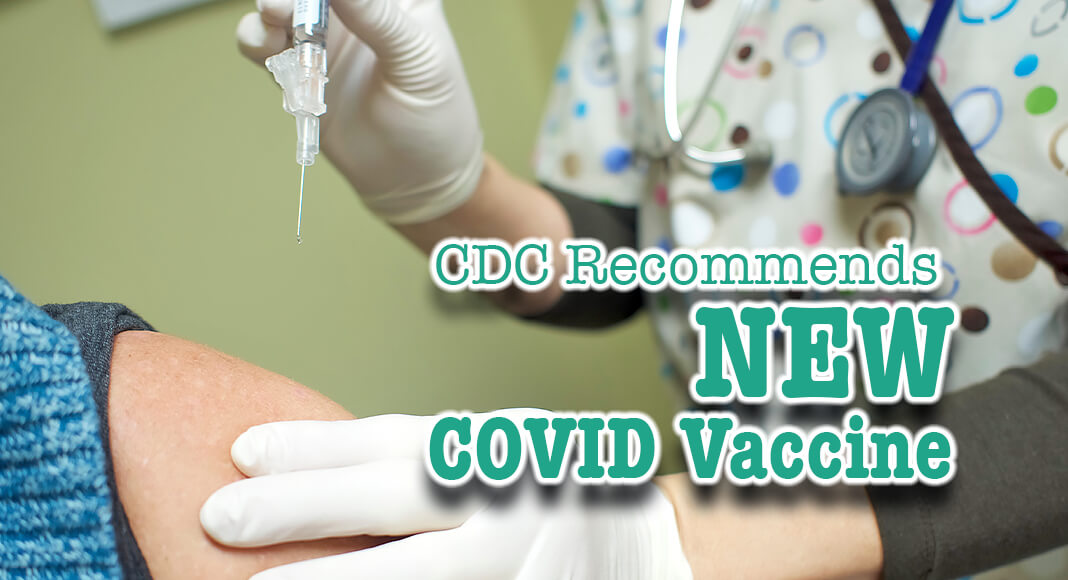

CDC Recommends New COVID Vaccine

The CDC is recommending anyone six months and older get the new COVID vaccine. A physician explains the benefits and how it's different than the previous versions.

Translate to Spanish or other 102 languages!

 The CDC is recommending anyone six months and older now get the new COVID vaccine to help protect against the virus. Image for illustration purposes
 The CDC is recommending anyone six months and older now get the new COVID vaccine to help protect against the virus. Image for illustration purposes

Mega Doctor News

- Advertisement -

CLEVELAND CLINIC  – The CDC is recommending anyone six months and older now get the new COVID vaccine to help protect against the virus.

As Kristin Englund, MD, infectious disease specialist with Cleveland Clinic explains, this vaccine is made up of a different formula than the others. 

“The prior bivalent and single-valent vaccines will no longer be available. They’re no longer useful,” said Dr. Englund. “Everybody should be getting the new COVID vaccine because again, it’s specific to what’s out in the world right now.” 

Dr. Englund said there has been an increase in COVID cases as we head into fall, which is to be expected.

She said more people are spending time indoors and kids are back in school.

- Advertisement -

It’s very similar to how flu season comes and goes each year.

And like the flu vaccine, the COVID vaccine is important to get.

Dr. Englund said it’s your best defense against the virus.

Currently, Moderna and Pfizer have their own versions of the vaccine, but they are both just as effective.

- Advertisement -

And you can also mix and match, as needed.

So, if you had a Pfizer vaccine before, it is okay to get Moderna next time. 

“The side effects that we can expect to see are very similar to what we saw previously with the other COVID vaccines,” said Dr. Englund. “So, if you had a sore arm before, if you had a little bit of some achiness, maybe a little low-grade fever, you can expect that to happen again.” 

Dr. Englund said besides getting the vaccine, it’s also important to take other safety measures, like regularly washing your hands and staying home when sick so you don’t put others at risk.


- Advertisement -
- Advertisement -

- Advertisement -

More Articles

DHR Health Transplant Institute Earns Top State and National Rankings

The DHR Health Transplant Institute announced today that it has been recognized among the state’s and nation’s top performing kidney transplant centers, earning the no. 2 ranking in the State and no. 16 ranking in the Nation, according to the Scientific Registry of Transplant Recipients (SRTR).  

New Noninvasive Tech Tracks Infant Vital Signs Without Wires

In the neonatal intensive care unit, the most fragile patients in medicine are often the most heavily wired. Premature babies, some weighing less than a pound, can be tethered to a tangle of cables, monitors, and sensors. Each blood draw to check sugar levels or electrolytes means another needle, another bandage, another moment of stress for an infant whose skin is still forming.

STHS McAllen Receives National Award for Advancing Cardiac Arrest Care & Improving Patient Survival

In the moments following cardiac arrest, every second counts. Rapid intervention, seamless teamwork and evidence-based care can make the difference between life and death.

The Truth About Hot Dogs and Your Health

July is National Hot Dog Month. Reports show Americans eat roughly 20 billion hot dogs every year. While they’re okay to have on occasion, they shouldn’t be a regular part of your diet.
- Advertisement -
