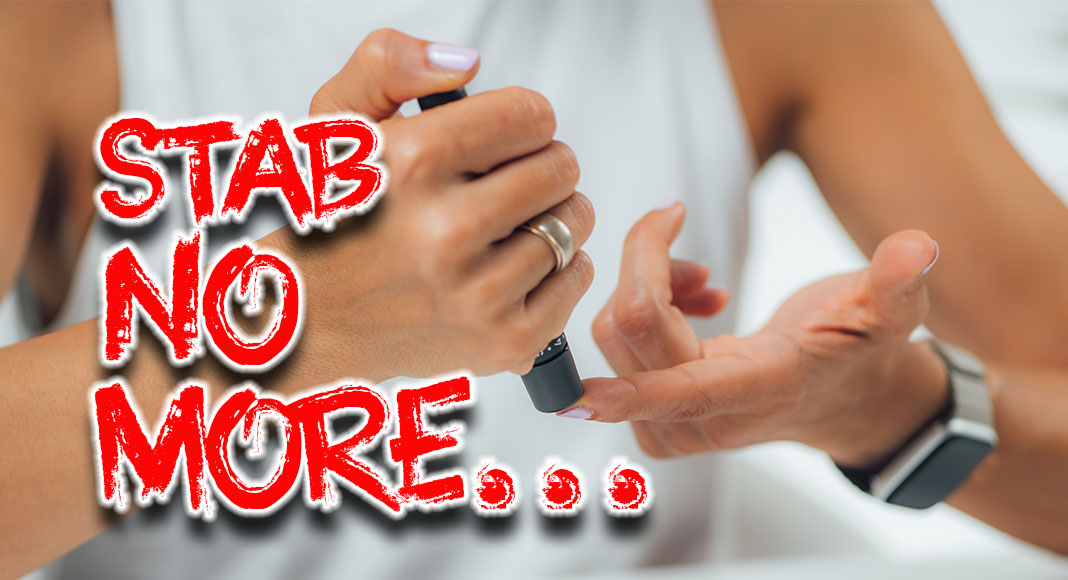
The wearable flexible patch would completely eliminate the need for multiple finger sticks. Image for illustration purposes.
Mega Doctor News
- Advertisement -
By University of California San Diego Health
A physician and nanoengineers at UC San Diego have successfully tested a noninvasive skin patch prototype that monitors blood glucose levels, a daily requirement for many persons with diabetes. The patch is thin, lightweight, easily applied and removed, and works for up to eight hours.
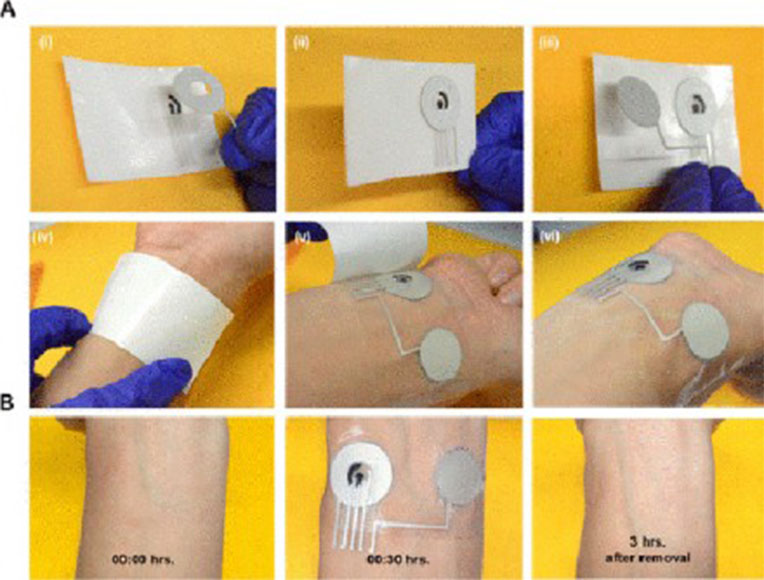
Assembly and the transfer process of the ISF glucose wearable patch. The screen-printed electrode system is transferred to a layer of adhesive tape. Afterward, the iontophoretic electrodes are placed on top of the adhesive layer, the cathode is placed on top of the screen-printed array, and the anode is set 1.5 centimeters away from the cathode). Next, a piece of agarose gel is placed on top of each electrode. The transfer process consists of placing the adhesive layer on the skin and removing the top layer of paper from the adhesive surface. Wrist pictures before transferring the sensing device onto the skin and three hours after removing the device. UC San Diego Health Sciences Image
From smaller incisions and less pain to shorter hospital stays and faster recovery times, robotic-assisted surgery is changing the way patients experience surgical care.
The Breast Cancer Awareness Symposium 2026 is an educational and networking event hosted by Texas Oncology and sponsored by Caris Life Sciences, bringing together oncology specialists, surgeons, advanced practice providers, and community healthcare professionals to discuss the latest advances in breast cancer prevention, diagnosis, treatment, survivorship, and reconstruction. The symposium's theme, "Breast Cancer 2026: Early Detection, Modern Care, and Survivorship Through Community Partnership," highlights the importance of multidisciplinary collaboration and patient-centered care
What began as a flat tire on the side of a highway turned into a frightening collision and an unexpected encounter for South Texas College faculty member Jesus Amaya, when the paramedic who responded to the scene turned out to be one of STC’s graduates.
Domestic violence claimed the lives of 160 Texans in 2025, according to a report released October 1, 2026, by the Texas Council on Family Violence (TCFV), documenting the continuing impact of intimate partner violence across the state.