








loader image
Monday, December 1, 2025
54.8 F
McAllen
- Advertisement -

How Extreme Heat Impacts Stroke Risk

A neurocritical care specialist explains how hot weather may increase your risk of stroke, and what precautions to take

Translate to Spanish or other 102 languages!

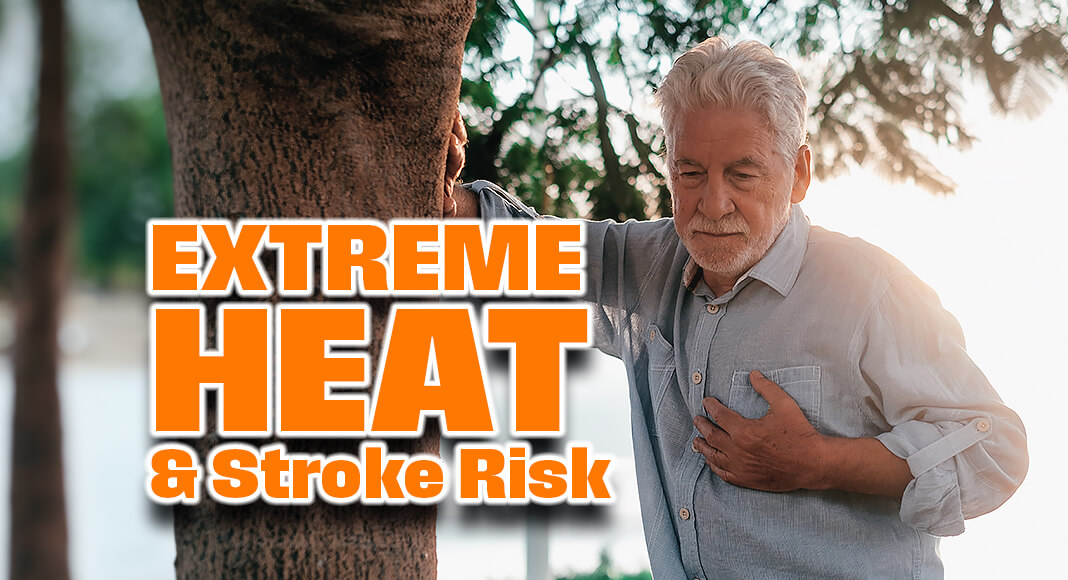
“Extreme heat adds incredible physiological stress to the individual and that can increase your risk of both ischemic and hemorrhagic stroke,” explained Marc Babi, MD, a neurocritical care specialist with Cleveland Clinic Florida. Image for illustration purposes
- Advertisement -

CLEVELAND CLINIC – As we get outside to enjoy the sunshine, it’s important to remember how the summer heat can take a toll on our bodies.

Staying outside for too long on a hot day may increase risk of stroke.

“Extreme heat adds incredible physiological stress to the individual and that can increase your risk of both ischemic and hemorrhagic stroke,” explained Marc Babi, MD, a neurocritical care specialist with Cleveland Clinic Florida.

- Advertisement -

Dr. Babi said one of the reasons behind the increased risk is that hot weather can lead to dehydration.

Not having enough water in your body can ultimately make your blood more likely to clot, leading to a stroke.

Although older adults and those with preexisting conditions may be more vulnerable, everyone should take precautions in extreme temperatures.

Dr. Babi said it’s important to stay hydrated and avoid strenuous activities when temperatures soar.

- Advertisement -

It’s also a good idea to check the weather and try to stay inside during the hottest points of the day.

“Not as an absolute rule, but in general, anytime it’s over 90 degrees outside, be mindful there is an increased risk of physical exhaustion, which in turn can add incredible stress on the body,”Dr. Babi said. “And in those folks who are susceptible, or have underlying cardiovascular disease, all of this can increase the risk of stroke.”

Dr. Babi stressed to call 911 right away if you or someone you know is experiencing stroke symptoms.


- Advertisement -
- Advertisement -

- Advertisement -

More Articles

What is CKM syndrome, and why should young adults pay attention?

If you’re unfamiliar with cardiovascular-kidney-metabolic syndrome, you’re hardly alone. But it might already be affecting you – no matter your age.

How Christmas Trees and Holiday Decor Trigger Allergies

Can you be allergic to your Christmas tree? While a pine allergy is pretty uncommon, you could be sneezing for other reasons. 

One in Eight Adolescents Shows Signs of Hearing Damage by Age 18

A comprehensive new study published in Otolaryngology–Head and Neck Surgery, the peer-reviewed journal of the American Academy of Otolaryngology–Head and Neck Surgery Foundation (AAO-HNSF), reveals alarming rates of hearing loss among adolescents, with 6.2% experiencing sensorineural hearing loss and 12.9% showing signs of probable noise-induced hearing damage by age 18.

Mayo Clinic Researchers Develop 3D Scanning Approach For Ultra-Precise Brain Surgery

Mayo Clinic researchers have developed and tested a new 3D surface scanning approach that gives neurosurgeons even greater precision when operating deep inside the brain.  
- Advertisement -
×
