









loader image
Saturday, February 7, 2026
54.7 F
McAllen
- Advertisement -

Welcoming Second Cohort of Mental Health Professionals 

Learning mental wellness techniques to serve the community in the wake of COVID-19

Translate to Spanish or other 102 languages!

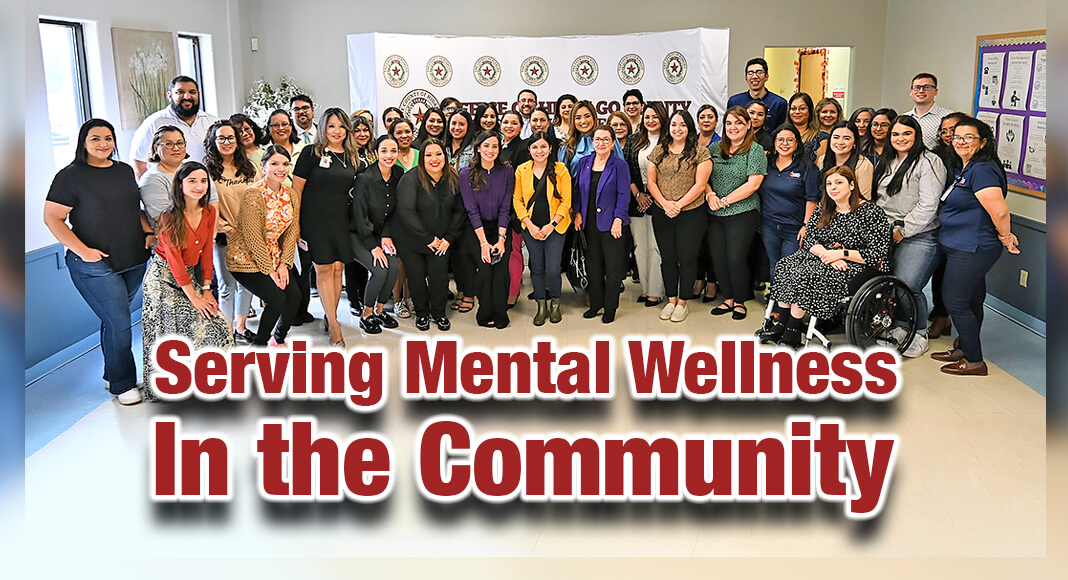
The latest training session represents a marriage of two Hidalgo County initiatives: the Hidalgo County Prosperity Task Force and the Mental Health Coalition. Both groups seek to assist low income residents, which make up as much as 40 percent of the population. The idea is to provide additional mental health services to those identified as suffering from recent trauma associated with the pandemic. Courtesy Image

Mega Doctor News

- Advertisement -

McALLEN – Hidalgo County Judge Richard F. Cortez and the Hope Family Health Center welcomed today the second cohort of mental health professionals who are learning a mental wellness technique aimed at helping non-profits better serve their clients in the wake of the COVID-19 pandemic.

Judge Cortez and officials with the Hope Family Health Center met with 50 mental health practitioners affiliated with local non-profit organizations to initiate a skills-building opportunity among mental health professionals involving a technique known as EMDR therapy. He noted that Hispanics were particularly hard hit by the pandemic, accounting for nearly one in four of the initial job losses. 

The latest training session represents a marriage of two Hidalgo County initiatives: the Hidalgo County Prosperity Task Force and the Mental Health Coalition. Both groups seek to assist low income residents, which make up as much as 40 percent of the population. The idea is to provide additional mental health services to those identified as suffering from recent trauma associated with the pandemic.

- Advertisement -
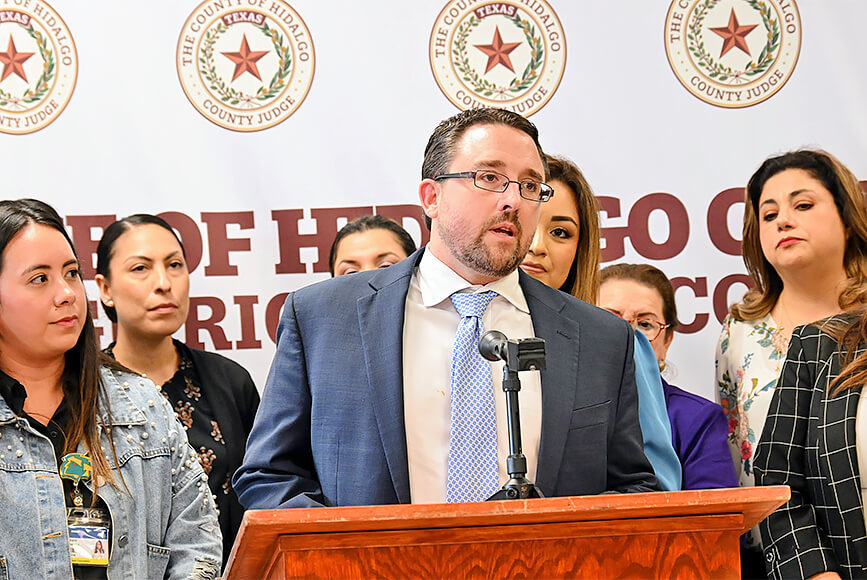
Stressing the importance of mental wellness in the community. Courtesy image

“We remain concerned about the mental wellness of all residents who lived through the trauma of the pandemic,” said Judge Cortez. 

Cortez committed an additional $60,000 in American Rescue Funds to help HOPE Family Health Clinic to build a larger network of collaboration, guidance, and practice in trauma therapy to strengthen the skills of mental health professionals in Hidalgo County in order to address the trauma of the COVID-19 pandemic for individuals.

“We received tremendous feedback from the first group of professionals who learned this technique and we are excited to offer this training to more mental health professionals,”  said Roxanne Ramirez, with the Hope Family Health Center.

So far, fifty mental health specialists affiliated with area school districts have completed their EMDR therapy certification and are already serving students on local campuses. Another 50 mental health professionals affiliated with local non-profits registered to take advantage of this additional opportunity.


- Advertisement -
- Advertisement -

- Advertisement -

More Articles

DHR Health Strengthens Heart Health Resources for Families Across the RGV

Did you know that heart disease is one of the leading causes of death in the United States and that the Hispanic population faces a higher risk due to the high rates of blood pressure, high cholesterol, diabetes and obesity?

STHS Heart Celebrates 650th Robotic-Assisted Surgery

Mega Doctor News Since opening 30 years ago as one of the...

Inside the Physiology and Neuroscience of Winter Olympians

What makes Olympians the very best at what they do — even in cold, slippery or icy conditions? 

Study Finds 60% of American Women Choose Clinic Visits Over At‑Home Cervical Screening

American women now have the option of screening for cervical cancer at home, using newly approved self-collection tools. While experts hope this will increase uptake in the under-screened population, a first-of-its kind study by researchers from The University of Texas MD Anderson Cancer Center found the majority (60.8%) still prefer to see a medical professional in-clinic.
- Advertisement -
×
