Texas Border Business
By Patrick Gonzales
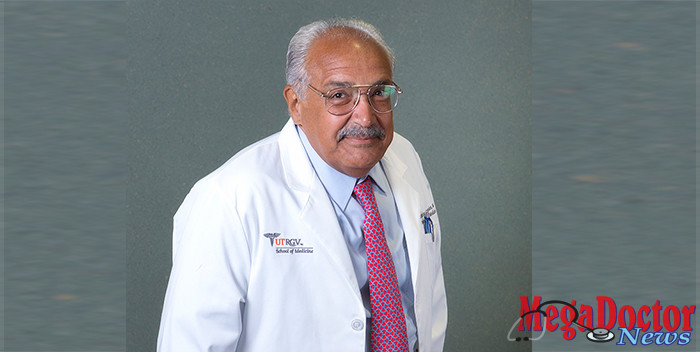
RIO GRANDE VALLEY, TEXAS – JUNE 29, 2016 – Dr. Francisco Fernandez has announced that, effective July 1, he will step down as vice president for medical affairs and dean of The University of Rio Grande Valley School of Medicine to return to the psychiatry faculty.
“I am going to follow my heart and step down to continue and focus my work on bringing health equity to the Rio Grande Valley,” Fernandez said. “This has been the most amazing journey, and I couldn’t have imagined anything more fulfilling for me. And like Ronnie Milsap sang so eloquently, ‘I Wouldn’t Have Missed It For The World.’ I am extremely grateful to the UT System and to UTRGV for this incredible opportunity.”

Fernandez became dean in May 2014, and in 2015, he was named Professor of Psychiatry at the UTRGV Department of Psychiatry, Neurology, and Neurosciences. During Fernandez’s tenure as dean, he has led significant strategic efforts in community outreach across the Rio Grande Valley with School of Medicine affiliates and their partners.
His work also included the development of a successful application process for the Liaison Committee on Medical Education preliminary accreditation. With a collaborative and inclusive approach, Fernandez organized community leaders, faculty from across the UT System, administrators, and clinical affiliates to develop the application materials for accreditation.
That milestone allowed the school to recruit its first class, and after 2,784 applications and 226 interviews, the first cohort of 55 medical students arrived on campus Monday for orientation.
“On behalf of the entire UTRGV community, I’d like to thank Dr. Fernandez for his tremendous service the past two years,” said UTRGV Founding President Guy Bailey. “Building a medical school from scratch is no easy task, and Dr. Fernandez has done an excellent job in getting our school up and running. We are particularly pleased with our first class of students.”
Fernandez also developed the strategic vision for the School of Medicine’s One Community, One Mission, One Solution plans, which led to the promising VIDAS (Valley Interprofessional Dedicated Access and Service) program funded through the United Health Foundation.
“As founding dean of UTRGV’s School of Medicine, Dr. Fernandez guided its creation, including its LCME approval, laying the foundation for a medical school that will forever transform the lives of the residents of South Texas,” said Dr. Francisco G. Cigarroa, former UT System chancellor who helped spearhead the effort both to create UTRGV and its medical school. “This new school, which just opened its doors to students, is the fulfillment of a dream for so many, and Dr. Fernandez embraced that dream with passion and dedication just like the people of the Rio Grande Valley.”
“Establishing the UTRGV School of Medicine has always been about so much more than simply bringing medical education to the Rio Grande Valley. It’s about establishing a world-class medical school to drive better health care for the region and the entire state of Texas,” Chancellor William H. McRaven said. “Dean Fernandez has championed that vision, and his astute leadership has helped turn that vision into reality. He has worked tirelessly to attract the highest-quality students and faculty, and the impact of this commitment will be felt for many years to come.”
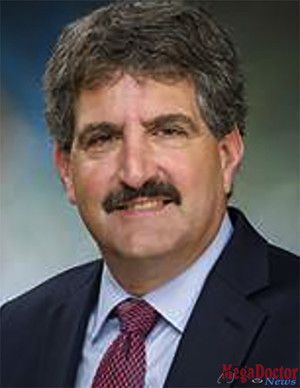
As part of an interagency agreement with the University of Texas Medical Branch, Dr. Steve Lieberman of UTMB in Galveston will serve as interim dean as the university begins the process of a formal search for candidates for the permanent position. Lieberman, senior dean for Administration at UTMB, is a San Antonio native and has many years of experience working in the Valley with a variety of cooperative programs.