








Mega Doctor News
HARLINGEN, Texas – Texas State Technical College recently hosted an awareness training session titled “Stalking: Know It, Name It, Stop It.”
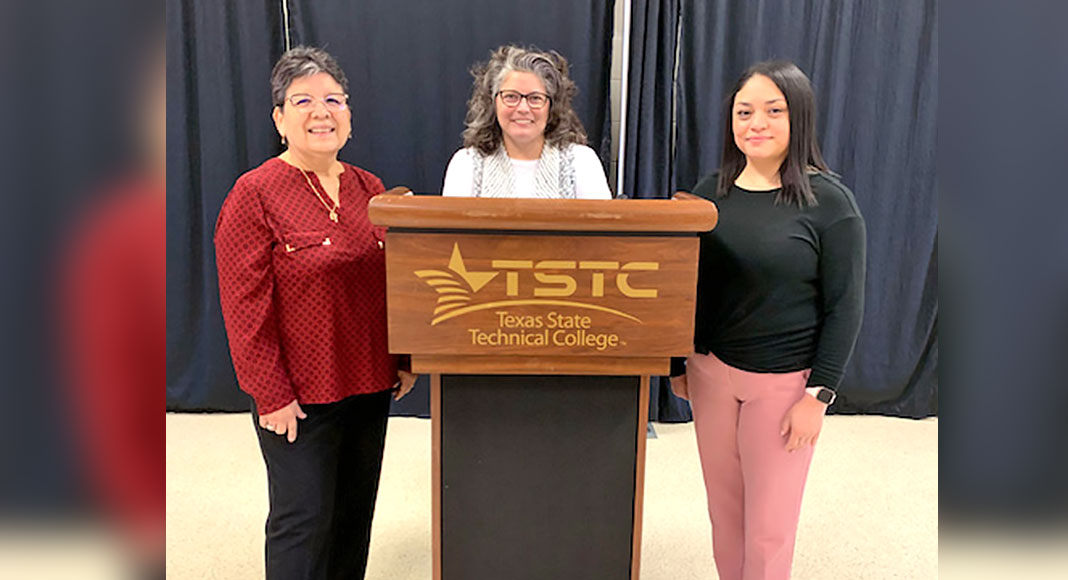
The session was presented at the TSTC Cultural Arts Center on the Harlingen campus in collaboration with Friendship of Women Inc., which is located in Brownsville, and the Texas A&M University College of Nursing at College Station.
Stacey Drake, an associate professor at the Texas A&M University College of Nursing, was the featured speaker. She discussed intimate partner violence, identifying stalking behaviors, and how to support survivors who disclose that there is violence in their relationships.

During the presentation, she highlighted what defines stalking and the types of stalking behaviors: surveillance, intimidation, life invasion and interference.
“My hope is for people to recognize stalking for what it is,” she said. “It is important to help those that it is impacting because it targets both men and women.”
Daisy Lopez, director of operations for Friendship of Women, noted that it is helpful for public safety officers to be able to identify stalking behaviors.
“For victims of intimate partner violence, it occurs regularly,” she said.
According to the session presenters, women are more likely than men to experience stalking, and a stalker might be an acquaintance, a stranger, a family member or a person of authority.
Cristobal Villalon, a TSTC police officer, added that many police departments need better solutions to the problem of stalking.
“Many instances happen; officers need to be cognizant and respond quicker,” he said.
Ileana Granados, a TSTC police officer, said that TSTC takes student safety very seriously.
“The information provided in this training was valuable,” she said. “Our department actually provides personal escorts for those who need it. The students here know we are available at all times.”
The presentation was made available both in person and online, and those in attendance included TSTC employees, members of the TSTC Police Department, and representatives of Cameron County and some nearby counties.
National Stalking Awareness Month will be observed in January 2022.
For more information about TSTC, visit tstc.edu.


