Mega Doctor News

Newswise — Not long after the coronavirus pandemic began impacting the nation, hospitals and other health services began running into shortages of personal protective equipment such as face masks. Typical masks can help prevent the transmission of disease, but have a one-time use. Researchers at the University of Notre Dame are working to develop a new fabric for antimicrobial masks that could potentially be reusable.
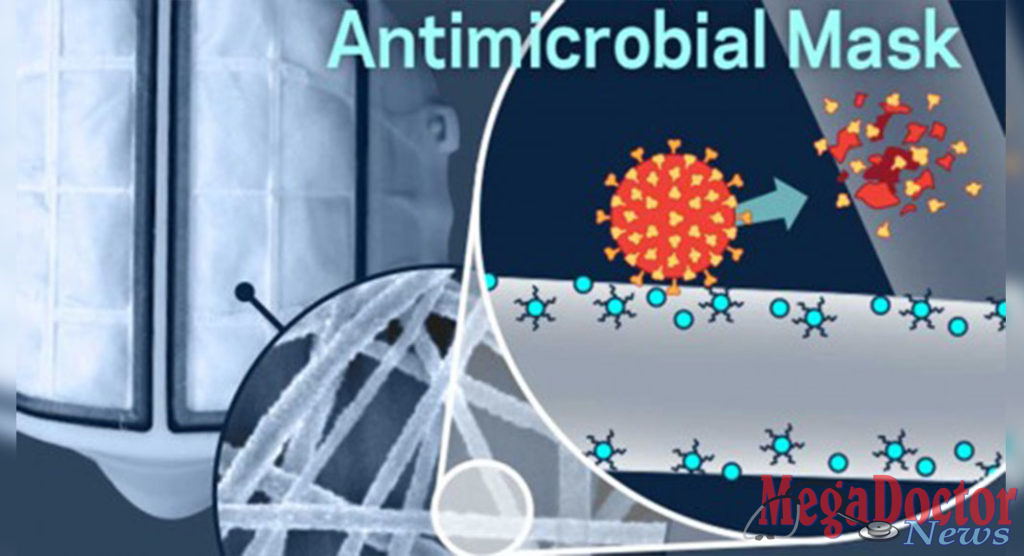
Funded by the National Science Foundation through a Rapid Response Research (RAPID) grant, scientists and engineers are collaborating to translate existing water filtration technology to create a new fabric that will not only capture viruses, like the coronavirus, but also deactivate them.
“Our team previously created a proprietary composite nanofiber material for water filtration that we believed could be fairly easily translated and utilized to filter air. Once the pandemic hit, we began to think more critically about how we could make an air filtration material for face masks that not only meets a critical need for health care professionals but improves them,” said Nosang Vincent Myung, the Keating Crawford Endowed Professor in Chemical and Biomolecular Engineering at Notre Dame and co-lead on the project.

Through a decade-long collaboration, Myung and David Cwiertny, professor of civil and environmental engineering at the University of Iowa, developed a new material that maximized water filtration performance while minimizing the cost. By using this material’s unique formula, the researchers will aim to mimic the pathogen-capturing process for air filtration as well as include a biocidal or antimicrobial function.
As a part of the team, Patrick O’Shaughnessy, professor of occupational and environmental health at the University of Iowa, will assess the efficiency of the material’s ability for capturing airborne particles. Additionally, Kyle Bibby, associate professor and the Wanzek Collegiate Chair in the Department of Civil and Environmental Engineering and Earth Sciences at Notre Dame, will utilize his expertise to test if it’s effective, and how successful the material is at deactivating airborne viruses.
“The water filter materials Nosang and I developed have always been hybrids — both blocking and reacting with molecules. Now we are looking forward to applying this same concept to a product that could protect people within the health services industry and those that may be exposed to other air-compromised environments,” said Cwiertny, co-lead on the project.
Myung and Bibby are affiliated with Notre Dame’s Advanced Diagnostics and Therapeutics initiative.