
Mega Doctor News

By Roberto Hugo González / Mega Doctor News
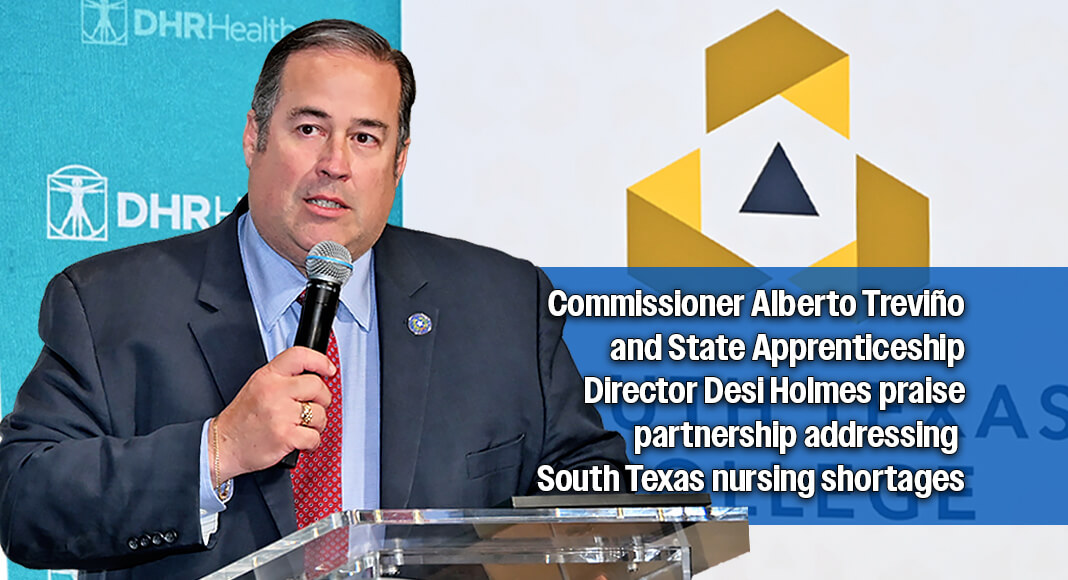
EDINBURG, Texas — Albert Treviño III, commissioner representing labor for the Texas Workforce Commission (TWC), praised the DHR Health and South Texas College Registered Nurse Apprenticeship Program as a model for workforce development during a graduation ceremony honoring the program’s first cohort.
The event celebrated 10 graduates of what officials described as the nation’s first federally recognized traditional registered nursing apprenticeship program, developed through a partnership among DHR Health, South Texas College, and the Texas Workforce Commission to address nursing shortages in the Rio Grande Valley.

Treviño said the program’s success reflects collaboration among healthcare institutions, educators, and workforce leaders focused on expanding career pathways in Texas.
“I want to thank the instructors because today doesn’t stop here with the graduation,” Treviño said. “Your knowledge and expertise go to every hospital room that your apprentices go to.”
Treviño credited DHR Health, South Texas College, and former Texas Workforce Commissioner Julian Alvarez for helping bring partners together to establish the initiative. He said the apprenticeship model has opened new possibilities for workforce training in healthcare and beyond.
“What this did is it opened the floodgates to what’s potential for being an apprenticeship program,” Treviño said, noting that other career fields are now exploring similar workforce models.
During the ceremony, Treviño presented a proclamation recognizing Apprenticeship Week in Texas, signed by Governor Greg Abbott, and highlighted the rapid growth of apprenticeship programs statewide.
Treviño said apprenticeship programs provide opportunities for Texans to gain hands-on experience while earning wages and developing careers in high-demand occupations.

Desi Holmes, state apprenticeship director for the Texas Workforce Commission, said Texas played a leading role in creating the nursing apprenticeship model and securing approval for registered nursing as a recognized apprenticeship occupation.
“Texas was the first one to take it to the Department of Labor to actually have registered nurse as an apprenticeship program,” Holmes said. “So we were the leaders in that.”
Holmes said creating the program required coordination among employers, educational institutions, the Texas Higher Education Coordinating Board, the Texas Education Agency, and nursing regulators. She said state leaders moved quickly to address barriers, including ensuring nursing apprentices could complete paid clinical experiences.
“We had the employers coming and saying, ‘We have to have help. We have to figure out another way to move forward with developing more nurses,’” Holmes said.
Holmes also praised the apprenticeship training model, saying it gives students stronger clinical preparation by combining classroom education with practical experience.
“You learned it well, you learned it and earned it through the process,” Holmes told graduates.
Both Treviño and Holmes said the inaugural cohort is helping establish a model that could shape future nursing education programs in Texas and across the country.
The ceremony concluded with a white-coat presentation honoring the graduates and recognition of faculty members, mentors, and preceptors who supported the students during the program.
See related stories: