








Mega Doctor News
Mega Doctor News
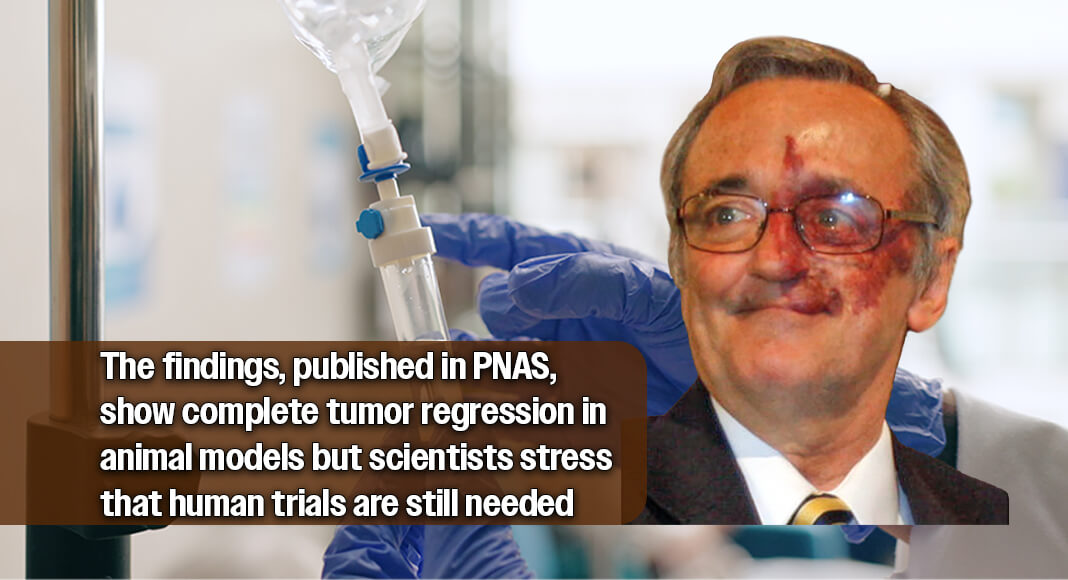
A team of scientists at the Centro Nacional de Investigaciones Oncológicas (CNIO) has reported the complete elimination of pancreatic tumors in mice using a combination of three targeted drugs. The study was published in the scientific journal Proceedings of the National Academy of Sciences (PNAS) and has drawn attention because pancreatic cancer is one of the deadliest and most treatment-resistant forms of cancer.
According to the researchers, the therapy was able to eradicate tumors in animal models without allowing the cancer to develop resistance, a frequent problem in pancreatic cancer treatments. The study focused on pancreatic ductal adenocarcinoma, the most common and aggressive type of pancreatic cancer. The authors report that “tumors completely regressed in all treated mice” and that the effect was sustained over time.

The research team explains that the treatment works by simultaneously blocking three key molecular pathways involved in tumor growth and survival. One of these pathways involves the KRAS mutation, which is present in the majority of pancreatic cancer cases and has long been considered difficult to target with drugs. By combining three agents rather than relying on a single therapy, the researchers prevented the cancer cells from adapting and becoming resistant.
In the study, published in PNAS, the authors state that the treatment “induces a profound and durable antitumor response without detectable toxicity in the animal models.” They also note that none of the treated mice showed signs of tumor relapse during the observation period.
Despite the promising results, the researchers emphasize that the findings are limited to preclinical models. “Results in mice do not automatically translate to humans,” the authors caution in the paper. They stress that further studies are required before clinical trials can begin, including additional safety evaluations and regulatory approval.
Pancreatic cancer remains one of the most lethal cancers worldwide, with a five-year survival rate of around 10 percent, largely due to late diagnosis and resistance to existing treatments. For this reason, the CNIO team describes their findings as a significant step forward, while also warning against interpreting them as an immediate cure.
The study was led by researchers at the CNIO under the direction of Mariano Barbacid, whose group has spent years studying the molecular mechanisms that drive pancreatic cancer. According to the authors, the next phase of research will focus on determining whether the same therapeutic strategy can be adapted safely for human patients.
The full scientific paper is available through the journal Proceedings of the National Academy of Sciences, where the researchers detail their experimental methods, results, and limitations.
Mariano Barbacid
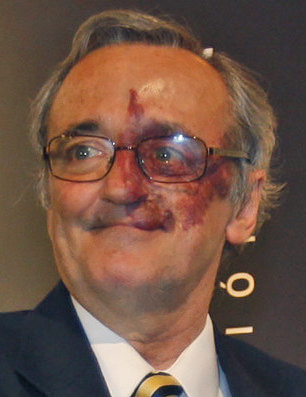
Image: Certo Xornal, CC BY-SA 2.0 <https://creativecommons.org/licenses/by-sa/2.0>, via Wikimedia Commons
Mariano Barbacid is a Spanish molecular biologist and one of the most influential cancer researchers in
He earned his PhD in biochemistry at the Complutense University of Madrid and later moved to the United States, where he worked for more than two decades at the National Cancer Institute (NCI). During that period, he made key discoveries that helped establish the molecular basis of cancer as a genetic disease.
In 1998, Barbacid returned to Spain to lead the creation of the Centro Nacional de Investigaciones Oncológicas (CNIO) in Madrid. He served as its founding director until 2011 and continues to lead the Experimental Oncology Group there. Under his leadership, the CNIO became one of Europe’s most respected cancer research centers.
His research has focused on understanding how genetic mutations drive tumor development and how these pathways can be targeted with drugs. In recent years, his team has gained international attention for developing experimental therapies that successfully eliminate pancreatic tumors in animal models.
Barbacid has received numerous international awards for his scientific contributions and is widely regarded as a key figure in modern cancer biology. His work has had a lasting impact on cancer research, drug development, and translational medicine.


