








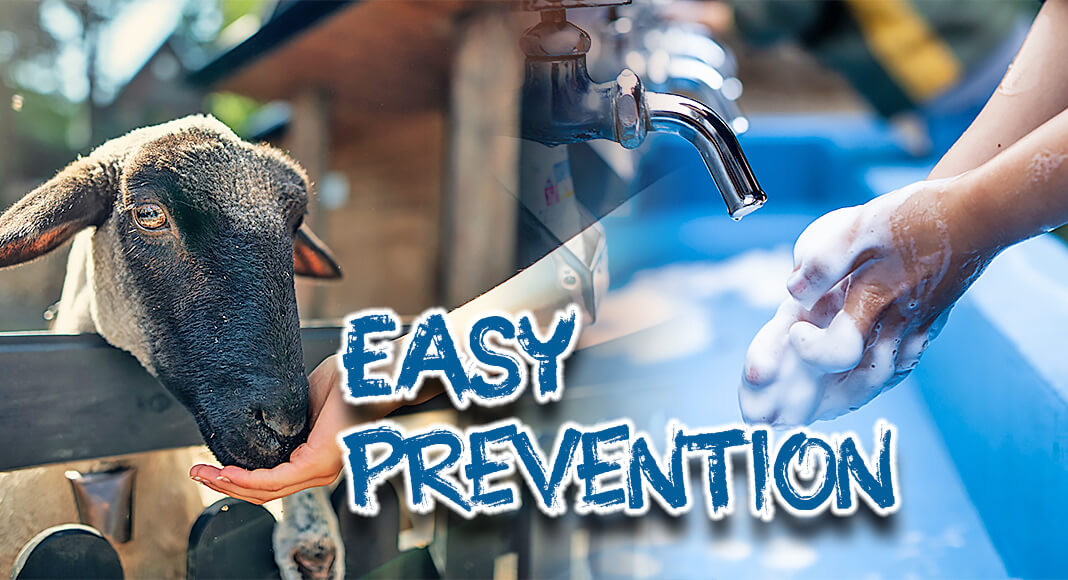
Prevent E. coli from animals with clean hands 

Translate to Spanish or other 102 languages!

before. But did you know that harmful E. coli bacteria can also spread from certain animals to people? Image for illustration purposes.

Mega Doctor News

- Advertisement -

You’ve probably heard of outbreaks of E. coli from contaminated leafy greens, meat, and other foods before. But did you know that harmful E. coli bacteria can also spread from certain animals to people?

Animals that carry E. coli 

Animals like cows, goats, sheep, and deer can carry E. coli in their stomachs and shed the germs in their poop. Infected animals can still spread the bacteria even if they look healthy and clean. The germs can live on their skin or fur and in the areas where they live and roam.  

How it spreads to people 
People can get E. coli when they touch an infected animal or contaminated surface and then their mouths. Young kids, people with weakened immune systems, and people over 65 are especially at risk for getting seriously sick from E. coli infection. It’s important to practice good hygiene around animals, especially at petting zoos, fairs, and other animal exhibits.   
Stay healthy around animals
The best way to prevent E. coli infection is to wash your hands! Wash them: After touching animals, their food, supplies, or items in their environments.  After visiting petting zoos, fairs, farms, or other places where animals live and roam, even if you didn’t touch an animal.  After removing shoes and clothes that have been worn around animals or their environments.  
  • Other ways to stay healthy: 
  • • Don’t eat, drink, or prepare food around animals.  
  • • Don’t let kids under 5 years old touch cows, goats, sheep, or deer. 
  • • Don’t let kids sit or play on the ground in areas where animals live and roam.  
  • • Keep strollers and other supplies outside of animal areas.
- Advertisement -


- Advertisement -

- Advertisement -

More Articles

DHR Health Continues to Lead the Way in Treatment of Alzheimer’s Disease for the RGV

Two years after DHR Health announced it was the first hospital south of San Antonio to successfully administer Leqembi, an FDA-approved intravenous treatment for early Alzheimer’s disease, DHR Health continues to expand access to advanced Alzheimer’s care for patients in the Rio Grande Valley being now the only facility doing amyloid PET Scans, a diagnostic test to accurately diagnose Alzheimer’s disease. DHR Health also offers Kisunla, another FDA-approved intravenous treatment for early symptomatic Alzheimer’s disease.

The Genetic Armor Defeating Colorectal Cancer

A team of scientists from the Barbara Ann Karmanos Cancer Institute, Wayne State University, and institutions across the U.S., have published a landmark paper on the role of TGFBR1*6A, a naturally occurring genetic mutation in the TGFBR1 gene found in approximately 14 percent of the general population. Image for illustration purposes

Why CKM Syndrome Requires a Coordinated Care Point Person

When the term “cardiovascular-kidney-metabolic syndrome” was created in 2023 to define how heart disease, kidney disease, obesity and diabetes are connected, one goal was to help health professionals understand the benefits of working together.

How Long is Too Long to Fall Asleep?

How long does it take you to fall asleep? Sleep experts call this sleep latency, and they say there’s a typical range for how long it takes most people to drift off.
- Advertisement -

