Mega Doctor News

By Camryn Haines, Ph.D., VMBS Marketing & Communications
For decades, research has linked coffee consumption to longer life and lower risk of chronic disease — but exactly how those benefits occur has remained unclear.
Now, new research from the Texas A&M College of Veterinary Medicine & Biomedical Sciences (VMBS) suggests that compounds in coffee may work, in part, by activating a receptor in the body known as NR4A1 — a protein increasingly recognized for its role in aging, stress response, and disease.

The findings, recently published in Nutrients, provide one of the first direct connections between coffee and this receptor, offering a potential explanation for the beverage’s widespread health effects.
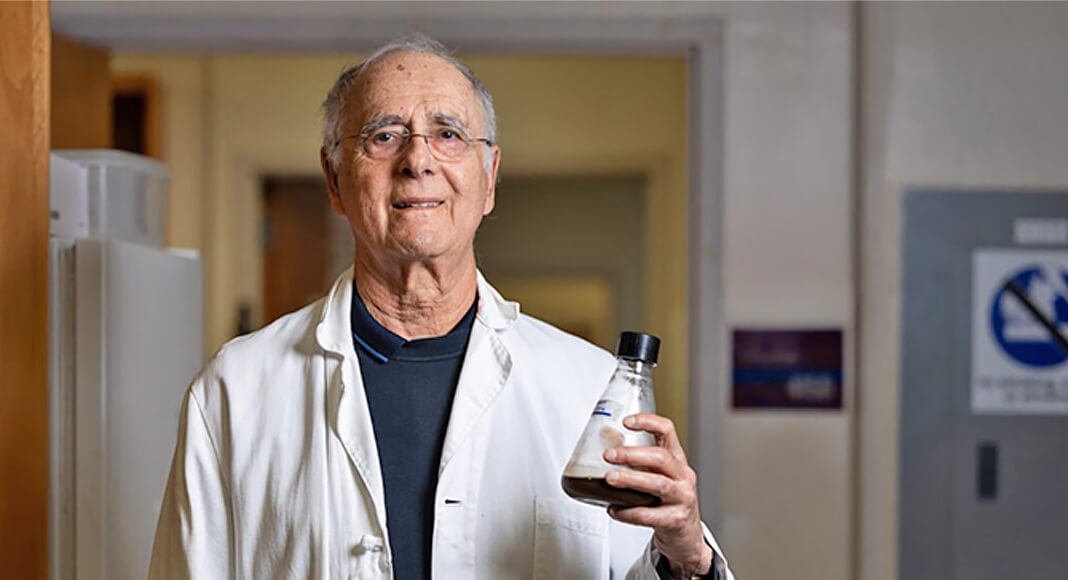
“Coffee has well-known health-promoting properties,” said Dr. Stephen Safe, distinguished professor and Sid Kyle Endowed Chair in Veterinary Toxicology in VMBS’ Department of Veterinary Physiology & Pharmacology. “What we’ve shown is that some of those effects may be linked to how coffee compounds interact with this receptor, which is involved in protecting the body from stress-induced damage.”
A Receptor Tied To Aging And Disease
NR4A1 belongs to a family of nuclear receptors that help regulate gene activity in response to stress and damage in the body.
In previous work, Safe and collaborators described NR4A1 as a “nutrient sensor” — a receptor that responds to compounds found in the diet and plays a role in maintaining health as the body ages.
“If you damage almost any tissue, NR4A1 responds to bring that damage down,” Safe said. “If you take that receptor away, the damage is worse.”
Research has shown that NR4A1 is involved in a wide range of biological processes, including inflammation, metabolism, and tissue repair — all of which are closely tied to age-related diseases such as cancer, neurodegeneration, and metabolic disorders.
Connecting Coffee To A Biological Mechanism
While coffee has long been associated with reduced risk of conditions like Alzheimer’s disease, Parkinson’s disease, and metabolic disease, most studies have been observational, leaving scientists searching for a clear biological explanation.
Safe’s team hypothesized that some of coffee’s benefits could be linked to NR4A1.
The study was conducted in collaboration with researchers from across Texas A&M, including Dr. Robert Chapkin, Dr. Roger Norton, Dr. James Cai, and Dr. Shoshana Eitan, whose work helped demonstrate coffee’s protective effects in neurological models.
In their study, researchers found that multiple compounds in coffee — particularly polyhydroxy and polyphenolic compounds such as caffeic acid — bind to the receptor and influence its activity.
“What we’re saying is that at least part of coffee’s health benefits may come through binding and activating this receptor,” Safe said.
The team also found that these compounds could influence cell behavior in ways consistent with disease protection, including reducing cellular damage and slowing cancer cell growth in laboratory models.
Importantly, when NR4A1 was removed from cells, those protective effects disappeared — further supporting the receptor’s role in mediating coffee’s impact.
More Than Just Caffeine
While caffeine is the major individual component of coffee, the study suggests that it may not be the primary driver of these health effects.
Instead, a range of naturally occurring compounds — many also found in fruits and vegetables — appear to play a larger role.
“Caffeine binds the receptor, but it doesn’t do much in our models,” Safe said. “The polyhydroxy and polyphenolic compounds are much more active.”
This may help explain why both regular and decaffeinated coffee have been associated with similar health benefits in large population studies.
A Complex But Promising Pathway
Despite the findings, Safe emphasized that coffee’s effects are likely not limited to a single pathway.
“There are many receptors and many mechanisms involved,” he said. “What we’re showing is that this could be one of the important pathways.”
The study is primarily mechanistic, meaning it focuses on how biological processes work rather than proving direct cause-and-effect in humans.
“There’s still a lot of work to be done,” Safe said. “We’ve made the connection, but we need to better understand how important that connection is.”
The findings add to a growing body of evidence suggesting that diet — particularly plant-based compounds — plays a critical role in regulating aging and disease processes.
Because NR4A1 is involved in multiple conditions, the research could also inform future efforts to develop new therapies. Safe’s team is already exploring synthetic compounds that target the receptor more effectively than natural dietary compounds, with the goal of developing treatments for cancer and other diseases.
At the same time, the work reinforces the potential benefits of everyday dietary choices.
“Coffee is a very complex mixture of compounds,” Safe said. “It’s a very potent combination.”
What It Means For Coffee Drinkers
For now, the research does not change current recommendations around coffee consumption, and individual responses can vary.
However, it offers something researchers have long been missing — a clearer understanding of why coffee appears to support long-term health.
“I think it helps explain why coffee has the effects that it does,” Safe said. “It’s not just an observation — there’s a mechanism behind it.”
Information source: Texas A&M College of Veterinary Medicine & Biomedical Sciences