








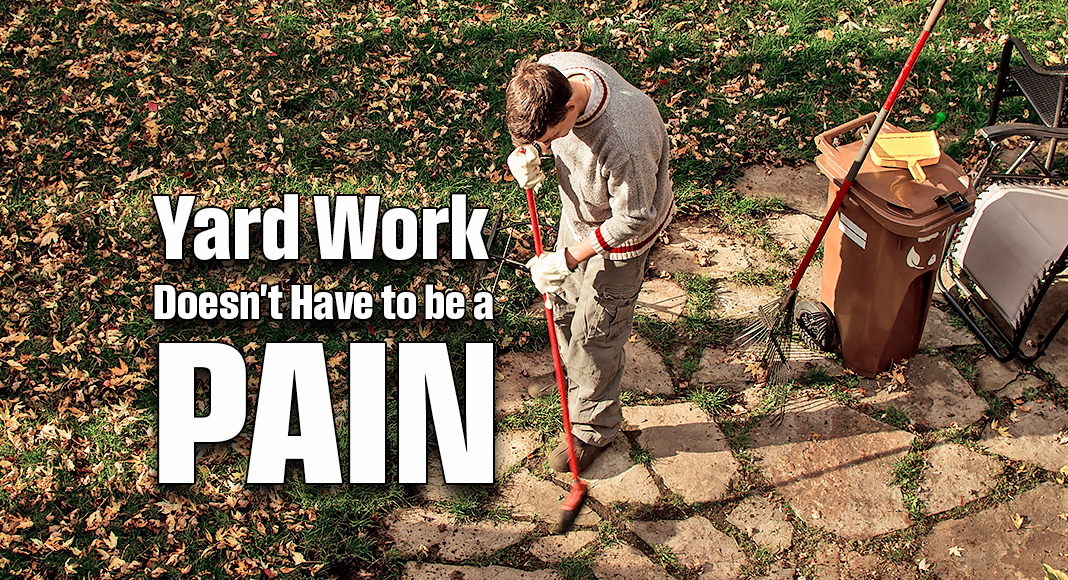
Yard Work Doesn’t Have to be a Pain

Translate to Spanish or other 102 languages!

It’s that time of year where homeowners are cleaning up their yards in preparation for winter. Image for illustration purposes
- Advertisement -

CLEVELAND CLINIC – It’s that time of year where homeowners are cleaning up their yards in preparation for winter.

And while it can be a tedious task, it doesn’t have to be a pain too.

Andrew Bang, DC, chiropractor with Cleveland Clinic, offers some ways to help prevent injury.

- Advertisement -

“It is just like going to the gym. You would never go right to a deadlift or a military press, or a bench press, or a squat, cold. You would not put it on max and just go right to it,” said Dr. Bang. “You would warm up because we just kind of intuitively know if I warm up, I am not going to get injured.”

Dr. Bang said another tip is to do just a little bit of yard work at a time.

So for example, you could rake leaves for 20 minutes, take a break and then move on to something else, like mowing the lawn or pulling weeds.

He said by multi-tasking, it keeps your body from being stuck in the same position or doing the same motion for hours.

- Advertisement -

You also shouldn’t push yourself with yard work.

If you start to feel any kind of pain or discomfort, it’s best to stop.

And if it’s severe enough, consult with a physician.

However, if it seems like your joints are just sore after you’re done for the day, Dr. Bang suggests doing some movement.

“Movement helps reduce some of that delayed soreness because you’re helping flush out the chemicals, the pain chemicals that form, and you’re bringing in new blood and new nutrients, taking away the bad stuff,” he explained.

Finally, Dr. Bang reminds homeowners to make sure they are wearing the right protective gear while doing yard work so they don’t get hurt.

The same goes for using the right tool for the job.

- Advertisement -
- Advertisement -

- Advertisement -

More Articles

Exploring Facial Processing Differences in Autism

Some of the hallmark characteristics of autism are the tendencies to avoid looking at other’s faces and making less eye contact.

New Lancet Commission Outlines Roadmap to Close the Gender Gap in Blood Disorders

A new report in The Lancet Haematology, led by Cleveland Clinic hematologist Bethany Samuelson Bannow, M.D., outlines practical strategies to improve diagnosis, care and outcomes globally for women and girls with hematological conditions, such as bleeding disorders, heavy menstrual bleeding, postpartum hemorrhage, thrombosis and maternal hematologic complications.

The Hidden Chemicals Lurking in E-Cigarettes

Compared with traditional cigarettes, electronic cigarettes can seem simple and harmless. After all, they trade the eye-stinging smoke of burning tobacco leaves for something that looks like steam and might smell like air freshener. But that aroma masks a complex chemical mix that definitely worries experts who study the ingredients and effects of e-cigarettes, or vapes as they’re also known.

How Emerging Tick-Borne Viruses Evade the Human Immune System

Warmer temperatures bring out ticks that spread diseases such as Lyme disease and Rocky Mountain spotted fever. But another class of emerging tick-borne pathogens — nairoviruses — is on the rise.
- Advertisement -

