








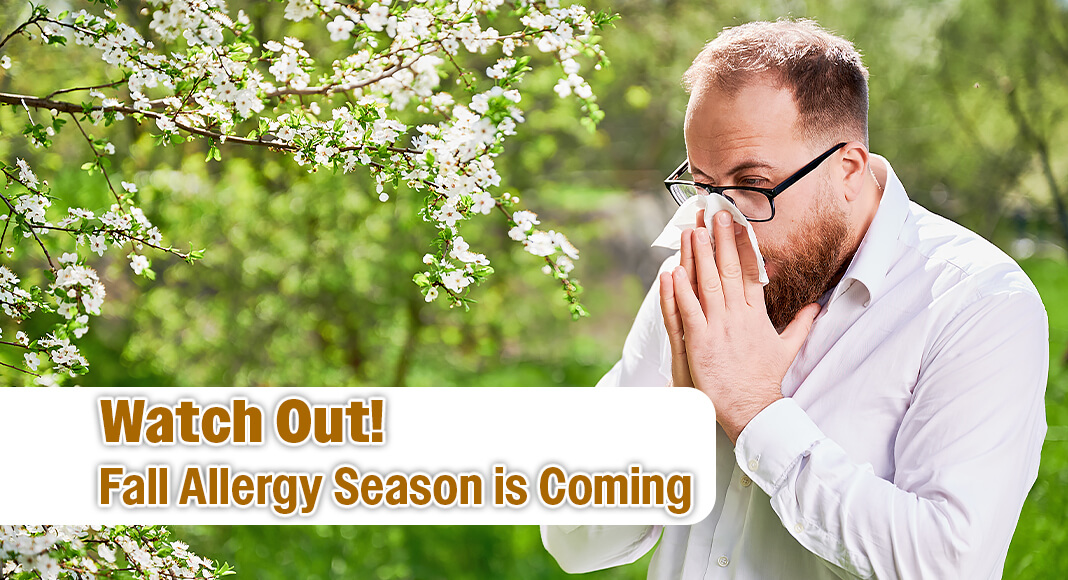
Getting Ahead of Fall Allergy Season

Translate to Spanish or other 102 languages!

 Although we’re still enjoying the summer sunshine, fall allergy season is right around the corner. Image for illustration purposes
 Although we’re still enjoying the summer sunshine, fall allergy season is right around the corner. Image for illustration purposes
- Advertisement -

CLEVELAND CLINIC – Although we’re still enjoying the summer sunshine, fall allergy season is right around the corner.

In fact, you may be reaching for the tissue box sooner than you think.

“I typically tell my patients fall allergies start right around Labor Day, and they go until the first snowfall. So, we’re in fall allergy season when kids start going back to school,” explained Sandra Hong, MD, an allergist with Cleveland Clinic.

- Advertisement -

If you suffer from fall allergies, Dr. Hong recommends starting allergy medications about two weeks before your symptoms typically begin.

Over-the-counter antihistamines can ease symptoms like sneezing, runny nose, watery eyes and itching – while nasal steroid sprays can help with congestion.

Dr. Hong also suggests limiting time outdoors when pollen counts are high, like early mornings or on dry, windy days.

When you’re coming in from outside, make sure to change your clothes, take a shower and keep your windows closed. This all helps prevent outdoor allergens from getting inside.

- Advertisement -

Above all, Dr. Hong said it’s important to know when to see an allergist.

“If someone is still feeling miserable despite using over-the-counter medications, or if their symptoms are interfering with daily life, it’s time to see an allergist,” Dr. Hong said. “There are so many other options that allergists can utilize to make people feel better.”

Dr. Hong said an allergist can figure out what’s triggering your symptoms and offer other treatment options that you can’t get over the counter, like allergy shots.

- Advertisement -
- Advertisement -

- Advertisement -

More Articles

Lab-Grown Mini Organs Show Promise in Predicting Breast Cancer Treatment Outcomes

Researchers at UC San Francisco have developed a new method to predict how different types of breast cancer will respond to treatment, using patient data from the I-SPY2 breast cancer trial and rapid testing on lab-grown mini tumors. 

STHS Hosting Community Blood Drive Amid National Blood Shortage, August 21st 

The United States is facing a severe blood shortage, prompting the American Red Cross to issue only the second national blood crisis declaration in its history.

Study Points to High Blood Pressure as a Key Factor in Rising Heart Disease Rates

Heart disease is the leading cause of death in the United States according to the Journal of the American College of Cardiology. Its impact extends beyond biology, with social detriments such as food insecurity, socioeconomic status and education influencing outcomes.

Dysfunctional, Not Missing, Immune Cells Explain Skin Cancer Risk in Immunosuppressed Patients

Researchers at The University of Texas MD Anderson Cancer Center have discovered that immunosuppressed patients with non-melanoma skin cancer are not missing the key cancer-fighting immune cells found in immunocompetent patients, but those cells – known as macrophages – have lost the ability to communicate effectively.
- Advertisement -
