

What You Need to Know About Dense Breast Tissue

Some women may be told after a mammogram that they have dense breast tissue. A diagnostic radiologist explains why that's important to know when it comes to detecting breast cancer.

Translate to Spanish or other 102 languages!

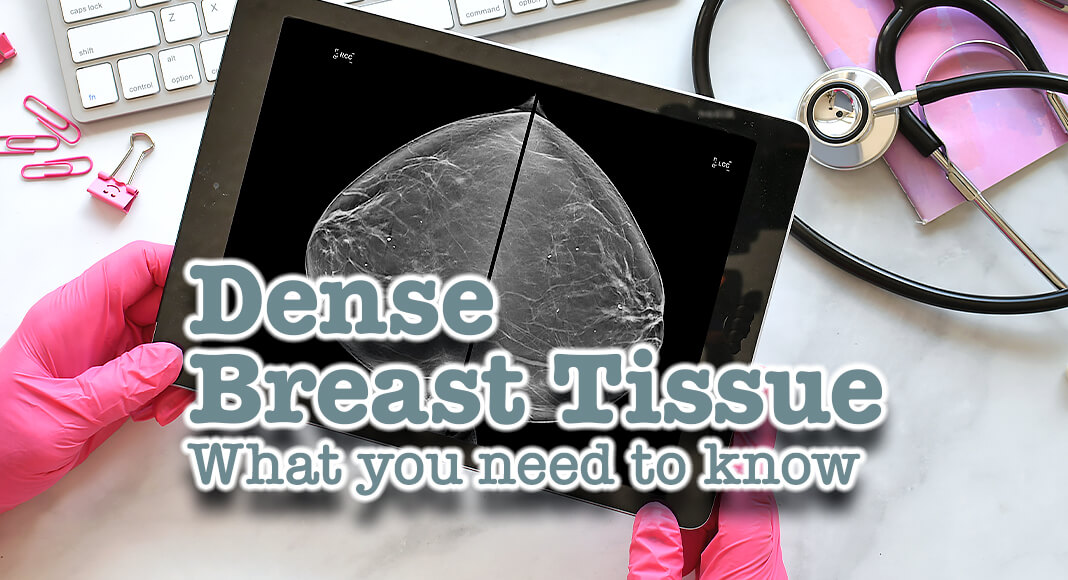
“So essentially dense breast tissue refers to the amount of milk ducts and connective tissue in the breast,” said Laura Dean, MD, diagnostic radiologist for Cleveland Clinic. “And the reason it’s important with respect to screening for breast cancer is that dense breast tissue, or the connective tissue and the milk ducts, show up on the mammogram as white.” Image for illustration purposes

Mega Doctor News

- Advertisement -

CLEVELAND CLINIC – With October being Breast Cancer Awareness Month, women are reminded to make sure they are getting their annual mammograms. 

And for some, they might discover they have dense breast tissue. 

So, what does that mean, and is it cause for concern? 

- Advertisement -

“So essentially dense breast tissue refers to the amount of milk ducts and connective tissue in the breast,” said Laura Dean, MD, diagnostic radiologist for Cleveland Clinic. “And the reason it’s important with respect to screening for breast cancer is that dense breast tissue, or the connective tissue and the milk ducts, show up on the mammogram as white.”

Dr. Dean said since dense breast tissue can show up as white on a mammogram, it can make it harder to spot breast cancer. That’s because breast cancer also shows up as white. 

Self-checks at home can also be challenging since dense breast tissue tends to have more lumps and bumps. 

Dr. Dean said dense breast tissue is very common in women, and in some cases, they may need additional screenings, like an ultrasound or breast MRI.

- Advertisement -

However, that is up to their physician to determine.

“The other part that we’re learning more about is how dense breast tissue can increase your risk for breast cancer a little bit compared to women who don’t have dense breast tissue,” she said. “So, women who have the most dense, or extremely dense tissue, are about four to six times more likely to develop breast cancer in their lifetime compared to someone who has really fatty breast tissue.”

Currently, breast cancer is the most common cancer for women in the united states aside from skin cancers. 

It is also the second leading cause of cancer death in women. 

- Advertisement -
- Advertisement -

- Advertisement -

More Articles

How to Make Snoring Easier to Live With

Anyone who has had to share a room — or worse, a bed — with a loud snorer knows the effect unchecked snoring can have on sleep, sanity, and emotional stability.

Burn Maximum Calories with These Easy-on-the-Joints Workouts

Looking for a way to burn calories that’s gentler on your body? According to a Cleveland Clinic sports medicine specialist, low-impact exercises can help you stay active while putting less stress on your joints.

STHS Heart Introduces Advanced WATCHMAN FLX Pro Technology for Patients with Atrial Fibrilation

Atrial fibrillation (AFib), the most common type of heart rhythm disorder, is on the rise in the United States due to an aging population, increasing rates of obesity and high blood pressure and the growing use of wearable devices that can detect irregular heartbeats. 

Salmonella Outbreak Linked to Shell Eggs

CDC, FDA, and public health officials in several states are investigating a multistate outbreak of Salmonella infections linked to shell eggs. If you have recalled shell eggs in your home or business, throw them out or return them
- Advertisement -