


loader image
Sunday, December 21, 2025
70.6 F
McAllen
- Advertisement -

What You Need to Know About Dense Breast Tissue

Some women may be told after a mammogram that they have dense breast tissue. A diagnostic radiologist explains why that's important to know when it comes to detecting breast cancer.

Translate to Spanish or other 102 languages!

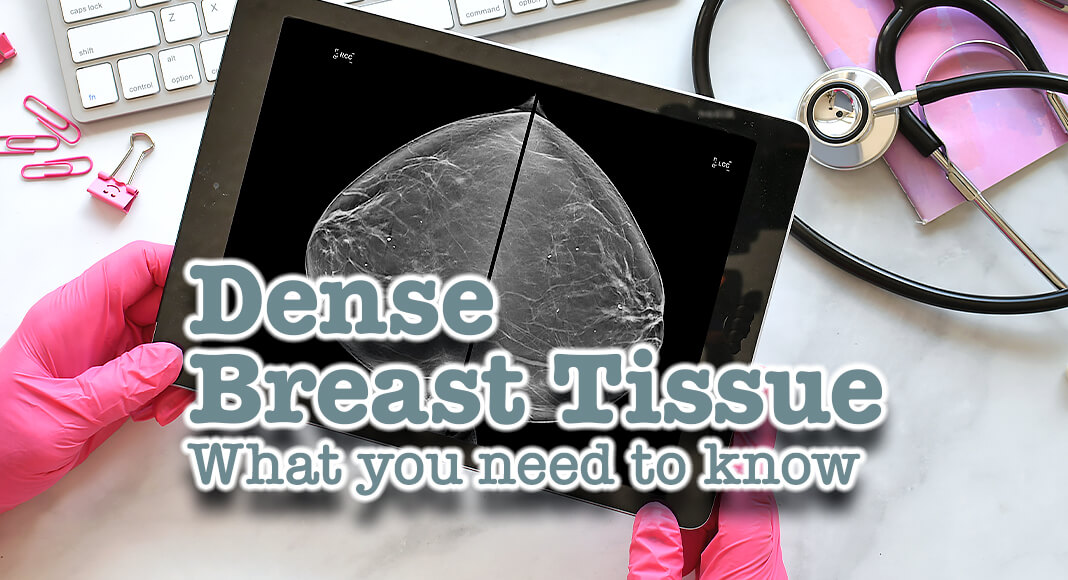
“So essentially dense breast tissue refers to the amount of milk ducts and connective tissue in the breast,” said Laura Dean, MD, diagnostic radiologist for Cleveland Clinic. “And the reason it’s important with respect to screening for breast cancer is that dense breast tissue, or the connective tissue and the milk ducts, show up on the mammogram as white.” Image for illustration purposes

Mega Doctor News

- Advertisement -

CLEVELAND CLINIC – With October being Breast Cancer Awareness Month, women are reminded to make sure they are getting their annual mammograms. 

And for some, they might discover they have dense breast tissue. 

So, what does that mean, and is it cause for concern? 

- Advertisement -

“So essentially dense breast tissue refers to the amount of milk ducts and connective tissue in the breast,” said Laura Dean, MD, diagnostic radiologist for Cleveland Clinic. “And the reason it’s important with respect to screening for breast cancer is that dense breast tissue, or the connective tissue and the milk ducts, show up on the mammogram as white.”

Dr. Dean said since dense breast tissue can show up as white on a mammogram, it can make it harder to spot breast cancer. That’s because breast cancer also shows up as white. 

Self-checks at home can also be challenging since dense breast tissue tends to have more lumps and bumps. 

Dr. Dean said dense breast tissue is very common in women, and in some cases, they may need additional screenings, like an ultrasound or breast MRI.

- Advertisement -

However, that is up to their physician to determine.

“The other part that we’re learning more about is how dense breast tissue can increase your risk for breast cancer a little bit compared to women who don’t have dense breast tissue,” she said. “So, women who have the most dense, or extremely dense tissue, are about four to six times more likely to develop breast cancer in their lifetime compared to someone who has really fatty breast tissue.”

Currently, breast cancer is the most common cancer for women in the united states aside from skin cancers. 

It is also the second leading cause of cancer death in women. 

- Advertisement -
- Advertisement -

- Advertisement -

More Articles

FDA Approves Daily Pill to Treat Low Libido in Women After Menopause

On December 15, 2025, the U.S. Food and Drug Administration (FDA) approved the medication Addyi (flibanserin) for the treatment of hypoactive sexual desire disorder (HSDD) in postmenopausal women under the age of 65.

Heart Association Highlights 2025’s Major Research Findings

In 2025, cardiovascular investigators worldwide reported findings that could help fill important gaps in preventing and managing conditions including high blood pressure, stroke, heart failure, dangerous blood clots and aortic stenosis.

Uniting Experts to Revolutionize Cancer Treatment

More than 70% of all cancers are impacted by mutations caused by a group of DNA-editing enzymes that drives tumor growth and drug resistance. The apolipoprotein B mRNA-editing enzyme catalytic polypeptide, or APOBEC, family, is a dominant factor in many cancers including bladder, breast, cervical, head and neck and lung.

Early Findings Show Breast Cancer Vaccine Produces Immune Response

Cleveland Clinic released its findings from the first phase of the clinical trial for the preventive breast cancer vaccine. 
- Advertisement -
×