








Mega Doctor News
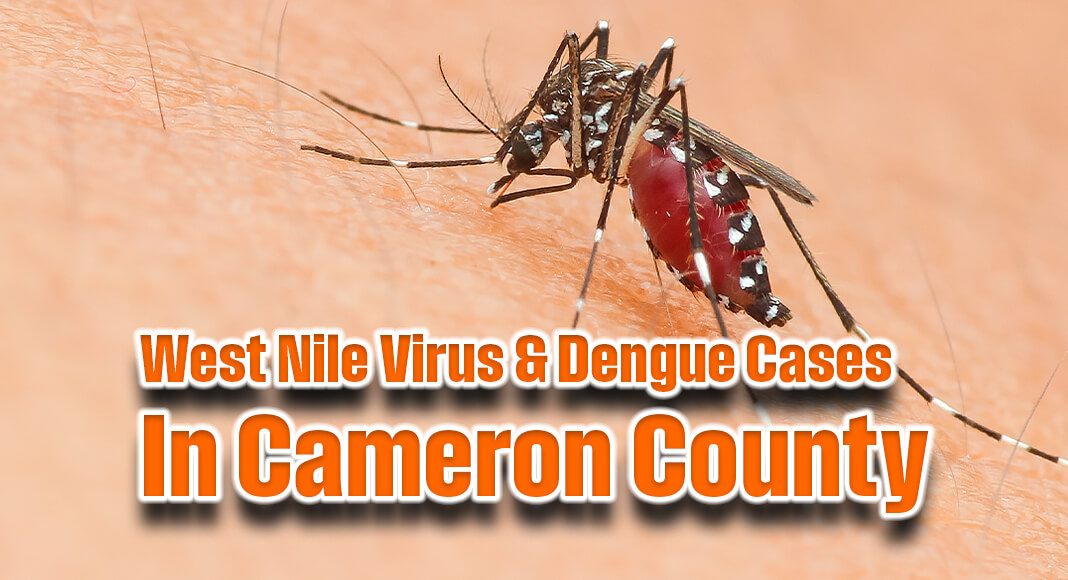
Cameron County Public Health has detected an increase of mosquito-borne disease activity in Cameron County, including the identification of two locally acquired cases of West Nile virus and one locally acquired case of dengue.
These are the first locally acquired mosquito-borne disease cases for Cameron County this year. The principal symptoms of both West Nile and dengue are similar: high fever, headache, joint pain, muscle and bone pain, nausea, vomiting and rash. Additional symptoms of dengue include pain behind the eyes, and other symptoms of West Nile include swollen lymph nodes and sore throat. Most people recover completely from both diseases within two weeks, but some may develop complications that will require medical attention as it may be fatal if untreated.
West Nile and dengue are transmitted in the same manner, through the bites of mosquitoes carrying the virus. While the mosquitoes which transmit West Nile and dengue are two different types of mosquitoes, they generally acquire the virus when they bite a person who has virus in their blood. After virus incubation for 8-10 days, an infected mosquito is capable of transmitting the virus while biting a healthy person. West Nile virus and dengue cannot be spread directly from person to person. “As soon as we receive a report of a potential mosquito borne disease, we work closely with municipalities to coordinate mosquito spraying in areas where the report originated and also conduct mosquito trapping which assists in identifying the types of mosquitoes we are seeing and if they are disease carrying,” stated Emeralda Guajardo, Health Administrator. “We do, however, want to remind our residents that it’s important that they take proactive steps to eliminate breeding sites.”

Cameron County Public Health reminds everyone to practice the “Four Ds” of DEET: Dress, Dusk and Dawn, and 1. Apply insect repellent that contains DEET (N, N-diethyl-m-toluamide), picaridin, or oil of lemon eucalyptus. Spray exposed skin and clothing with repellent. Another option is to use permethrin, which should be applied only to clothing. Be sure to read label instructions on any repellent.
Dress protectively by wearing long-sleeved shirts, long pants, socks, and shoes when you are outside. Stay indoors at dusk and dawn, times when infected mosquitoes are most active, but keep in mind that mosquitoes that carry the dengue virus usually bite during the day so county residents should use precautions throughout the day. Drain standing water in your backyard and neighborhood; old tires, flowerpots, and clogged rain gutters are mosquito-breeding sites.
For additional information on mosquito borne diseases, please visit www.edc.gov
Information Source: Cameron County Public Health