









Juan De La Garza, EMT-Basic with Lifeline, received the COVID-19 vaccine Saturday, Dec. 19, 2020, at the UTRGV School of Medicine’s Medical Education Building on the Edinburg Campus. (UTRGV Photo by Paul Chouy) 
A Mercedes Fire Department first responder gets the COVID-19 vaccine Saturday, Dec. 19, 2020, at the UTRGV School of Medicine, at the UTRGV School of Medicine’s Medical Education Building on the Edinburg Campus. (UTRGV Photo by Paul Chouy) 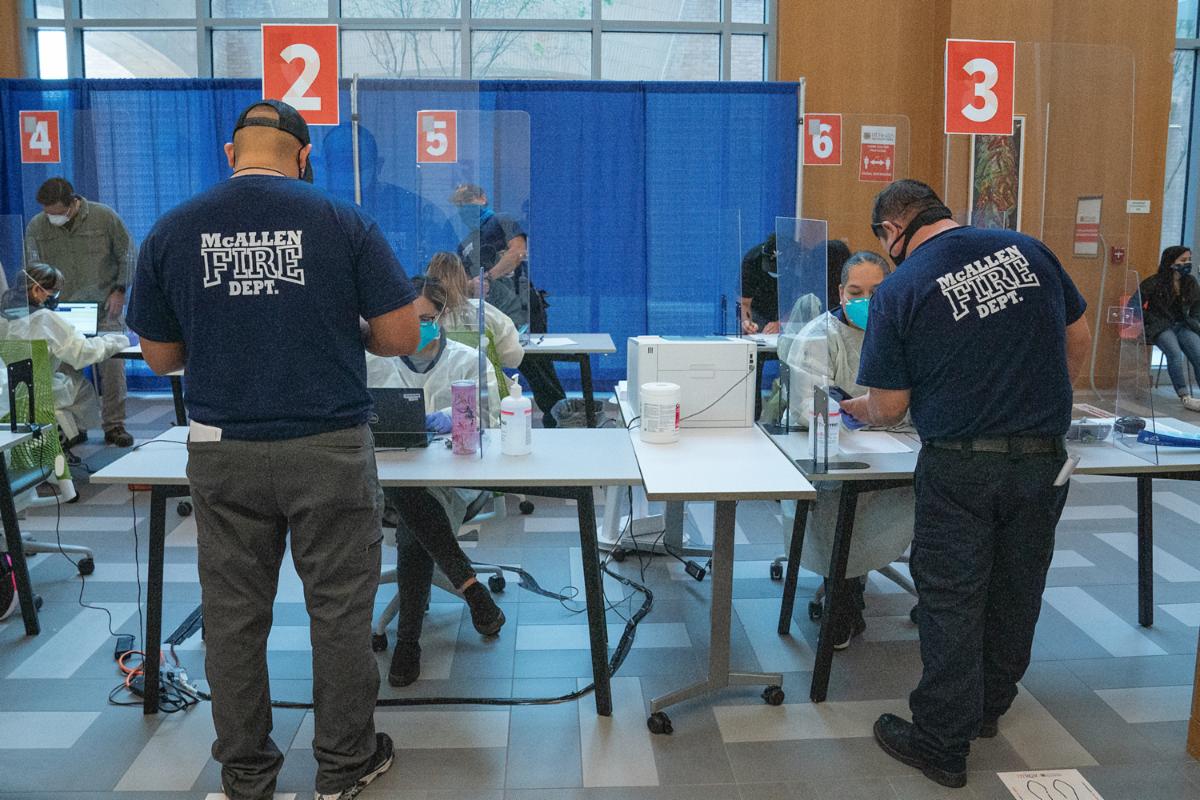
The UTRGV School of Medicine on Dec. 19, 2020, administered the COVID-19 vaccine to area EMS providers, like these from McAllen, at the UTRGV School of Medicine’s Medical Education Building on the Edinburg Campus. (UTRGV Photo by Paul Chouy) 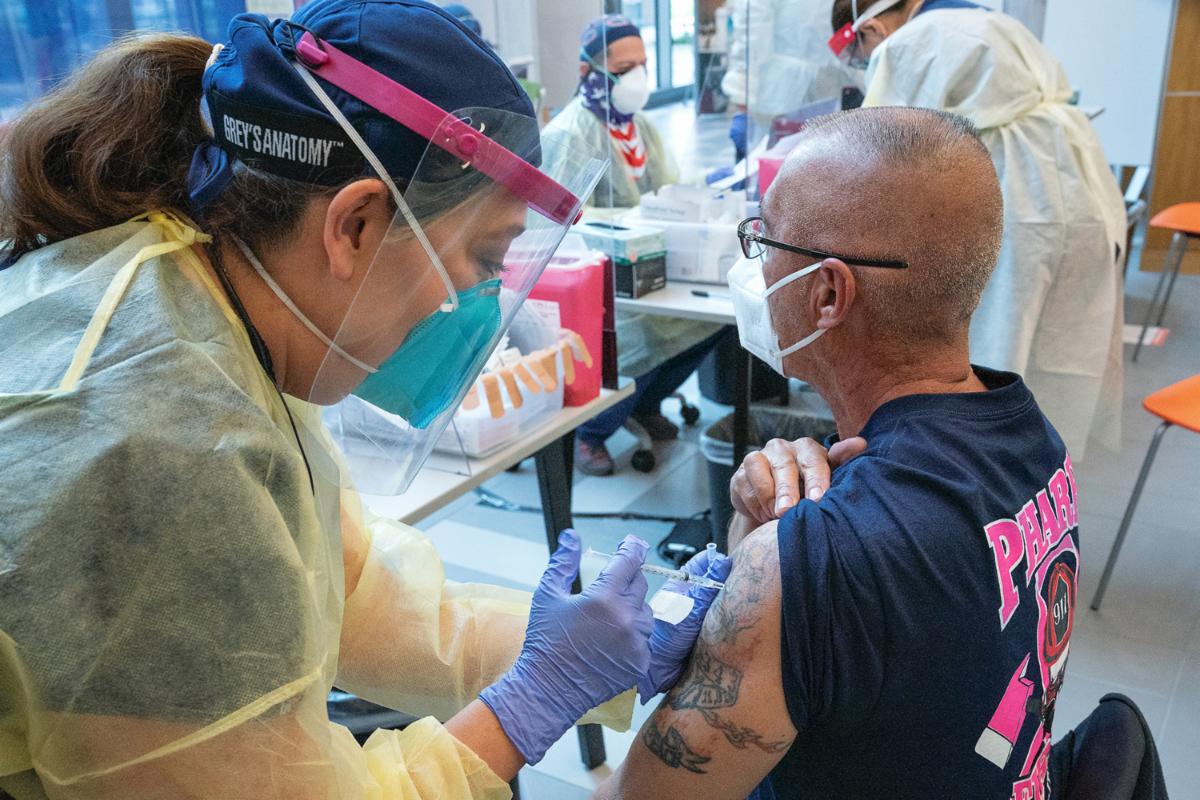
Esteban Gonzalez, a lieutenant with the Pharr Fire Department, received the COVID-19 vaccine Saturday, Dec. 19, 2020, at the UTRGV School of Medicine’s Medical Education Building on the Edinburg Campus. (UTRGV Photo by Paul Chouy)
Mega Doctor News
By News and Internal Communications
RIO GRANDE VALLEY, TEXAS –– UT Health RGV on Saturday continued to strengthen frontline personnel by administering the COVID-19 vaccine to EMS providers from across the Rio Grande Valley who engage in 9-1-1 emergency services like pre-hospital care and transport.
Saturday’s inoculations were part of UT Health RGV’s continued efforts for Phase 1A vaccination distribution as determined by the Centers for Disease Control and Prevention and the Texas Department of State Health Services.

“UTRGV and UT Health RGV are committed to serving the Valley community, as federal and state distribution guidelines expand,” said Dr. John H. Krouse, UTRGV executive vice president for Health Affairs and dean of the UTRGV School of Medicine.


