


Mega Doctor News

By Stacy Kish Yale School of Medicine
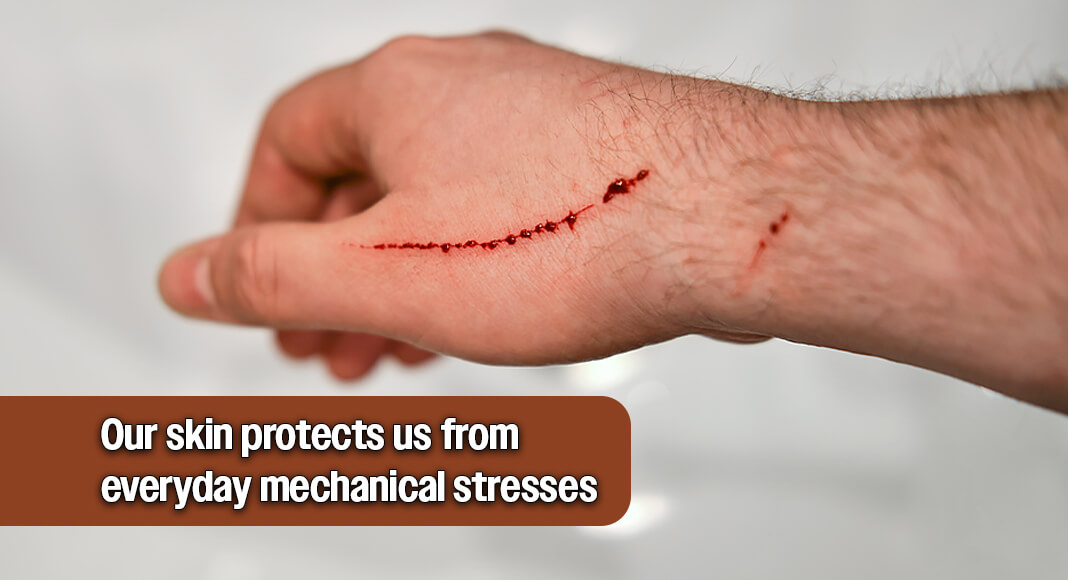
Newswise — Our skin protects us from everyday mechanical stresses, like friction, cuts, and impacts. A key part of this function—standing as a bulwark against the outside world—is the skin’s amazing ability to regenerate and heal. But where does this healing ability begin?
In a new study published in Nature Communications, an interdisciplinary team led by the laboratories of Kaelyn Sumigray, PhD, and Stefania Nicoli, PhD, discovered that, during the earliest stages of embryonic development, skin stem cells contribute to forming a protective skin layer that accelerates healing as the embryo grows.

Their findings reveal one of the earliest steps in how skin stem cells learn to repair tissue—knowledge that could help engineer improved skin grafts for transplantation.
“We were curious how to make skin more resilient to injury,” says Nicoli, associate professor of medicine (cardiology) and genetics at YSM and co-senior author on the study. “We found a mechanism that makes our skin tougher, which is exciting in a sense that it is an overarching concept that could apply across our entire adult body.”
The researchers examined development in zebrafish embryos, the skin organization of which is similar to human embryos. Specifically, they analyzed the thin transparent layer of cells that lines the zebrafish fin folds in the embryo, structures that transition into fins during development in a process that’s similar to limb development in mammals.
Because basal epidermal stem cells (BECs) in the fin fold provide a region of stronger, more resilient skin as the fin begins to form, the researchers defined the mechanism of such resilience.
The resilience of embryonic zebrafish skin depends on two proteins
The researchers found that in specific regions and patterns along the fin fold, BECs expressed two proteins—collagen and laminin—that contribute to the extracellular matrix, a non-cellular network of proteins and carbohydrates that surrounds and supports the cells in tissues and organs.
BECs that promote laminin reduce desmosome formation—protein complexes that anchor cells together—thereby weakening cell-to-cell adhesion and allowing greater mobility during tissue injury. In contrast, BECs that promote collagen increase desmosomes, strengthening specialized junctions that ultimately hinder skin repair.
The two paths work in conjunction to give the embryo both the room to grow a fin and then the ability to heal quickly, the researchers found.
“The stem cells have a mechanical logic to build a protective layer,” says Nicoli. “This is the first evidence of this function, which makes us rethink the properties of stem cells.”
Like zebrafish, early human fetal skin is organized into two layers: an outer protective layer called the periderm and an underlying layer of stem cells that separates the periderm from the extracellular matrix.
Sumigray, Nicoli, and their colleagues compared their findings in the embryonic zebrafish fin fold to a bilayer model of the human epidermis. Their modeling revealed that collagen and laminin matrices similarly influence human skin cells. Specifically, they found that laminin inhibited the proteins that drive desmosome junction formation.
This study supports ongoing research on intratissue communication and offers a new approach to strengthening cellular connections within the body’s protective tissue. The findings could provide a new path to develop skin healing methods through tissue engineering and regenerative medicines, including organ repair and skin transplants.
“This has broad implications,” says Nicoli. “Although stem cells are present throughout the adult body, they typically remain dormant. It would be exciting if we could one day guide stem cells to create personalized mechanical shields that protect the tissues where they reside.”