


Mega Doctor News

UV radiation
Ultraviolet (UV) radiation is a form of non-ionizing radiation that is emitted by the sun and artificial sources, such as tanning beds. While it has some benefits for people, including the creation of Vitamin D, it also can cause health risks.
- Our natural source of UV radiation:
- The sun
- Some artificial sources of UV radiation include:
- Tanning beds
- Mercury vapor lighting (often found in stadiums and school gyms)
- Some halogen, fluorescent, and incandescent lights
- Some types of lasers
Types of UV radiation rays
UV radiation is classified into three primary types: ultraviolet A (UVA), ultraviolet B (UVB), and ultraviolet C (UVC), based on their wavelengths. Almost all the UV radiation that reaches earth is UVA though some UVB radiation reaches earth. UVA and UVB radiation can both affect health, but UVA penetrates deeper into the skin and is more constant throughout the year.
Benefits
- The production of vitamin D, a vitamin essential to human health.
Vitamin D helps the body absorb calcium and phosphorus from food and assists bone development. The World Health Organization (WHO) recommends 5 to 15 minutes of sun exposure 2 to 3 times a week.
Risks
- Sunburn is a sign of short-term overexposure, while premature aging and skin cancer are side effects of prolonged UV exposure.
- UV exposure increases the risk of potentially blinding eye diseases if eye protection is not used.
- Overexposure to UV radiation can lead to serious health issues, including cancer.
Skin cancer is the most common cancer in the United States. The two most common types of skin cancer are basal cell cancer and squamous cell cancer. Typically, they form on the head, face, neck, hands, and arms because these body parts are the most exposed to UV radiation. Most cases of melanoma, the deadliest kind of skin cancer, are caused by exposure to UV radiation.
Anyone can have harmful health effects from UV radiation, but the risks increase in people who
- Spend a lot of time in the sun or have been sunburned.
- Have light-color skin, hair, and eyes.
- Take some types of oral and topical medicines, such as antibiotics, birth control pills, and benzoyl peroxide products, as well as some cosmetics. These medications may increase skin and eye sensitivity to UV in all skin types.
- Have a family member with skin cancer.
- Are over age 50.
To protect yourself from UV radiation
- Stay in the shade, especially during midday hours.
- Wear clothes that cover your arms and legs.
- Consider options to protect your children.
- Wear a wide brim hat to shade your face, head, ears, and neck.
- Wear wraparound sunglasses that block both UVA and UVB rays.
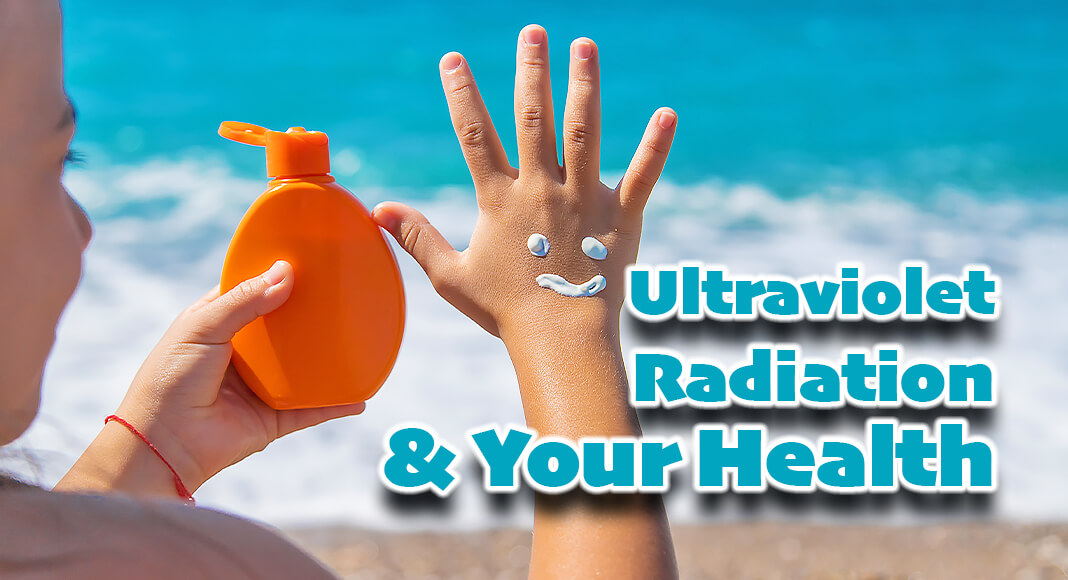
- Use sunscreen with sun protection factor (SPF) 15 or higher, for both UVA and UVB protection.
- Avoid indoor tanning. Indoor tanning is particularly dangerous for younger users; people who begin indoor tanning during adolescence or early adulthood have a higher risk of developing melanoma.