








Mega Doctor News
Newswise — As warmer weather beckons everyone outdoors, a West Virginia University expert reminds people to take cover from the sun’s ultraviolet rays, which can cause deadly skin cancers like melanoma.

Dr. Alan Thomay, associate professor in the WVU School of Medicine and a member of the WVU Cancer Instituteresearch programs, said someone dies from melanoma every hour, every day.

The most aggressive skin cancer, melanoma has more chance than other cancers of spreading elsewhere in the body if not found and treated early. Over the past decade, diagnoses of new invasive melanoma cases have increased by more than 25%. This year, an estimated 100,000 people in the United States will be diagnosed with the disease.
Quotes:
“Melanoma usually starts in skin cells that produce melanin, a pigment that gives the skin its color and protects the skin cells from injury. The cells of a melanoma often continue to produce melanin, thus giving them darker shades of color such as black, brown, tan or blue.
“Everyone has the risk of developing melanoma, some more than others. One sunburn bad enough to blister or peel, or five or more uncomplicated sunburns can double your risk. Skin damage accumulates over time, and chronic sun exposure, even without obvious burn, will increase your risk.
“Even more alarming are the risks for melanoma with the utilization of tanning beds. Data shows that just one indoor tanning session before the age of 35 will increase your risk for melanoma by 75%. Fifty or more hours in a tanning bed will triple your risk for melanoma.
“Also at higher risk are those with fair skin, freckles and light hair, or those with a first-degree relative with a history of melanoma. People also have about a 5% to 10% risk of developing a second melanoma if they have had one in the past.
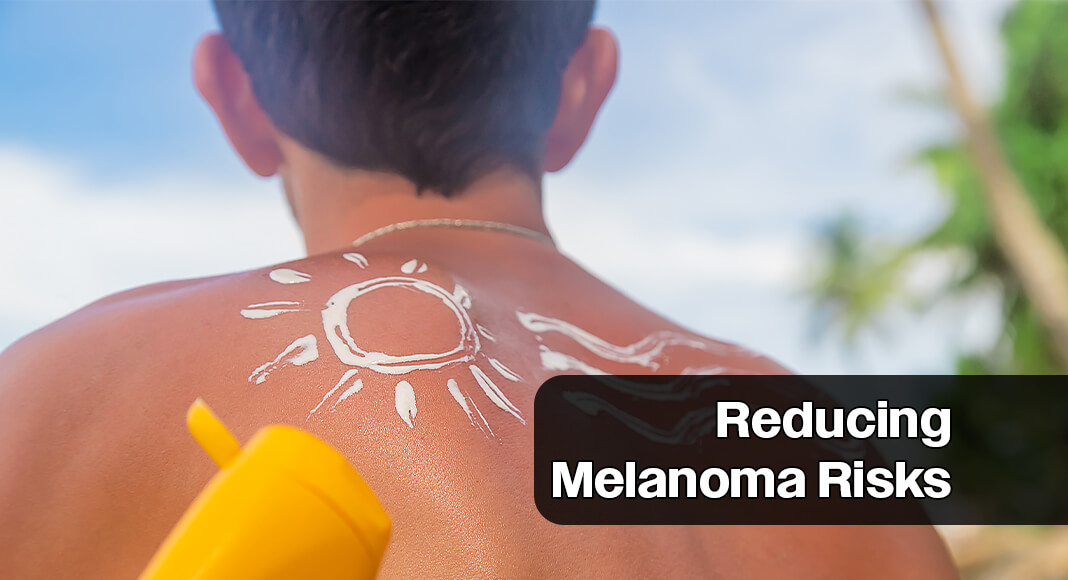
“Reducing exposure to ultraviolet radiation is preventative in the majority of cases. A good practice is a routine use of sunscreen — broad-spectrum protection with an SPF 30 or higher. Wear protective sunglasses, hats and other lightweight, long-sleeved clothing. Avoid the midday sun, 10 a.m. to 2 p.m. Seek shade when outdoors, though it is still possible to damage skin in the shade.
“The most important warning sign of melanoma is a spot on the skin that is new or that has changes in size, shape or color. Although most people have moles and almost all moles are benign, moles that develop later in life or changing moles need examination.” — Dr. Alan Thomay, associate professor of surgery, Division of Surgical Oncology, West Virginia University School of Medicine, and member, WVU Cancer Institute


