








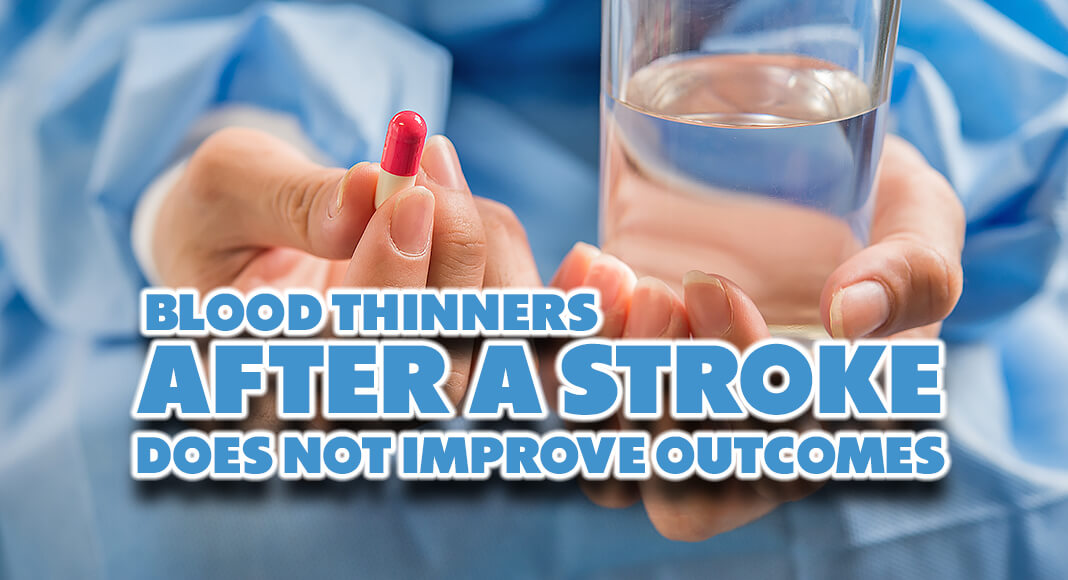
Taking Blood Thinners After a Stroke Does Not Improve Outcomes, Study Says

Translate to Spanish or other 102 languages!

Adding blood thinners to clot-busting medication after a stroke does not appear to improve the outcomes, according to a new study. Image for illustration purposes
- Advertisement -
  • About 15 million people around the world have a stroke each year, with about 62% of cases being ischemic strokes. 
  • The main treatment for ischemic stroke is a clot-busting medication delivered within 3 hours of having a stroke. 
  • After a stroke, a doctor may prescribe blood-thinning medications to help prevent clots from forming again. 
  • Researchers from the Washington University School of Medicine in St. Louis, MO, have found that giving blood thinners in conjunction with clot-busting medications when a person has an ischemic stroke did not improve the person’s 90-day outcome.

Researchers report that about 15 million people around the world have a stroke in the course of a year. About 62%Trusted Source of those people will have an ischemic stroke where blood flow to the brain is stopped due to arterial blockages.

Follow the link below to Medical News Today to read the full story:

https://www.medicalnewstoday.com/articles/taking-blood-thinners-after-a-stroke-does-not-improve-outcomes-study-says?utm_source=Sailthru%20Email&utm_medium=Email&utm_campaign=MNT%20Daily%20News&utm_content=2024-02-15&apid=&rvid=4ba4ec80177cae00eabc43b8bc6648d598c4a356d104663735777e0a0f8b5c9f

- Advertisement -

Information Source: https://www.medicalnewstoday.com

- Advertisement -

- Advertisement -

- Advertisement -

More Articles

Study Finds Simple Urine Test Outperforms MRIs in Cancer Tracking

A new urine test performed better than PSA-based testing and MRI for monitoring low-risk prostate cancers on active surveillance. Use of the test to determine the need for repeat “monitoring” biopsies would have avoided up to 64% of unnecessary biopsies while maintaining timely detection of higher-grade cancers that merit treatment, according to a study published in The Journal of Urology.

Why 8 Glasses of Water a Day Might Be a Myth

Have you ever wondered how much water you should drink each day? Turns out, there’s no one-size-fits-all answer.

USDA “Real Food First” Rule Doubles Stocking Requirements for SNAP Retailers

The U.S. Department of Agriculture (USDA) published the final rule regarding stocking standards for retailers participating in the Supplemental Nutrition Assistance Program (SNAP), ensuring a broader variety of nutritious food is available to SNAP participants at authorized retailers across the country.

Why Older Adults are Choosing Edibles Over Pills

For adults over 60, cannabis use is increasing faster than in any other demographic.
- Advertisement -


