








Mega Doctor News
National Weather Service
The National Weather Service has several tips and warnings with summer temperatures hitting well over the 100-degree mark. Heat can be very taxing on the body and can lead to heat related illnesses or make existing health conditions worse. Everyone can be vulnerable to heat, but some more so than others. According to The Impacts Of Climate Change On Human Health In The United States: A Scientific Assessment the following groups are particularly vulnerable to heat; check in with friends and relatives who fall in one of these populations, especially if they don’t have air conditioning.
- Young children and infants are particularly vulnerable to heat-related illness and death, as their bodies are less able to adapt to heat than are adults.
- Older adults, particularly those who have pre-existing diseases, take certain medications, are living alone or have limited mobility who are exposed to extreme heat can experience multiple adverse effects.
- People with chronic medical conditions are more likely to have a serious health problem during a heat wave than healthy people.
- Pregnant women are also at higher risk. Extreme heat events have been associated with adverse birth outcomes such as low birth weight, preterm birth, and infant mortality, as well as congenital cataracts.
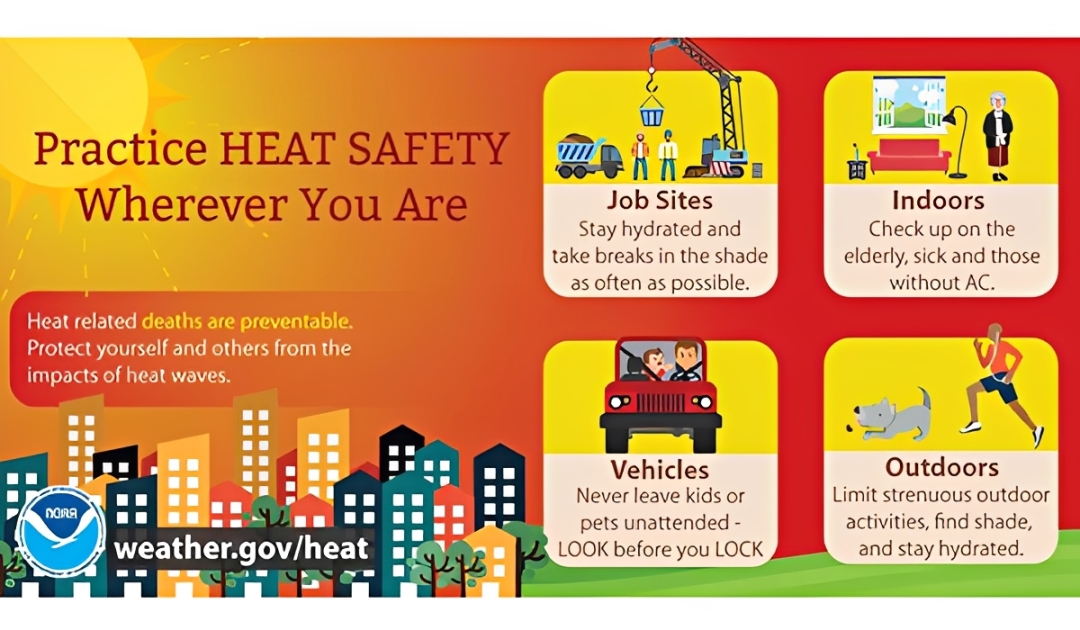
NWS Safety information on Children, Pets and Vehicles: It is NEVER safe to leave a child, disabled person or pet locked in a car, even in the winter. If you have a toddler in your household, lock your cars, even in your own driveway. Kids may play in cars or wander outside and get into a car and can die in 10 minutes! A reported 31 children died in hot cars in 2025. To see the latest information, go to this link. Deaths routinely are reported as early as April and tragedies continue into December in southern states.

Find out more about how cars can heat up quickly when left in the sun. Information and resources in both English and Spanish from the National Highway Traffic Safety Administration.
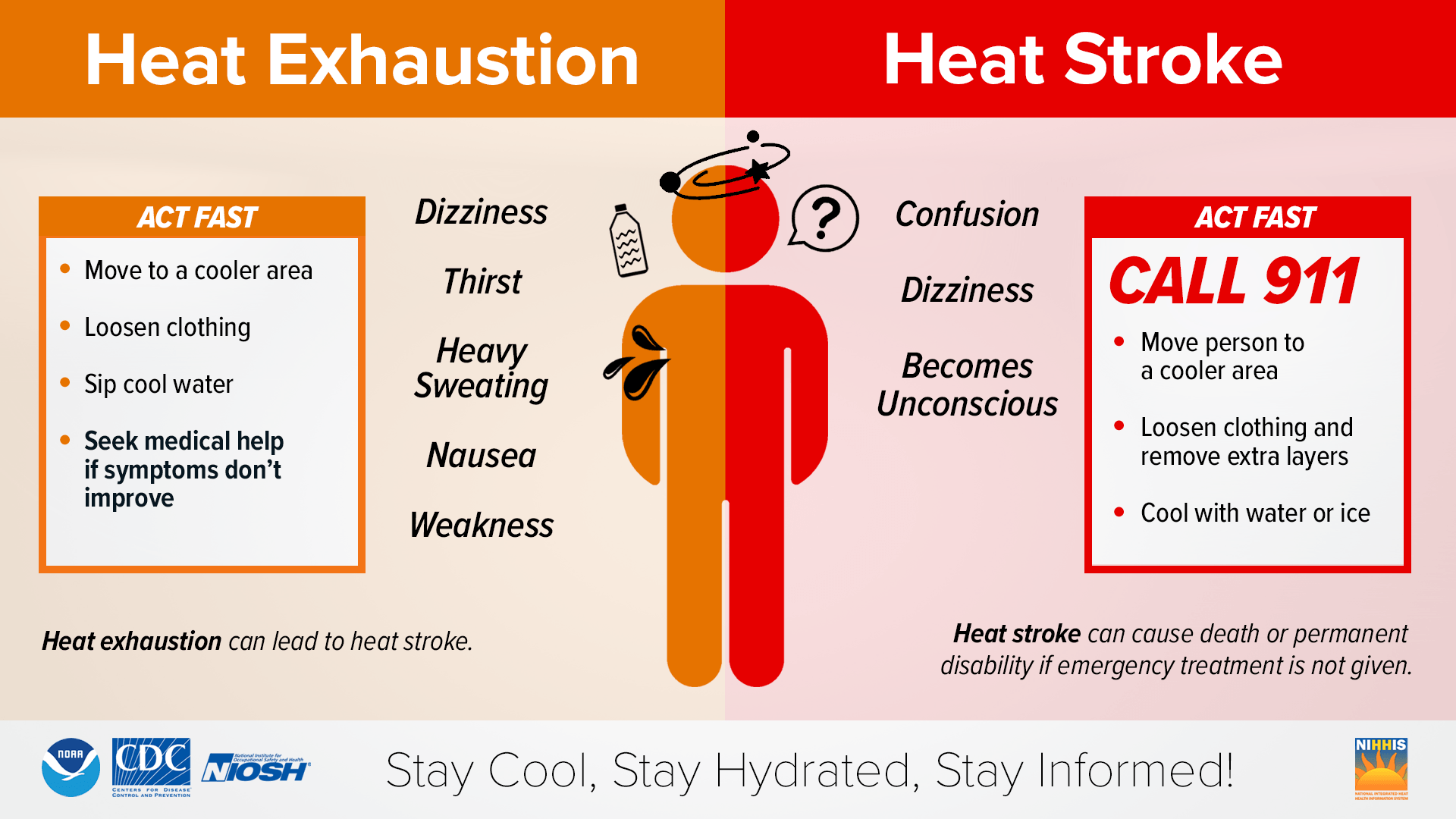
During extremely hot and humid weather, your body’s ability to cool itself is challenged. When the body heats too rapidly to cool itself properly, or when too much fluid or salt is lost through dehydration or sweating, body temperatures rise and you or someone you care about may experience a heat-related illness. It is important to know the symptoms of extreme heat exposure and the appropriate responses. The Centers for Disease Control and Prevention (CDC) provides a list of warning signs and symptoms of heat illness, and recommended first aid steps. Some of these symptoms and steps are listed below.
Heat Cramps
Heat cramps may be the first sign of heat-related illness, and may lead to heat exhaustion or stroke.
- Symptoms: Painful muscle cramps and spasms usually in legs and abdomen. Heavy sweating.
- First Aid: Apply firm pressure on cramping muscles or gently massage to relieve spasm. Give sips of water unless the person complains of nausea, then stop giving water.
Seek immediate medical attention if cramps last longer than 1 hour.
Heat Exhaustion
- Symptoms: Heavy sweating; weakness or tiredness; cool, pale, clammy skin; fast, weak pulse; muscle cramps; dizziness, nausea or vomiting; headache; fainting.
- First Aid: Move person to a cooler environment, preferably a well air-conditioned room. Loosen clothing. Apply cool, wet cloths or have person sit in a cool bath. Offer sips of water.
Seek immediate medical attention if the person vomits, symptoms worsen or last longer than 1 hour
Heat Stroke
- Symptoms: Throbbing headache; confusion; slurred speech; nausea; dizziness; body temperature above 103°F; hot, red, dry or damp skin; rapid and strong pulse; fainting; loss of consciousness.
- First Aid: Call 911 or get the victim to a hospital immediately. Heat stroke is a severe medical emergency. Delay can be fatal. Move the victim to a cooler, preferably air-conditioned, environment. Reduce body temperature with cool cloths or bath. Use fan if heat index temperatures are below the high 90s. A fan can make you hotter at higher temperatures. Do NOT give fluids.
Using a fan to blow air in someone’s direction may actually make them hotter if heat index temperatures are above the 90s. For more information on all of these heat related illnesses, see the Centers for Disease Control and Prevention (CDC) site.
Information source: National Weather Service


