








Study Links Sleep Disorders with More Severe Outcomes from COVID

Translate to Spanish or other 102 languages!

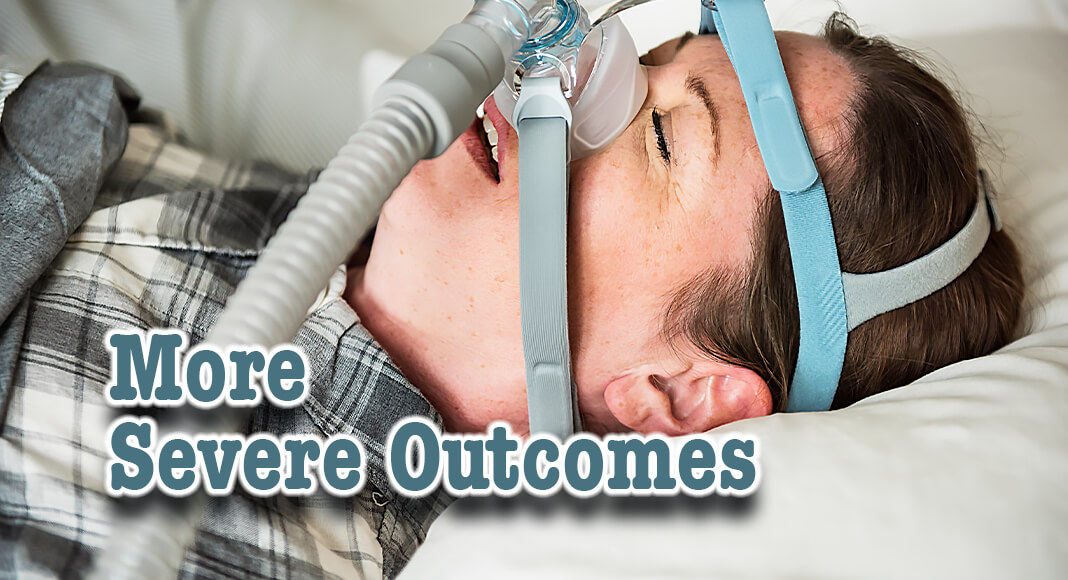
A recent Cleveland Clinic study found that people with certain sleep disorders, like sleep apnea, had more severe outcomes with COVID-19, including a 31% higher rate of hospitalization and mortality. Image for illustration purposes

Mega Doctor News

- Advertisement -

CLEVELAND CLINIC – A recent Cleveland Clinic study found that people with certain sleep disorders, like sleep apnea, had more severe outcomes with COVID-19, including a 31% higher rate of hospitalization and mortality.

“This was a study that we undertook to better understand the relationship of sleep disordered breathing and lowering of oxygen during sleep as it relates to COVID-19,” explained Reena Mehra, MD, director of sleep disorders research for Cleveland Clinic.

Dr. Mehra said while those with sleep apnea, or those who experience lowered oxygen while sleeping, did have more severe outcomes with COVID-19, they were not at a higher risk for contracting the virus.

- Advertisement -

They also learned that it didn’t make a difference if people were using a CPAP machine prior to getting sick. They still experienced the same kind of severe outcomes.

Dr. Mehra said that could be due to inconsistent use of the CPAP machine or residual hypoxia. Hypoxia is the absence of oxygen in the body’s tissues.

“We also don’t know if treating the sleep apnea, which theoretically should address the hypoxia, we don’t know the degree to which it was addressing the hypoxia. So if there was some residual hypoxia there or oxygen lowering, then that may be contributing to poorer COVID-19 outcomes,” she said.

Dr. Mehra said they plan to continue looking further into the connection between sleep disorders and COVID-19, as well as how people’s sleep is impacted once they recover from the virus.


- Advertisement -
- Advertisement -

- Advertisement -

More Articles

DHR Health Transplant Institute Earns Top State and National Rankings

The DHR Health Transplant Institute announced today that it has been recognized among the state’s and nation’s top performing kidney transplant centers, earning the no. 2 ranking in the State and no. 16 ranking in the Nation, according to the Scientific Registry of Transplant Recipients (SRTR).  

New Noninvasive Tech Tracks Infant Vital Signs Without Wires

In the neonatal intensive care unit, the most fragile patients in medicine are often the most heavily wired. Premature babies, some weighing less than a pound, can be tethered to a tangle of cables, monitors, and sensors. Each blood draw to check sugar levels or electrolytes means another needle, another bandage, another moment of stress for an infant whose skin is still forming.

STHS McAllen Receives National Award for Advancing Cardiac Arrest Care & Improving Patient Survival

In the moments following cardiac arrest, every second counts. Rapid intervention, seamless teamwork and evidence-based care can make the difference between life and death.

The Truth About Hot Dogs and Your Health

July is National Hot Dog Month. Reports show Americans eat roughly 20 billion hot dogs every year. While they’re okay to have on occasion, they shouldn’t be a regular part of your diet.
- Advertisement -
