Mega Doctor News
As the nation’s largest law enforcement agency, U.S. Customs and Border Protection safeguards our nation’s borders with a mix of advanced technology, enhanced infrastructure and highly skilled personnel.
But that’s not all… a team of specially trained agents help save lives.
The U.S. Border Patrol trains and deploys certified emergency medical technicians (EMTs) and paramedics as first responders through its Emergency Medical Services (EMS) program to handle urgent medical matters in the field, particularly during border security operations.

Locally, the Rio Grande Valley Sector – one of nine Border Patrol Sectors located along the nation’s southwest border – has a team of nearly 240 agents who underwent rigorous training to become certified EMTs and paramedics who provide emergency medical care in the field throughout the region.
“Our program is the only American Heart Association training center in the Border Patrol and oversees CPR training for 17 other Border Patrol sectors,” says Gloria I. Chavez, Chief Patrol Agent, Rio Grande Valley Sector, U.S. Border Patrol. “There are only 20 sectors nationwide, so we provide this training to the majority of our nation’s agents.”
From near drownings, heat-related illnesses and traumatic brain and cerebrovascular injuries to life-threatening snakebites and bee stings, the Border Patrol’s certified EMTs and paramedics respond to a wide range of medical incidents, including those involving their own fellow agents.
“U.S. Border Patrol agents serve as a critical link between the scene of an emergency along the treacherous terrain of the Texas/Mexico border and the hospital; they’re the first line of defense in a medical emergency, providing crucial interventions, rendering life-saving aid and ultimately stabilizing patients before they arrive to the emergency room,” says Tom Castaneda, System Director of Marketing and Public Relations. “Locally, the heroic actions of the agents who are part of the Border Patrol’s Emergency Medical Services program have been instrumental in saving lives and providing timely medical care to those in need.”
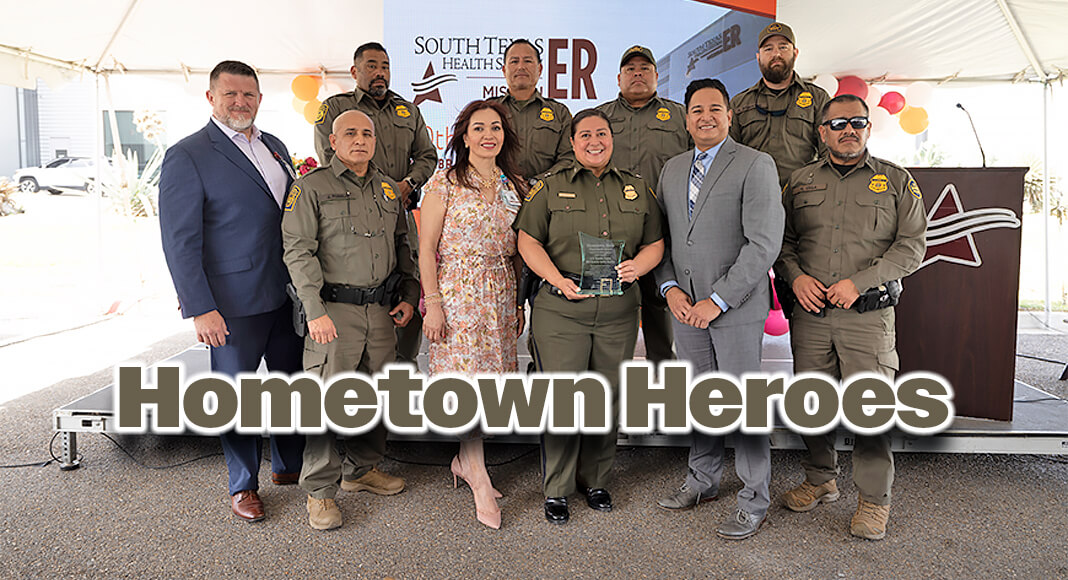
Throughout the year, South Texas Health System honors individual first responders and crews with its prestigious Hometown Heroes Award for going the extra mile to administer timely medical attention to critically ill or injured patients and swiftly transport them to an STHS facility.
But during a recent celebration commemorating the 10th anniversary of STHS ER Mission – the freestanding ER that’s closest to the border in western Hidalgo County and Starr County – STHS presented its Hometown Heroes Department Award to the U.S. Border Patrol Rio Grande Valley Sector. The distinction recognizes the dedication of the agency’s entire EMS unit for its for exceptional dedication, commitment and service to the health & wellbeing of individuals requiring emergency medical care along the border in South Texas.
“Every day our Border Patrol agents are making a difference in our communities,” says Chief Chavez. “It’s always a huge honor to hear from the community about those instances when our agents make a huge difference in the lives of individuals.”
In the last decade, U.S. Border Patrol has transferred hundreds of critically ill and injured patients to STHS McAllen, STHS Edinburg, STHS Heart, STHS Children’s and the system’s seven freestanding emergency departments. Since January 2025, the agency has transported 27 emergent patients to STHS ER Mission alone.
“With incidents ranging from minor injuries or illnesses to catastrophic events, agents within the U.S. Border Patrol Rio Grande Valley Sector are instrumental in rescue operations along our border,” says Castaneda. “The training these exceptional men and women are provided goes beyond safety and security and includes on-the-scene training to treat patients swiftly and get them to the emergency room for life-saving care. We’re grateful for their contributions to the safety, health and well-being of those in need.”
If you would like to nominate a first responder for their outstanding service – whether a firefighter, police officer, emergency medical technician or Border Patrol agent — to receive South Texas Health System’s Hometown Heroes Award, visit https://www.southtexashealthsystem.com/hometown-heroes-award/nomination-form to complete and submit the online form.