







Mega Doctor News

Whether elective or emergency, surgery may be recommended to a patient for a variety of reasons, including to help with a diagnosis, take a biopsy of a suspicious lump, remove or repair diseased tissue or organs and implant mechanical or electronic devices.
Globally, a staggering 310 million major surgeries are performed each year, according to the National Center of Biotechnology Information, with about 40 to 50 million of those procedures occurring in the United States.
Surgical care can treat up to one third of the global burden of disease, per the National Institutes of Health, with improved access to surgical care – including improvements in infrastructure, equipment and a highly skilled surgical workforce – critical to helping improve and save lives.

In the Rio Grande Valley, South Texas Health System is committed to meeting the need for comprehensive surgical services across the ever-growing four-county region.
For the last three years, the number of surgical procedures completed across STHS facilities has increased steadilyacross STHS’ acute care facilities: STHS McAllen, STHS Edinburg, STHS Heart and STHS Children’s.
In 2023, STHS facilities performed 22,181, a 10% increase from 2022, with 2024 surgery numbers expected to eclipse the previous year’s figures.
Through concerted efforts, including the recent expansion of STHS Edinburg’s surgical suite and the addition of robotic surgery services at STHS Heart, the healthcare system is ensuring Valley residents have access to the comprehensive surgical resources required to lead healthy lives.
In order to provide enhanced patient care, ensure positive patient experiences and help improve overall patient outcomes, STHS relies on having a strong healthcare workforce, with the future of the industry locally in the hands of students ready to serve as the next generation of healthcare professionals.
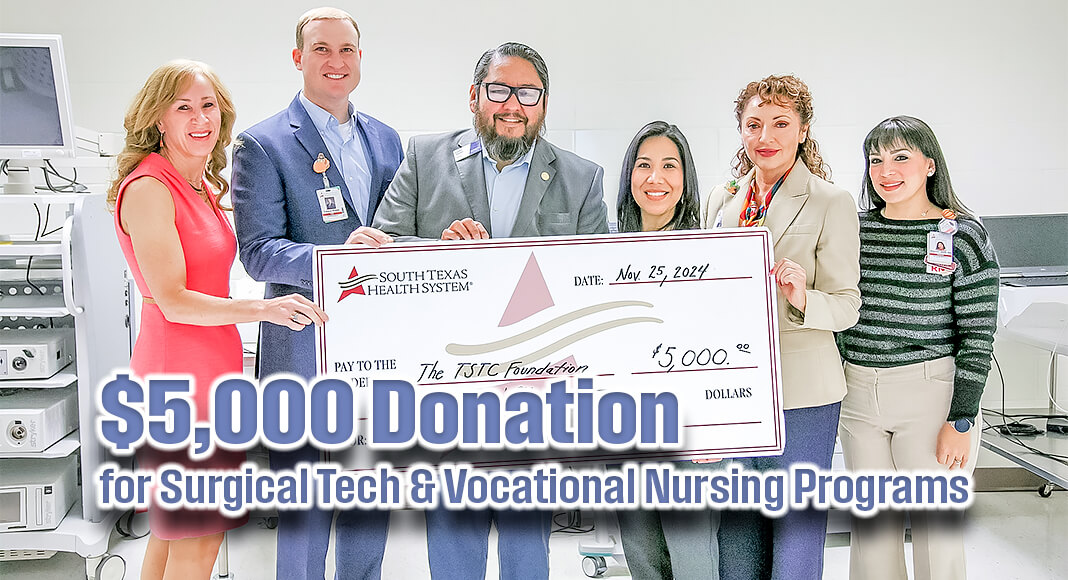
Understanding the importance education plays in creating a proficient health workforce locally, STHS recently donated $5,000 to The TSTC Foundation in support of Texas State Technical College’s thriving Surgical TechProgram at the college’s Harlingen campus. Additionally, the funds will support the Vocational Nursing and Allied Health programs in Cameron County.
“It’s been an honor to partner with TSTC Harlingen over the years; the college has produced a highly skilled crop of surgical techs that have brought their talents to our operating rooms at STHS,” says Lance Ames, CEO, STHS Edinburg & STHS Children’s. “It’s the only surgical tech program of its kind in the four-county region, so it’s important to support college’s efforts to expand the program to more students.”
Surgical technologists play a crucial role within a surgical team. They’re responsible for preparing an operating room before surgery, collaborate closely with surgeons and nurses to prepare a patient before a procedure, and assist before, during and after surgery, as needed.
“Surgical technologists are integral to helping South Texas Health System achieve its mission of providing quality, compassionate care to patients in the communities we serve,” says Emma Montes-Ewing, Chief Executive Officer, STHS McAllen. “Our highly trained surgical techs help ensure positive patient outcomes through the diligent work they do preparing our operating rooms and ensuring everything meets the stringent requirements to ensure thehighest standard of care.”
In addition to making the donation to The TSTC Foundation, STHS leaders had the opportunity to tour the TSTC Harlingen campus and learn more about the programs that would directly benefit from the funding.
“South Texas Health System’s support will be instrumental to our Allied Health Programs in the coming semesters as we aim to recruit, graduate and place more students in the healthcare industry in the Rio Grande Valley and throughout Texas,” says Like Lucio, Senior Development Officer, The TSTC Foundation. “We hope to continue to partner with STHS to help ensure our students obtain their clinical hours in a variety of hospital/healthcare settings. We believe that this is the beginning of a great partnership that can provide our students with incredibleopportunities in the future.”
As the largest integrated network of care in the Rio Grande Valley, South Texas Health System employs nearly 3,500 employees across 12 facilities in the region, all committed to providing quality, compassionate care. To learn more about STHS, including its philanthropic efforts aimed at helping develop a strong healthcare workforce, download the system’s 2024 Community Profile at https://www.southtexashealthsystem.com/about.


