








Mega Doctor News
By Selene Rodriguez
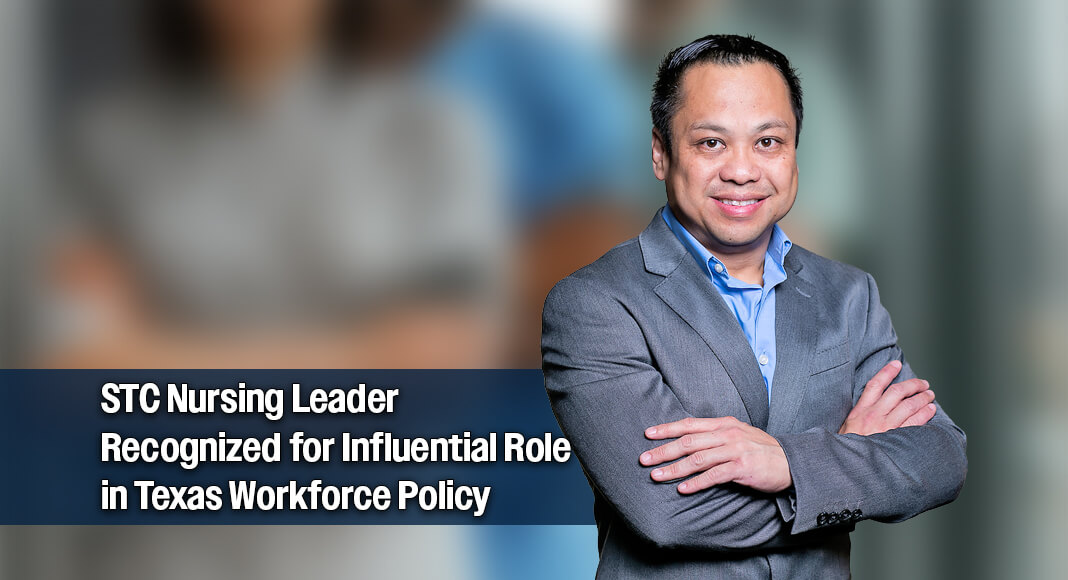
South Texas College Regional Health Care Liaison Jayson Valerio, DNP, has been selected by the Texas Health and Human Services Commission to serve on a statewide advisory committee tasked with implementing four newly approved laws aimed at strengthening the Texas health care workforce.
Valerio serves as the only representative from the Rio Grande Valley in this statewide effort to strengthen nursing pathways and expand the health care workforce.

“I am deeply humbled to serve as a voice for nurses across Texas and especially for those in the Rio Grande Valley. It’s a responsibility I take to heart,” Valerio said. “The work we’re doing today will strengthen the pipeline and help ensure our communities have the skilled professionals they need for years to come.”
In 2024, Valerio was appointed by Texas Governor Greg Abbott and the Texas Higher Education Coordinating Board to serve on the inaugural Texas Health Care Workforce Task Force as one of only 13 statewide leaders. The group included some of the state’s top research, medical and hospital executives.
The task force developed 18 recommendations to strengthen the state’s health care workforce, four of which were enacted into law in 2025.
“I was selected to serve on the Nursing Advisory Committee within the Career Pathways Workgroup, which was created through one of the four new laws,” Valerio said. “The committee examines standards, regulations and policies to help remove barriers that limit workforce growth. For example, we are reviewing situations where certified professionals are required to repeat coursework when advancing their education despite already holding national certification.”
The remaining enacted measures focus on strengthening health care education pathways, improving coordination of clinical training placements and enhancing statewide nursing workforce planning. Together, these efforts aim to reduce bottlenecks in education programs, expand opportunities for qualified students and ensure Texas is better prepared to meet growing health care demands.
Valerio brings more than 20 years of experience as a registered nurse, nursing educator and former dean of Health Science Professions at STC. He said the legislation impacts all health care professions statewide, with nursing projected to be among the most affected by workforce shortages.
“Workforce projections show that the Rio Grande Valley is expected to be one of the regions most impacted by the nursing shortage through 2036,” Valerio said. “We must strengthen collaboration between educational institutions and clinical sites to ensure we are not only producing nursing graduates, but also expanding the faculty and clinical capacity necessary to sustain growth.”
STC President Ricardo J. Solis, Ph.D., said Valerio’s role at the state level highlights the strength of STC’s Nursing programs and the institution’s impact across Texas.
“We are extremely proud of the leadership Dr. Valerio continues to demonstrate at the state level,” Solis said. “His work not only represents STC and the Rio Grande Valley with distinction, but also highlights the important role our Nursing programs play in preparing highly-skilled professionals who serve communities across Texas.”
For Valerio, the appointment is more than a professional milestone. It is about strengthening the future of health care and ensuring that communities receive the care they need when they need it most.
“We are fortunate at STC to have strong resources supporting our students, including advanced simulation technology that prepares them for real-world care,” Valerio said. “But as a nurse, this work goes deeper. It’s about ensuring there are skilled, compassionate professionals ready to provide that human touch when patients need it most. I do this work with the hope that long after I retire, our efforts today will translate into more health care professionals serving our communities.”


