








Mega Doctor News
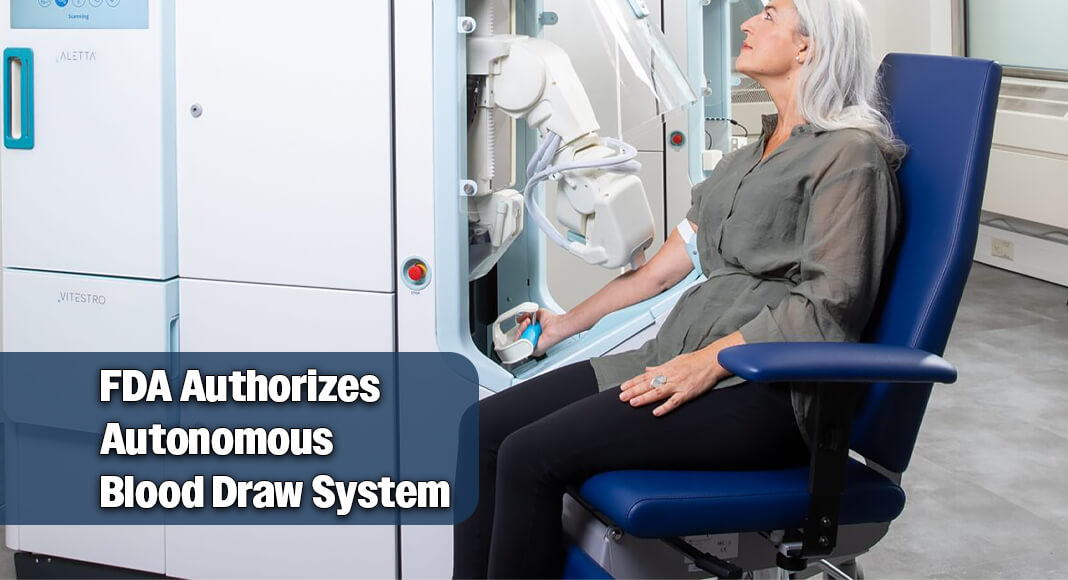
FDA – The U.S. Food and Drug Administration today authorized the Aletta, the first standalone robotic device that can draw blood from a patient’s arm without hands-on operator intervention. The device is authorized for use in adults in outpatient settings and must be operated under the oversight of a supervisor trained in phlebotomy. One phlebotomist can oversee up to three Aletta devices at the same time, which may help address the current phlebotomist shortage in the U.S.
“This authorization reflects the FDA’s commitment to advancing innovative medical devices that help meet a critical public health need while maintaining the safety and effectiveness patients deserve,” said Michelle Tarver, M.D., Ph.D., Director of the FDA’s Center for Devices and Radiological Health. “Blood draws are one of the most commonly performed medical procedures in the United States, yet patients may face delays due to a growing shortage of trained phlebotomists.”
The Aletta autonomously handles each step of the blood draw, while a trained phlebotomist initiates each session and remains available to respond to any issues throughout. The device guides the patient to position their arm, after which the patient or supervisor presses a button to start the blood draw. The Aletta then uses near-infrared light and Doppler ultrasound to locate a suitable vein and tell it apart from arteries. If no appropriate vein is found, the device will not attempt the procedure.

Once a vein is identified, the Aletta proceeds through the remaining steps on its own: applying a tourniquet, preparing the skin, inserting and disposing of the needle, changing collection tubes and placing a bandage. The supervising phlebotomist confirms that collection tubes are filled in the correct order and verifies that all tubes are adequately full following the procedure.
The Aletta is designed with multiple layers of patient safety in mind. The device continuously applies disinfectant to the skin during the ultrasound scan. The device is also cleaned by a trained professional between patients. If a patient moves too much during the procedure, the needle automatically detaches and the draw stops; additional onboard sensors can pause the procedure and alert the supervisor if other unsafe conditions are detected.
About the Authorization
This authorization advances the FDA’s Public Health Pillars of Innovation and Global Leadership, Increasing Access to Affordable Medicines and Medical Products, and Preventing Chronic Disease and Promoting Wellness in America by bringing a transformative technology to patients who increasingly face delays in accessing a critical diagnostic service.
The FDA’s authorization is based on clinical data demonstrating that the Aletta achieves successful blood draw rates comparable to or better than trained human phlebotomists when it proceeds with a stick. This was demonstrated across a broad range of patients, including those with varying health statuses, those who self-reported having difficult vein access and those with varying skin tones. Device-related adverse events were uncommon and mild.
The FDA granted marketing authorization to Vitestro for the Aletta through the De Novo pathway, a regulatory pathway for low- to moderate-risk devices of a new type. Along with this De Novo authorization, the FDA is establishing special controls that define requirements including those related to labeling, performance testing and clinical testing. When met, the special controls, in combination with general controls, provide a reasonable assurance of safety and effectiveness.
Information source: FDA


