Mega Doctor News

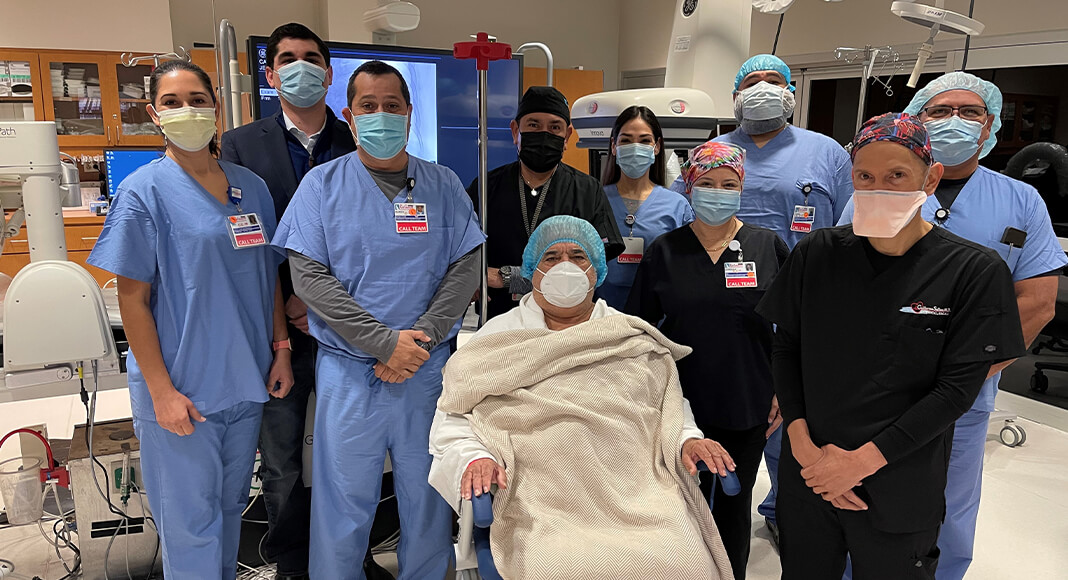
McAllen, TX – Rio Grande Regional hospital is excited to announce that Dr. Guillermo Salinas, Cardiologist and Medical Director of the Interventional Cardiology program at Rio Grande Regional Hospital implanted the first new miniaturized, wireless monitoring sensor to manage heart failure (HF). This new heart failure monitoring device has been clinically proven to significantly reduce hospital admissions when used by physicians to manage heart failure.
Heart failure occurs when the heart is unable to pump enough blood to meet the body’s demands. The CardioMEMS HF System features a sensor that is implanted in the pulmonary artery (PA) during a minimally invasive procedure. Increased PA pressures appear before weight and blood pressure changes, which are often used as indirect measures of worsening heart failure.
“Innovative telehealth technology reduces the need for in-person appointments and yet allows me to continue monitoring and treating my patients accordingly,” said Dr. Guillermo Salinas. “I am proud that the dedicated heart team at the hospital continues to introduce new life altering technology that benefits the patients of our community.”

Heart failure is the leading cause of hospitalization for Americans over age 65. This new device allows patients to remotely share daily sensor readings from their homes to their health care providers, allowing for personalized care to reduce the likelihood of hospitalization. Data from a recent clinical trial found that the remote monitoring technology reduces heart failure hospital admissions by up to 58 percent.
In addition, RGRH is committed to raising awareness in the communities we serve about the importance of heart health. We encourage both men and women over the age of 50 to visit RioGrandeHearts.com and take a free Heart Risk Assessment. The Heart Risk Assessment can help you take control of your heart health and gain a better understanding of your chances of developing cardiovascular disease. The results of the assessment can help you talk to your doctor and determine if you would benefit from any screening or diagnostic test that could help lower your risk of a heart attack or stroke. We are here to help you learn more about your heart health, because the most important heart you have to take care of is your own.
To learn more about the technology available at RGRH, please visit RioHealth.com.